Free Preschool Handwriting Worksheets
Preschoolers build the hand strength and control they need for writing by tracing lines and shapes first, then moving on to letters, numbers and their first sight words. Every worksheet here uses large letters, clear starting dots and a solid example to copy. Ages 3–5
Tracing Lines Pre-Writing
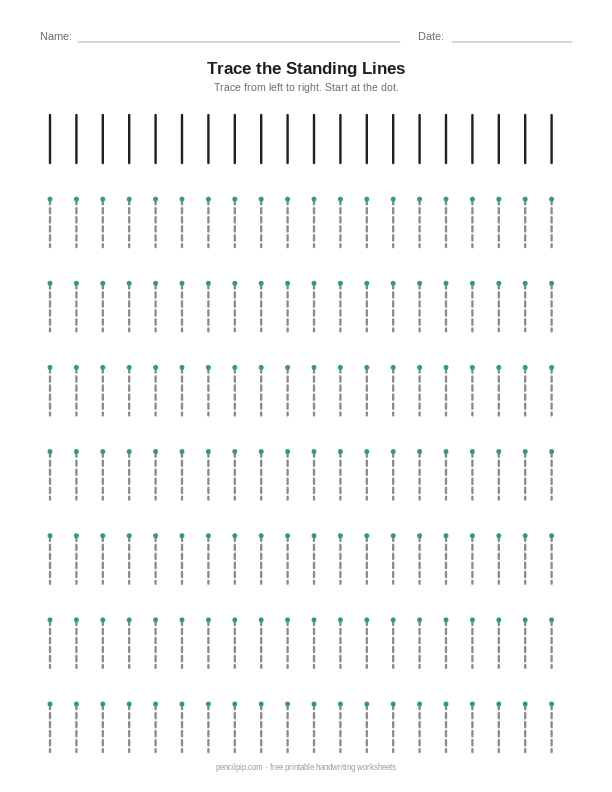
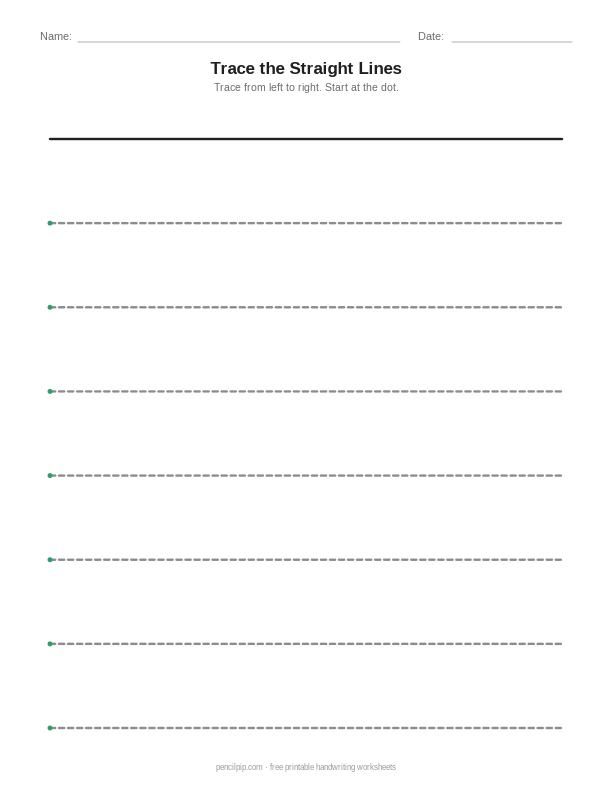
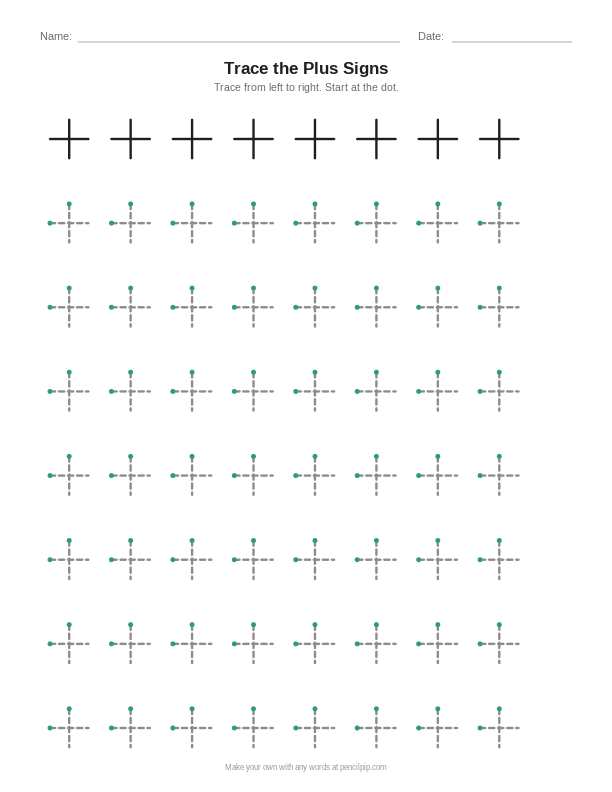
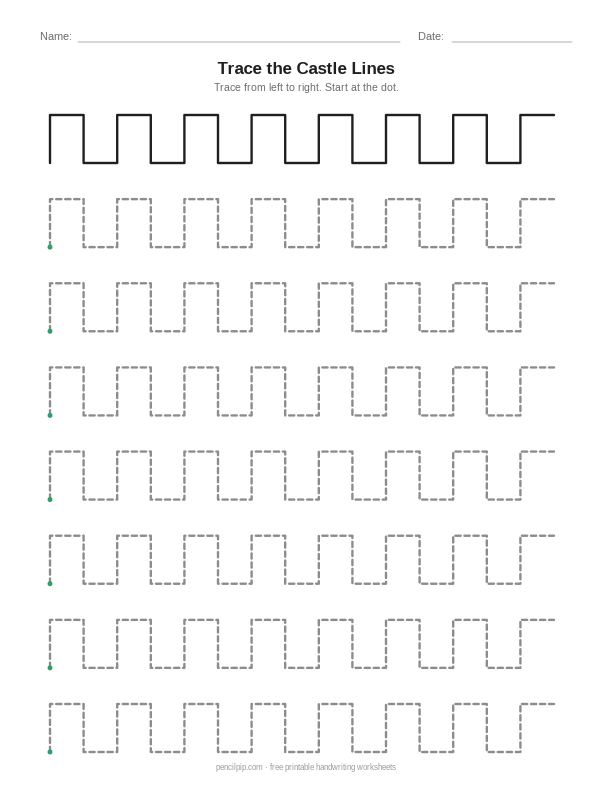
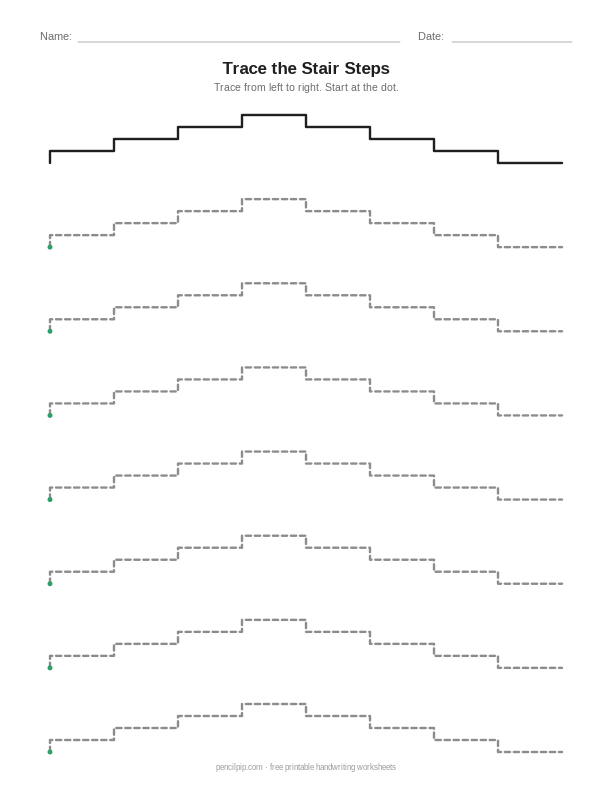
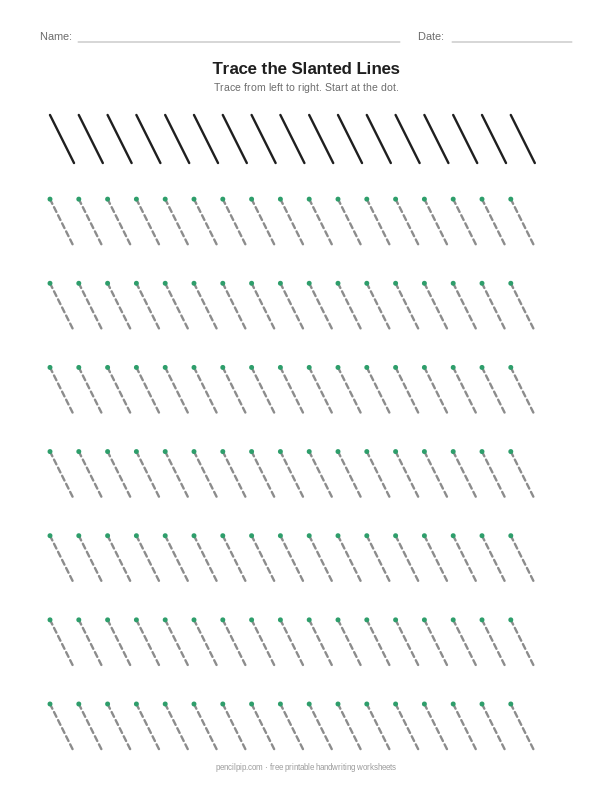
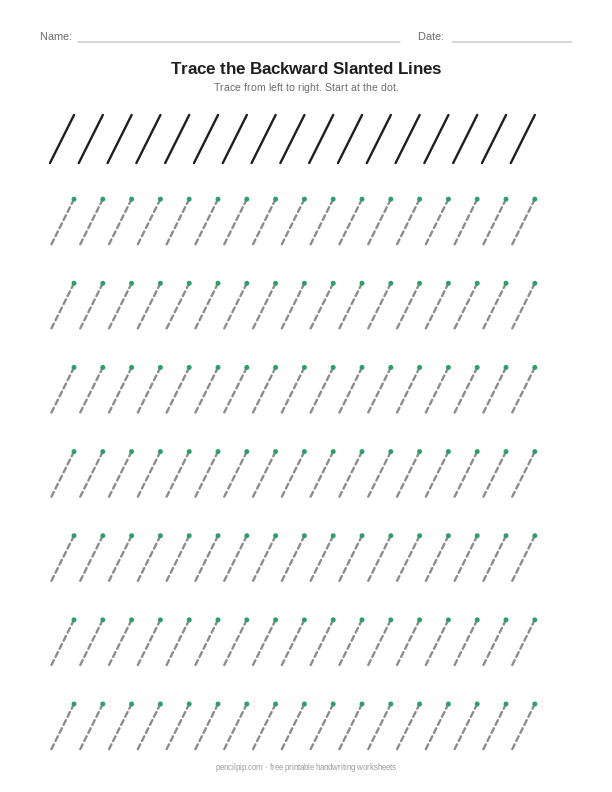
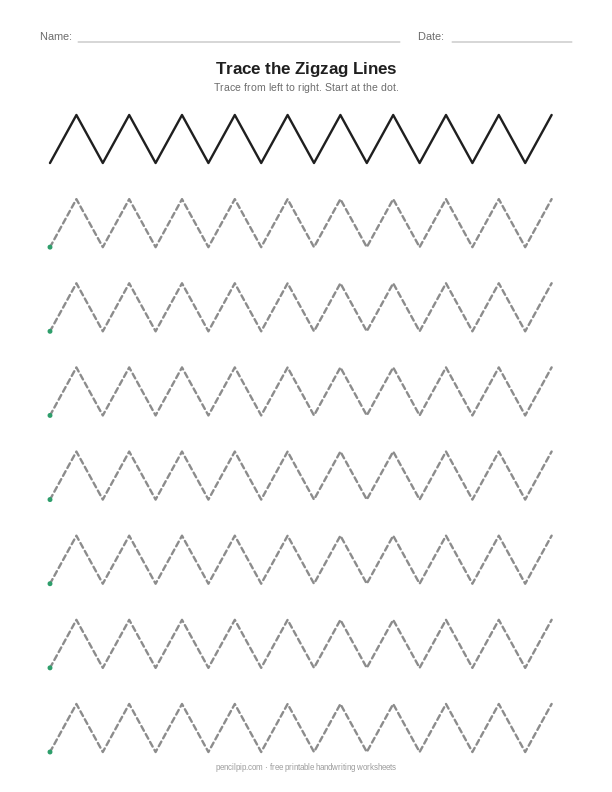
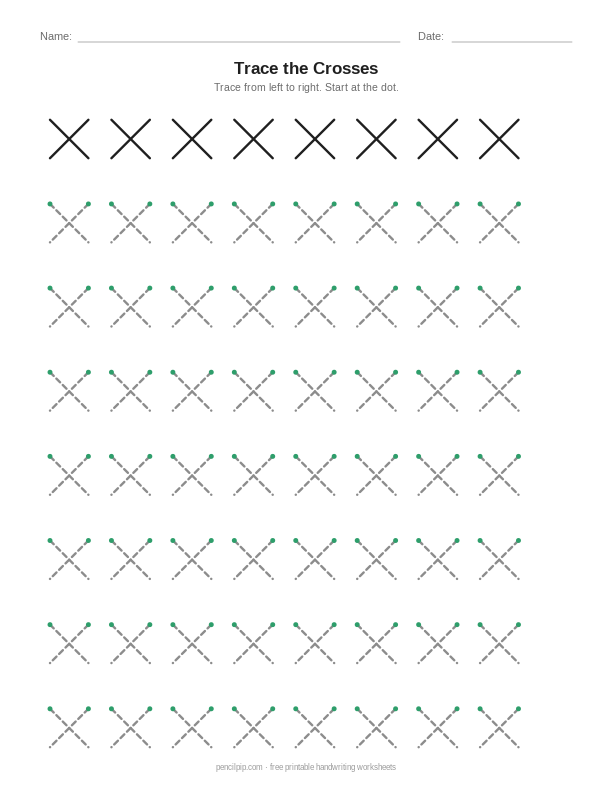
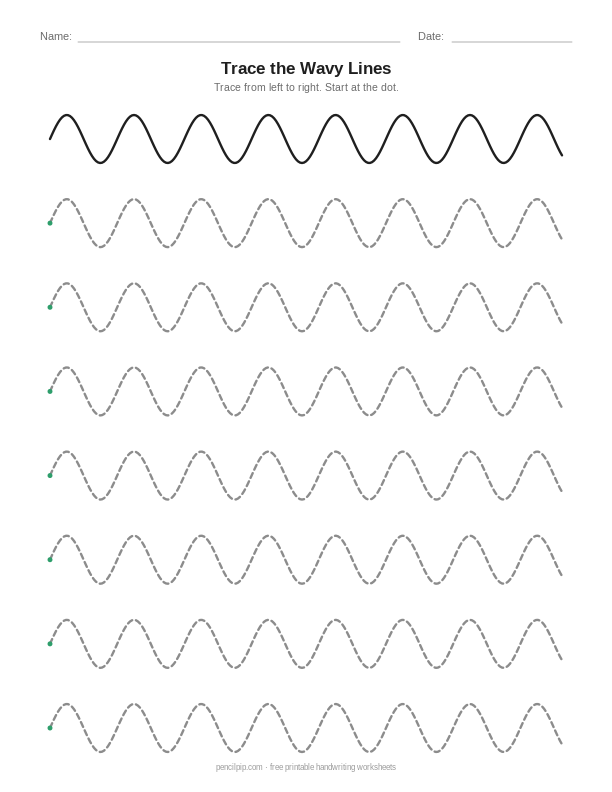
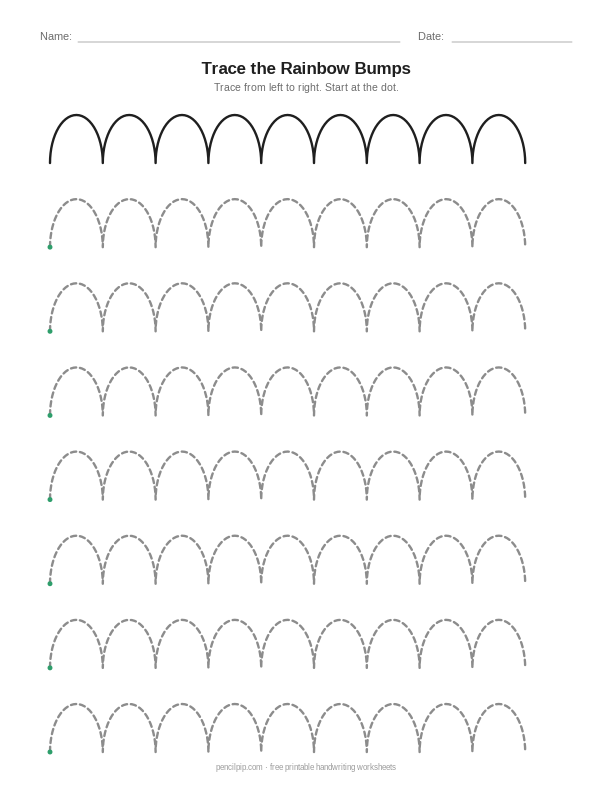
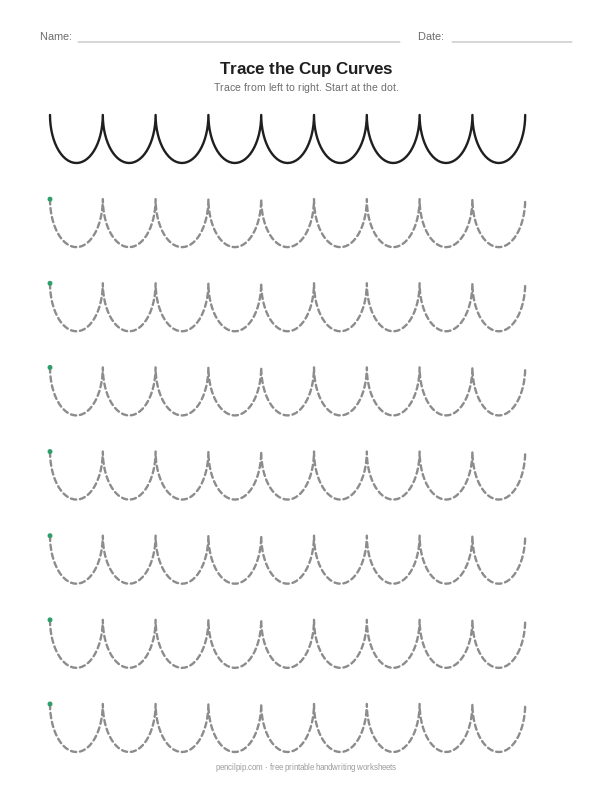
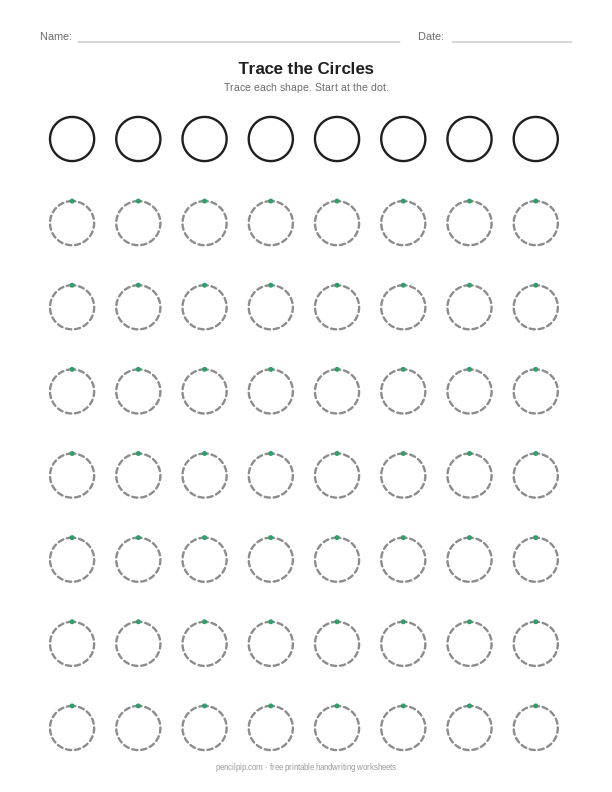
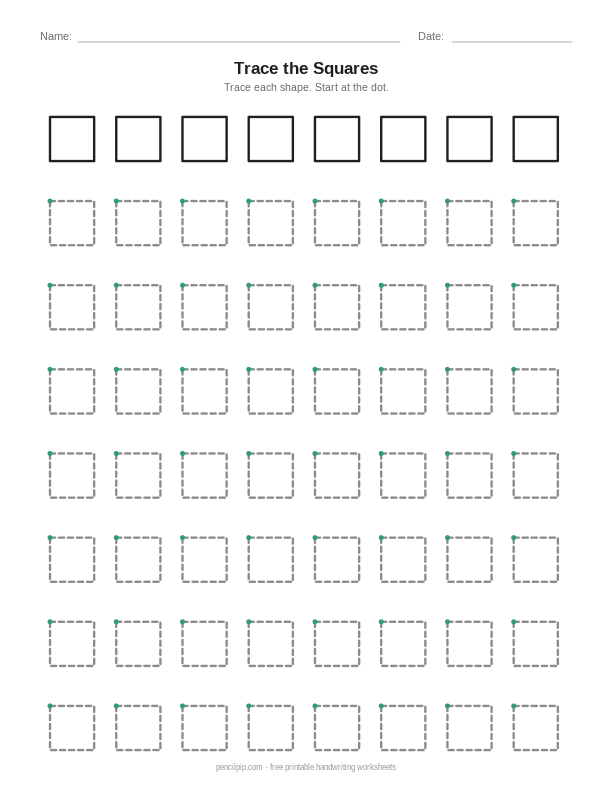
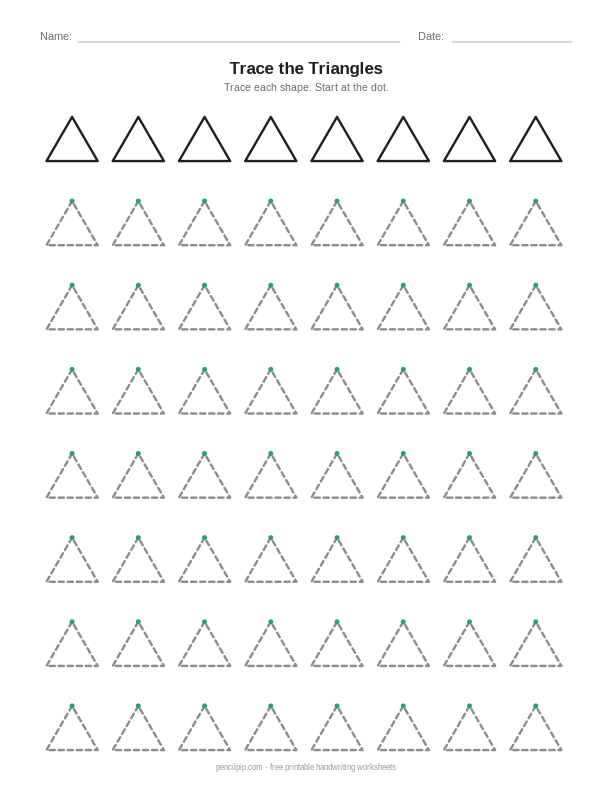
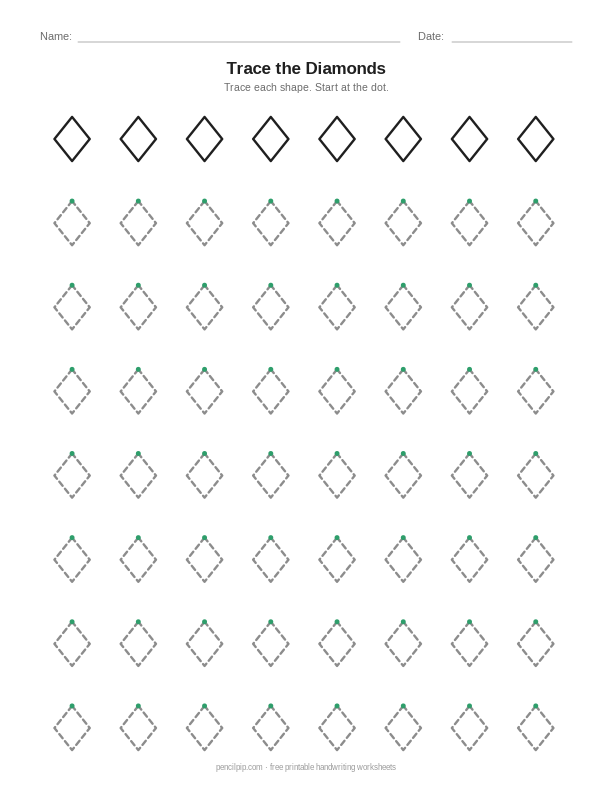
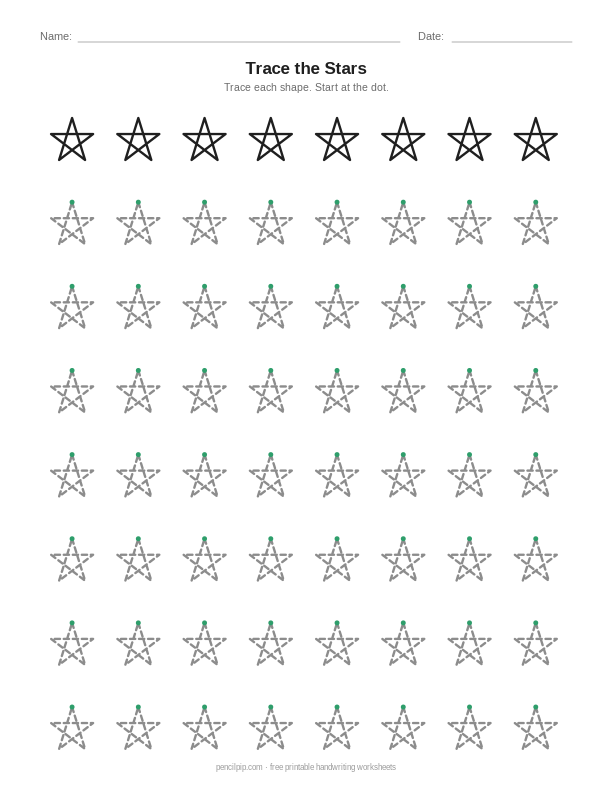
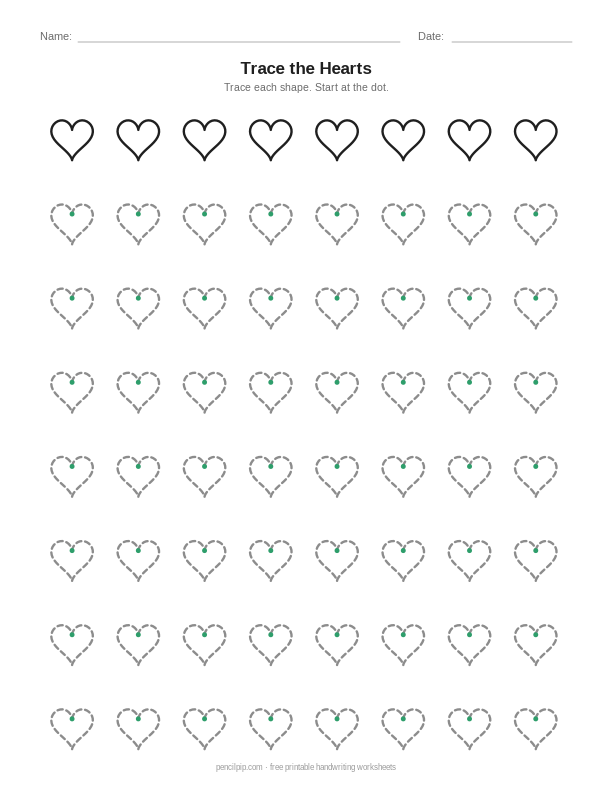
Shape Tracing Pre-Writing
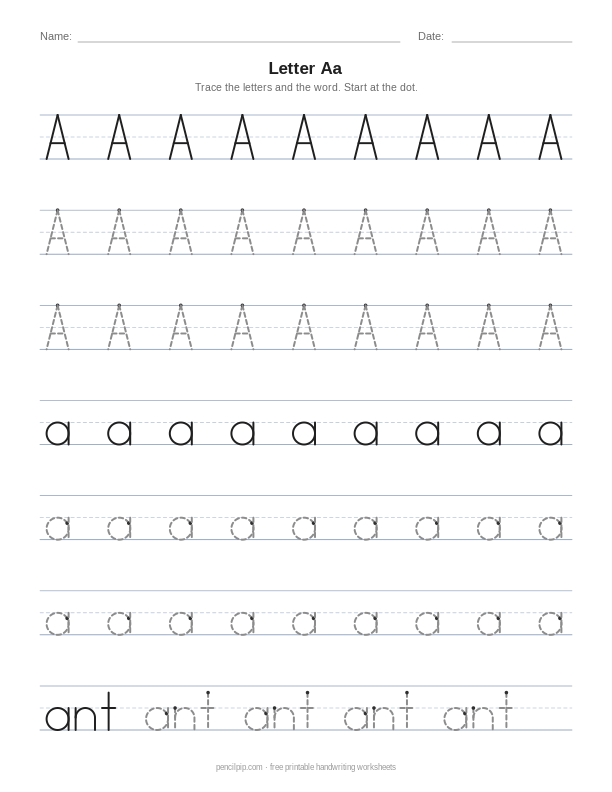
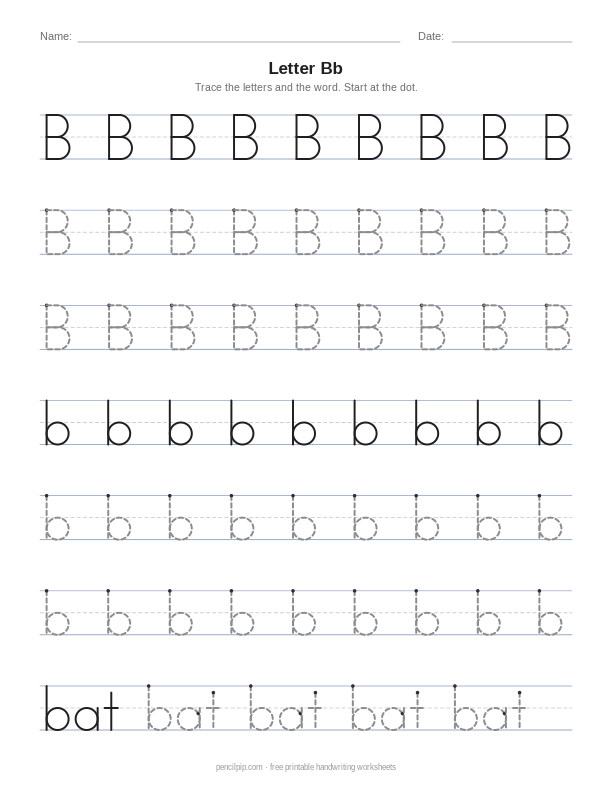
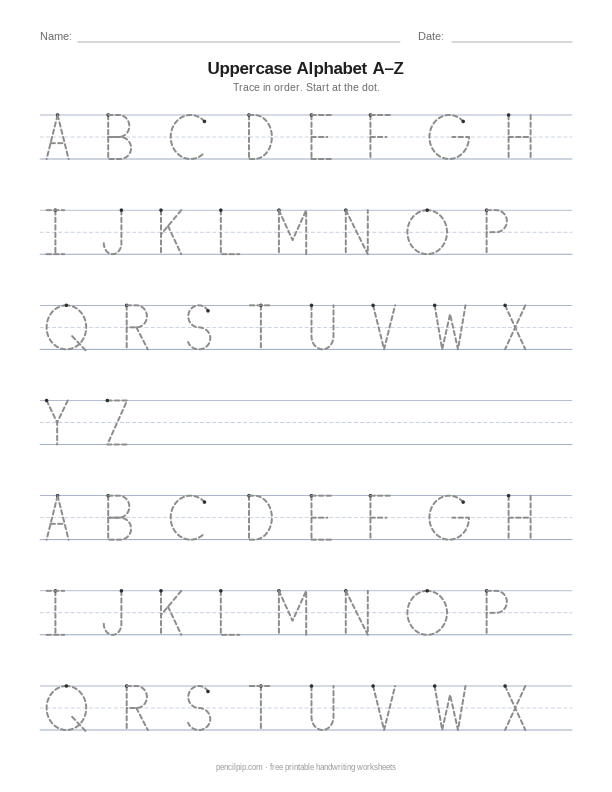
Letter Tracing A–Z Letters
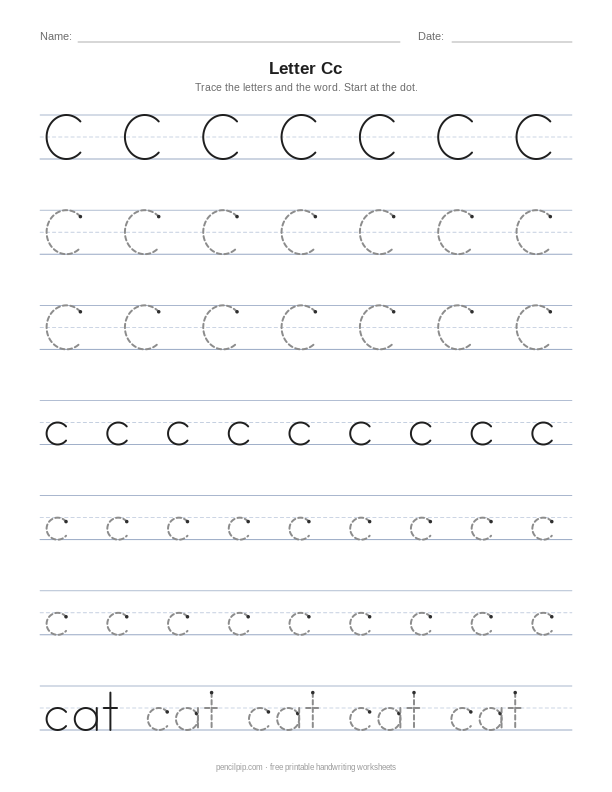
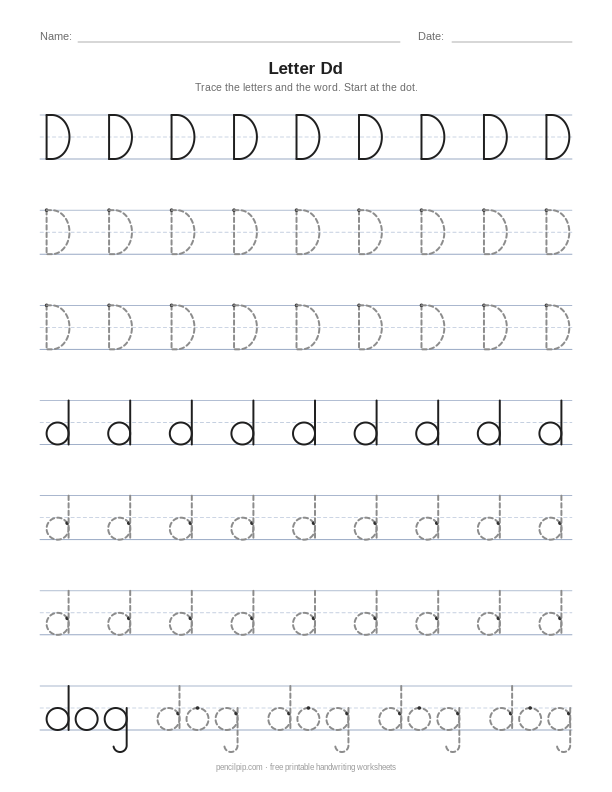
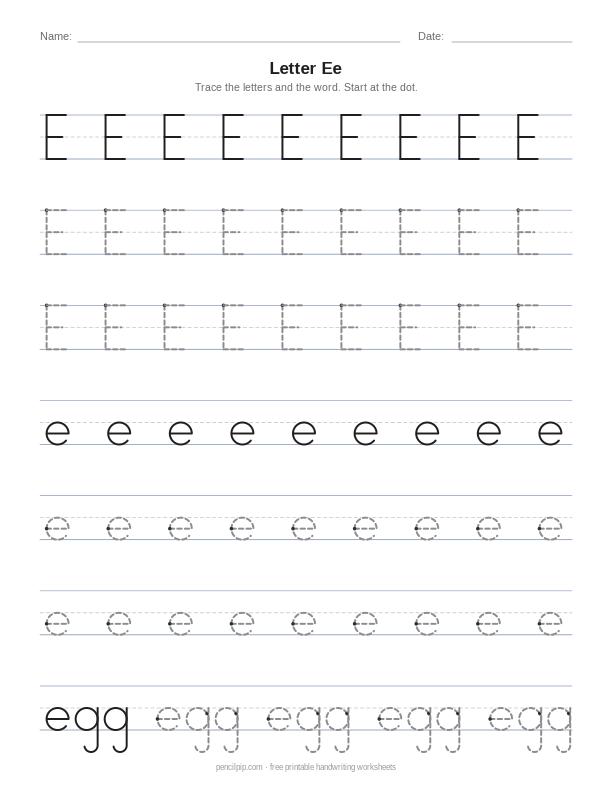
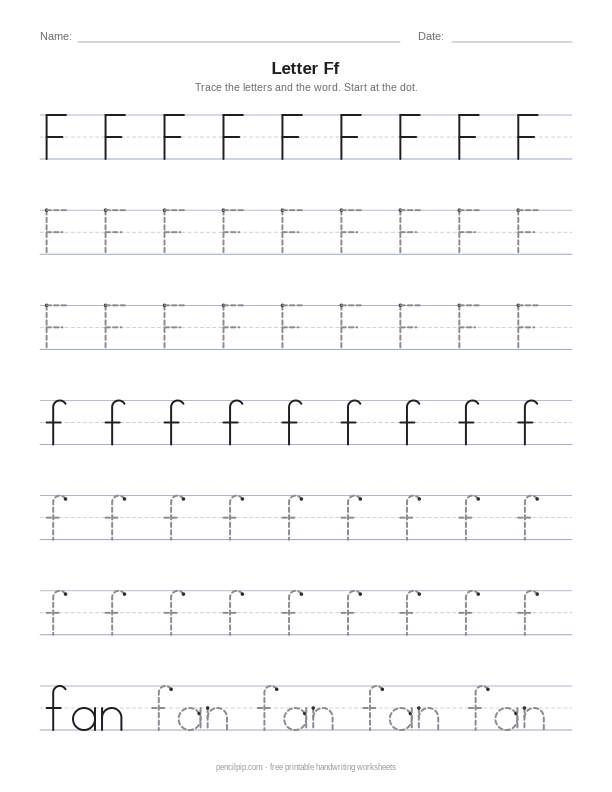
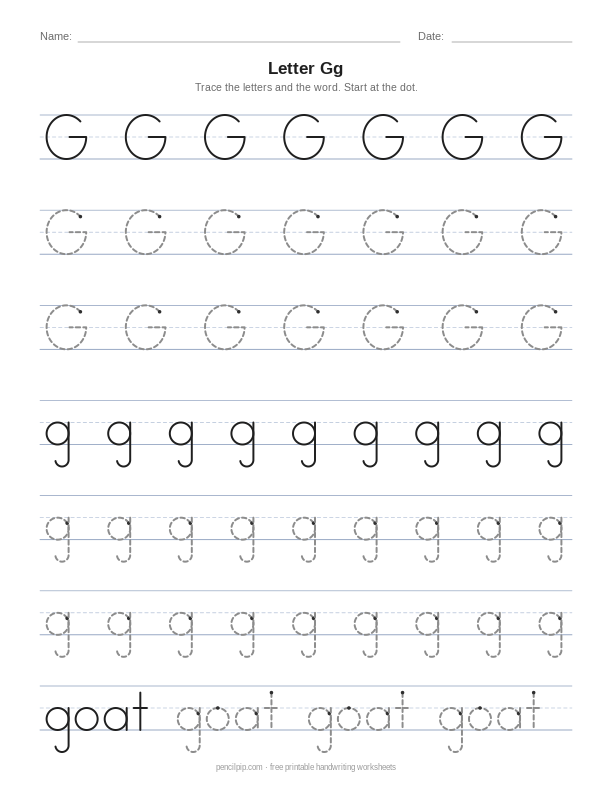
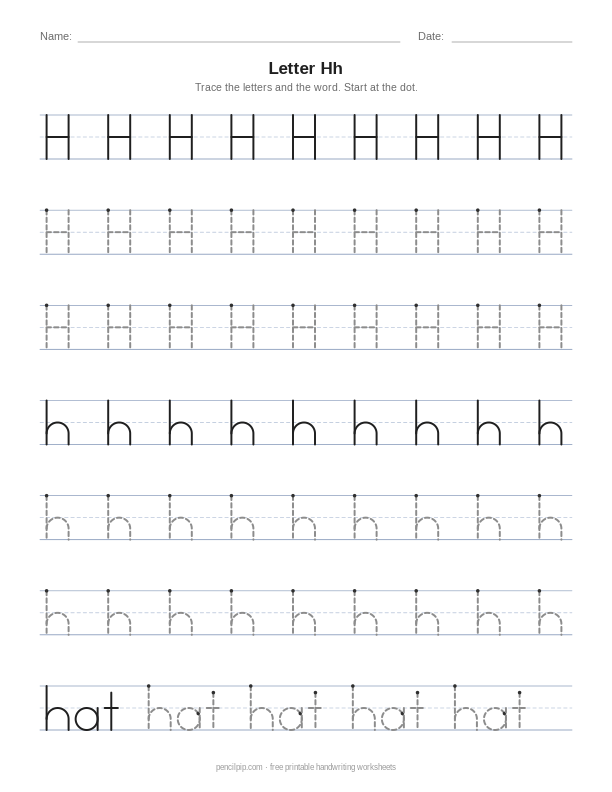
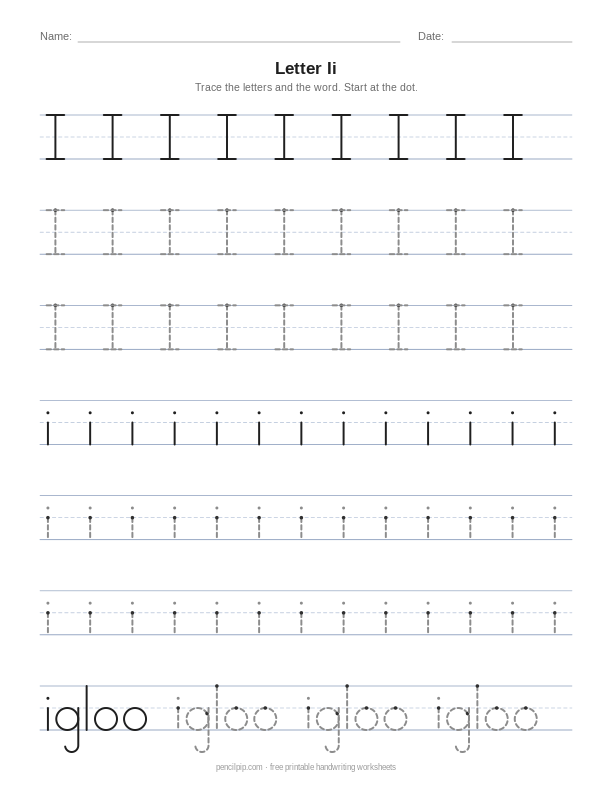
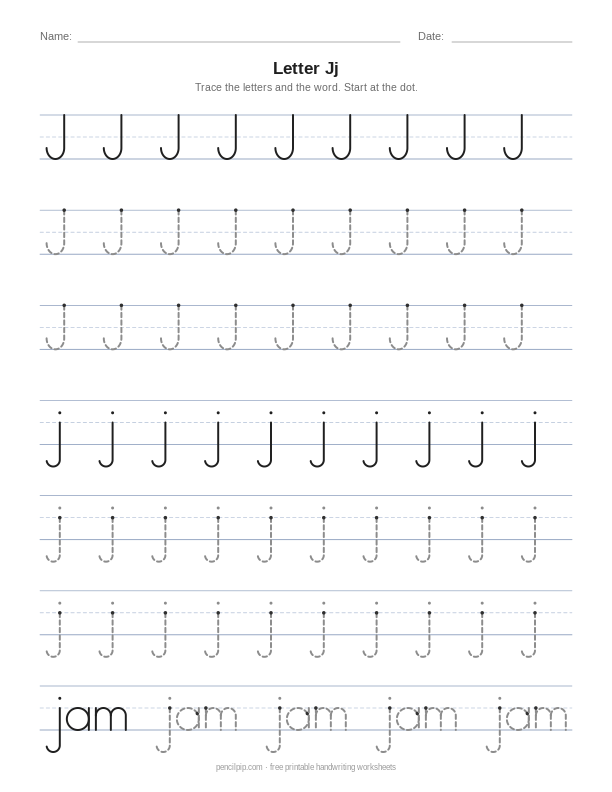
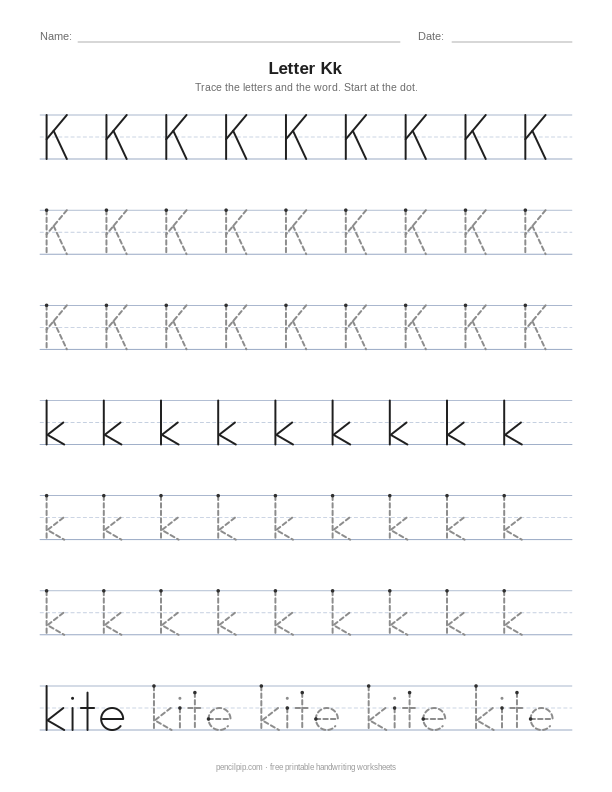
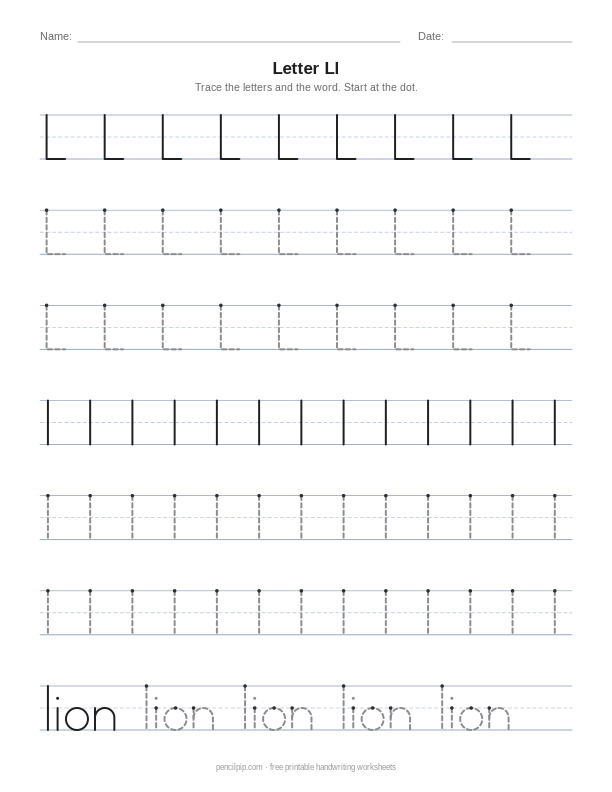
Alphabet Tracing Letters
Dolch Pre-Primer Sight Words
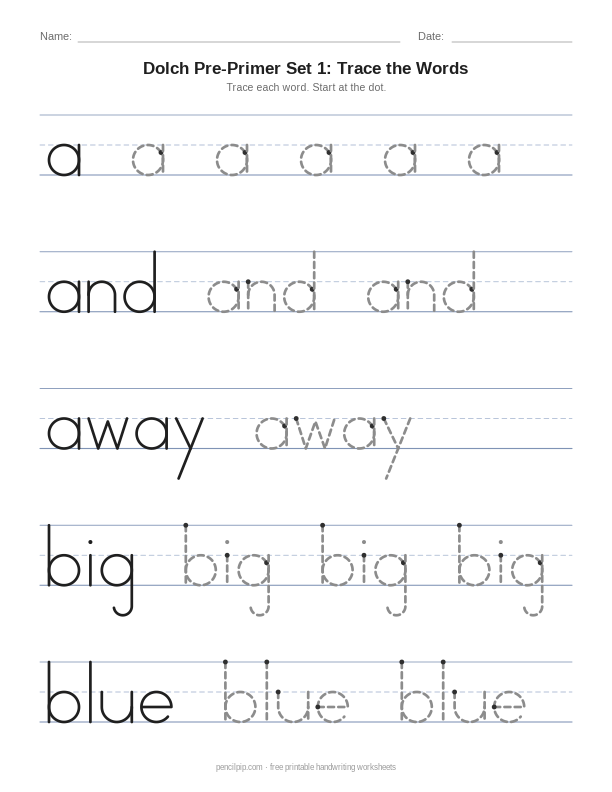 3 pagesDolch Pre-Primer Sight Words Set 1a, and, away, big, blue
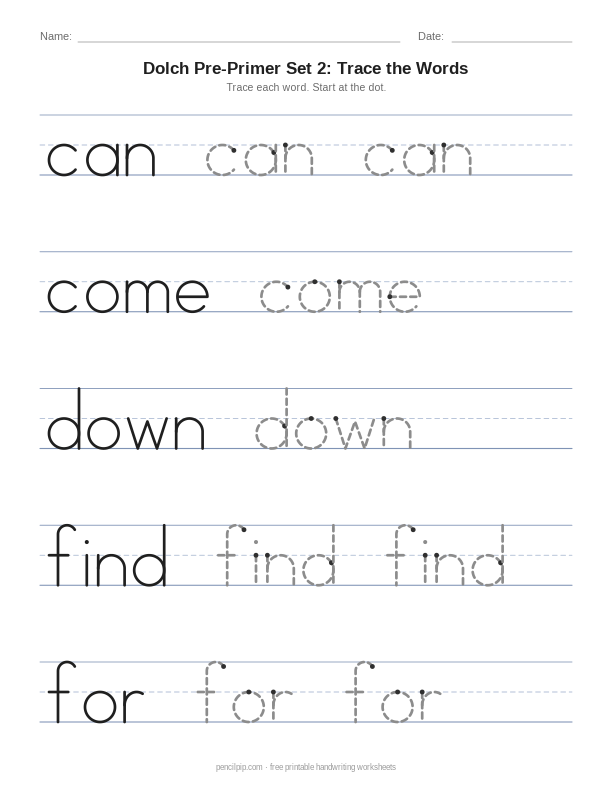 3 pagesDolch Pre-Primer Sight Words Set 2can, come, down, find, for
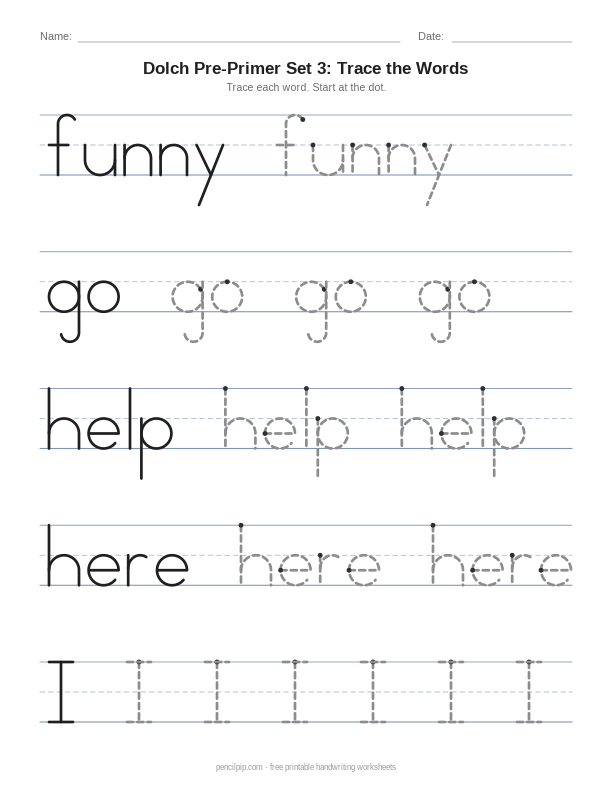 3 pagesDolch Pre-Primer Sight Words Set 3funny, go, help, here, I
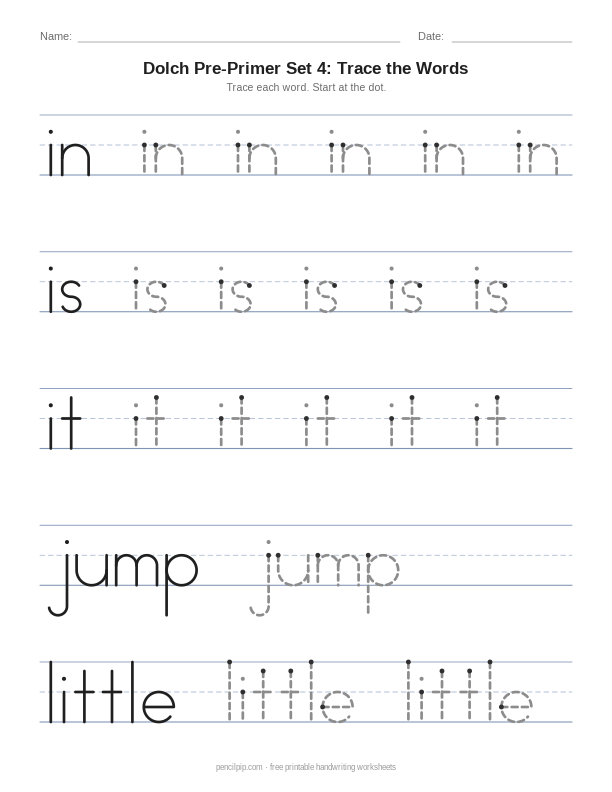 3 pagesDolch Pre-Primer Sight Words Set 4in, is, it, jump, little
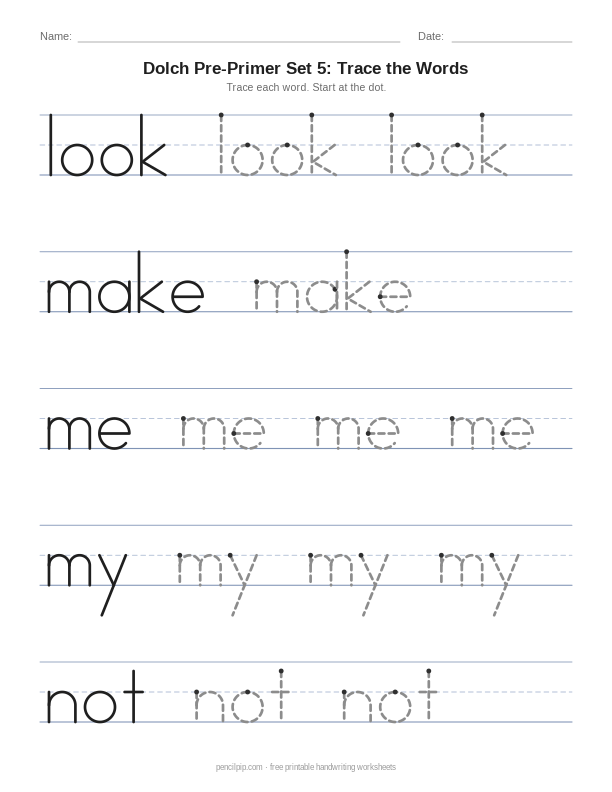 3 pagesDolch Pre-Primer Sight Words Set 5look, make, me, my, not
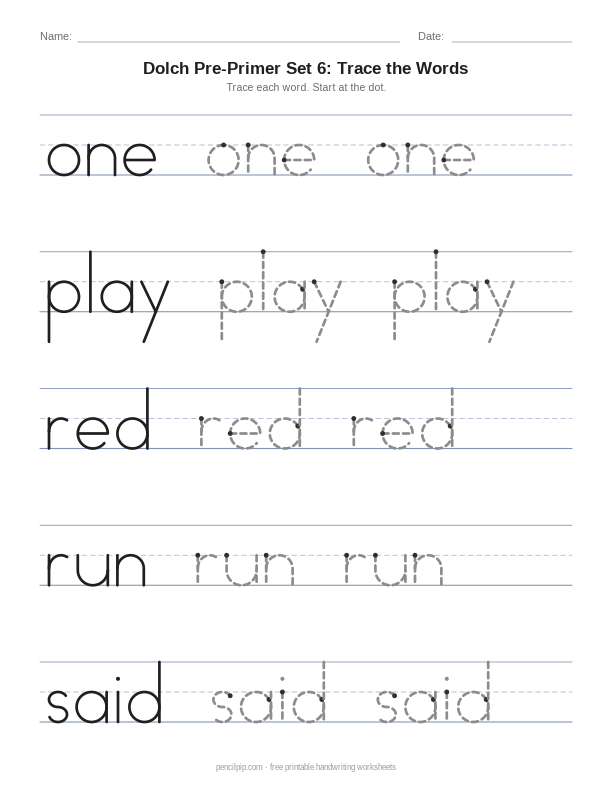 3 pagesDolch Pre-Primer Sight Words Set 6one, play, red, run, said
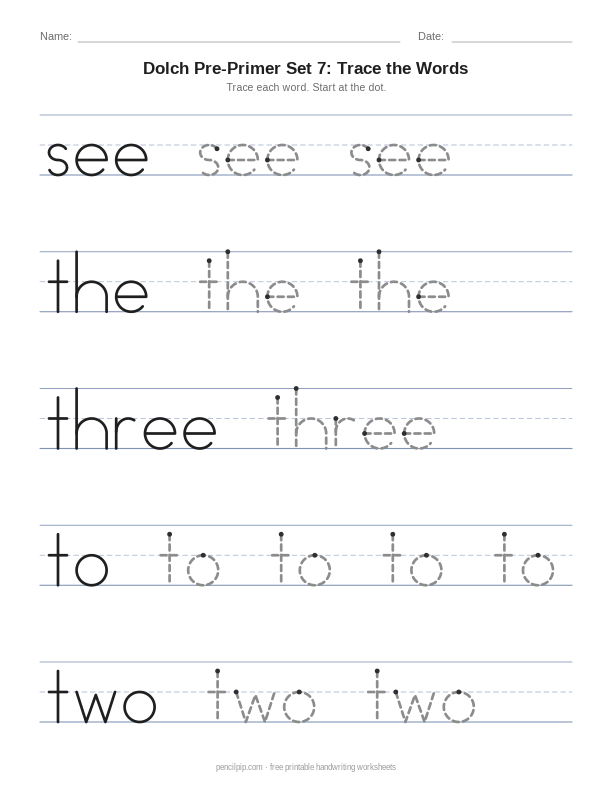 3 pagesDolch Pre-Primer Sight Words Set 7see, the, three, to, two
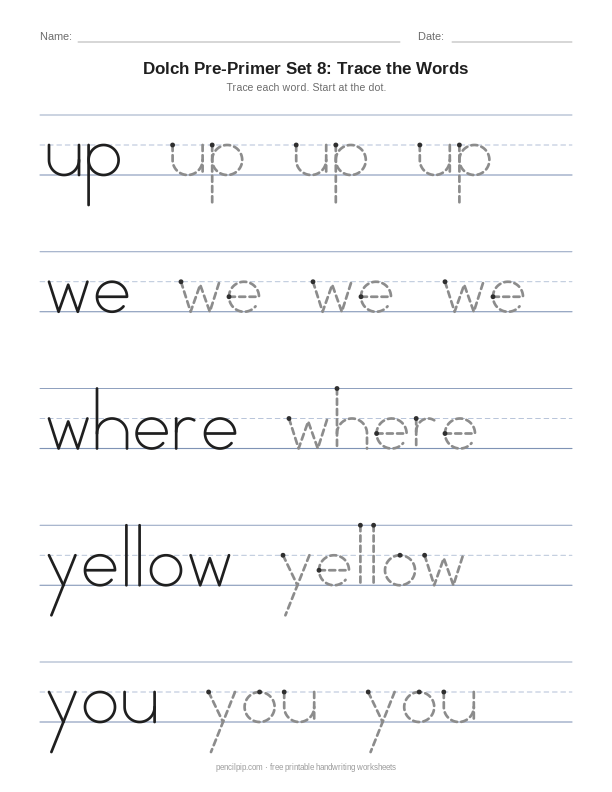 3 pagesDolch Pre-Primer Sight Words Set 8up, we, where, yellow, you
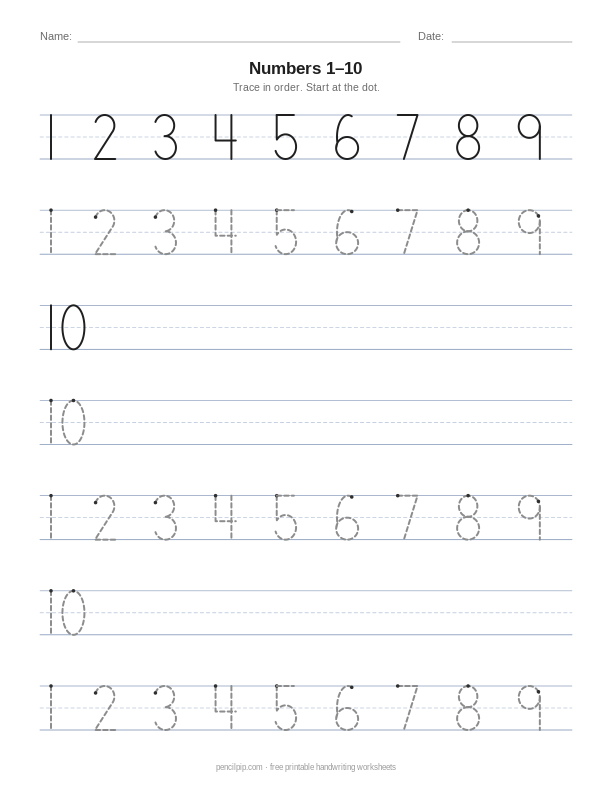
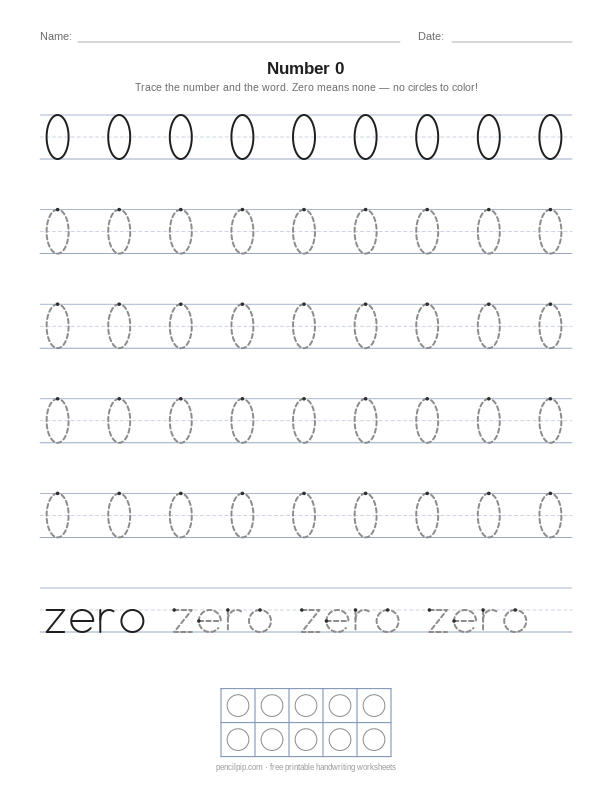
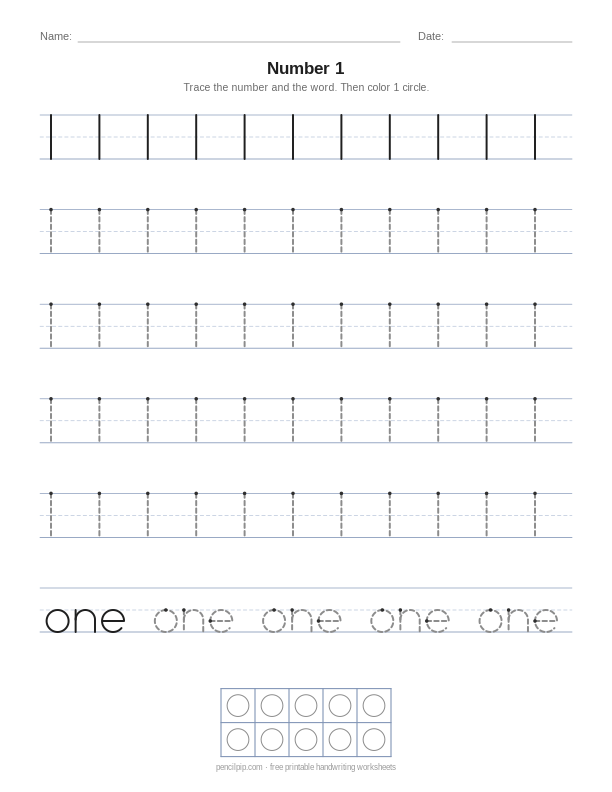
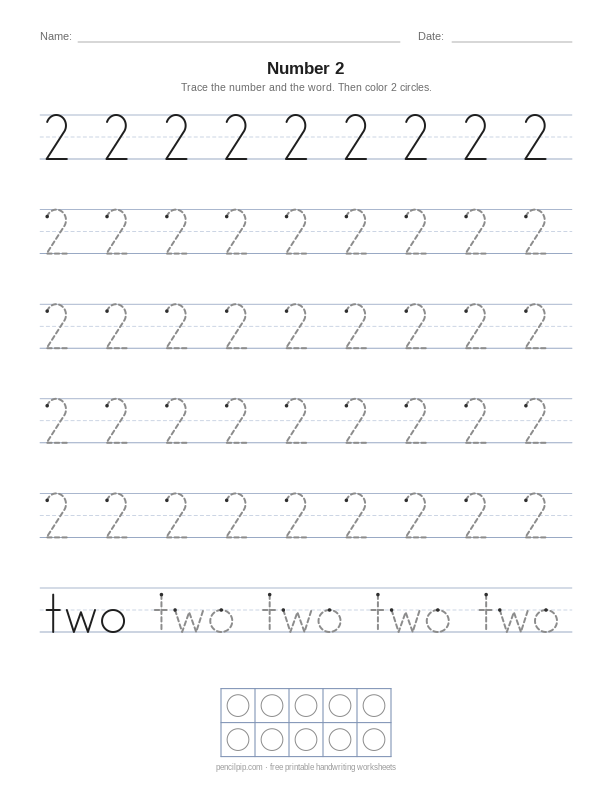
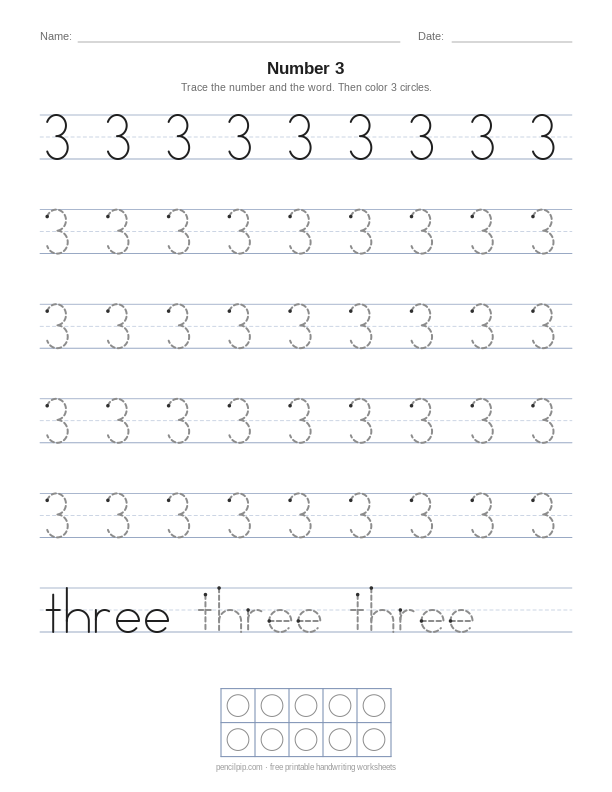
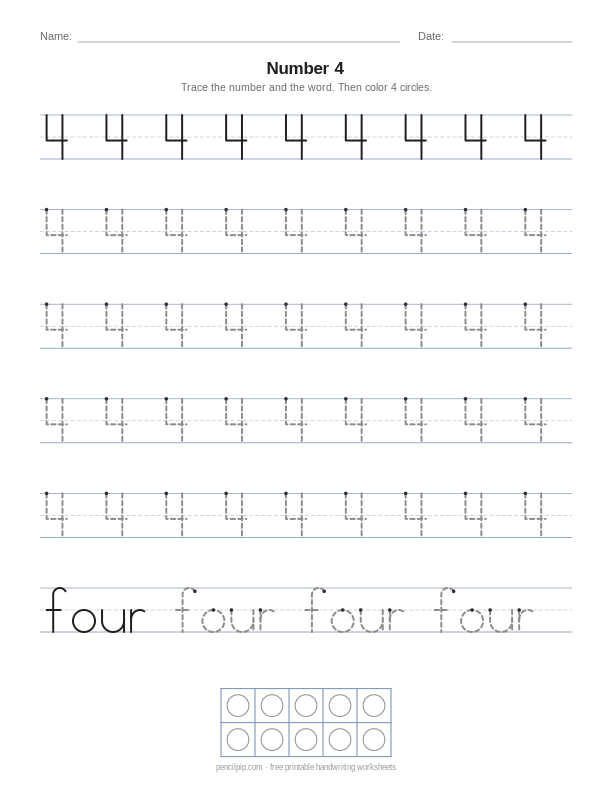
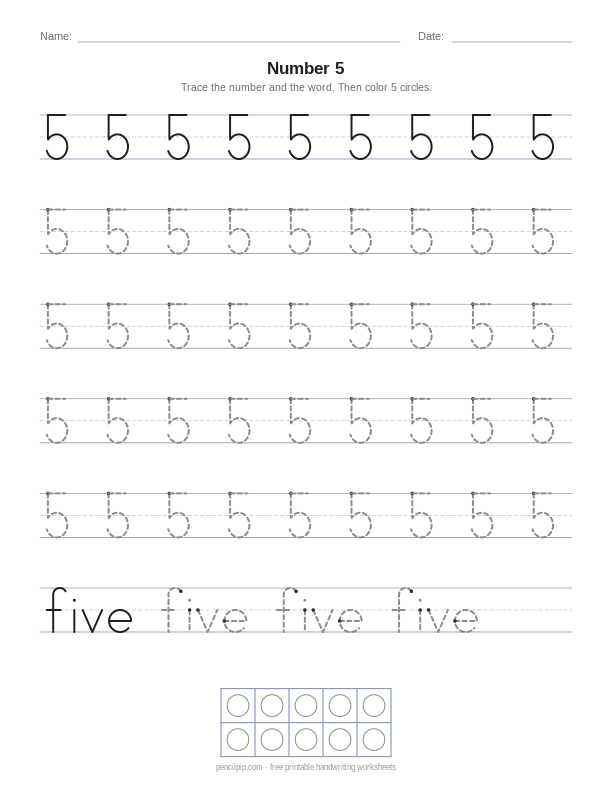
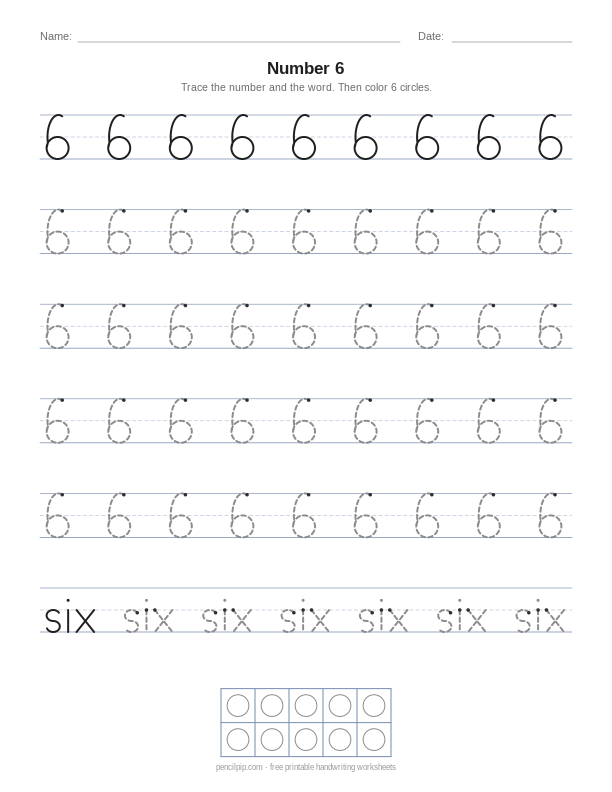
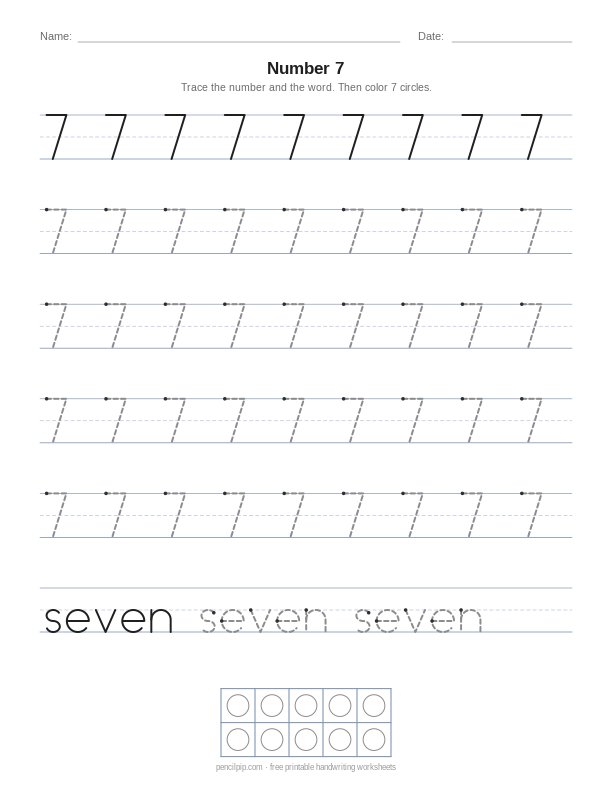
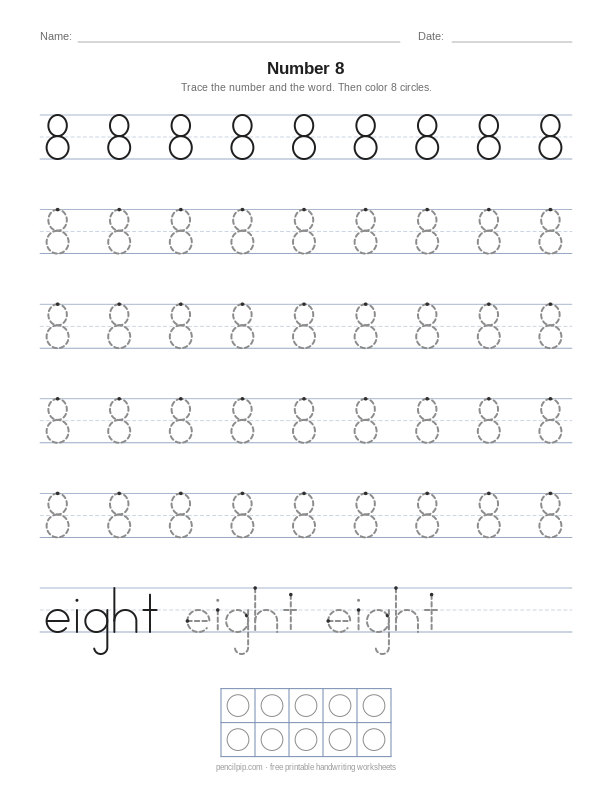
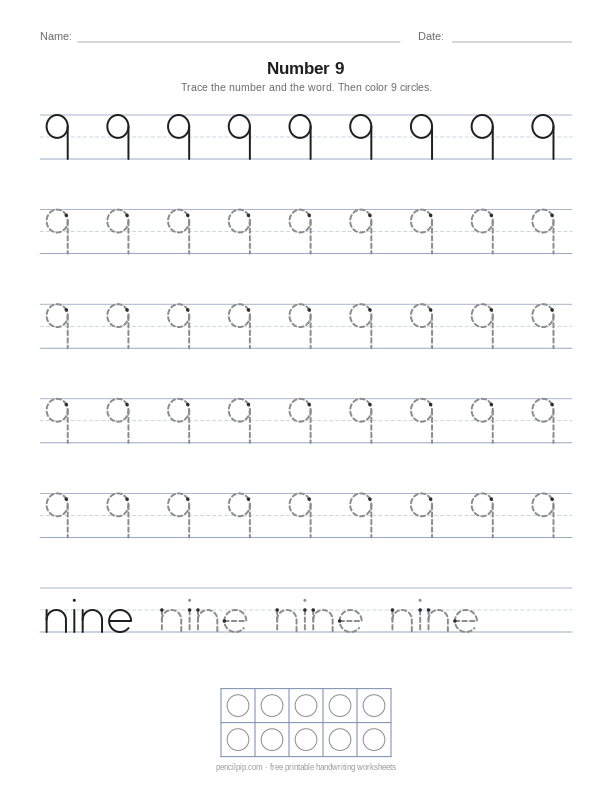
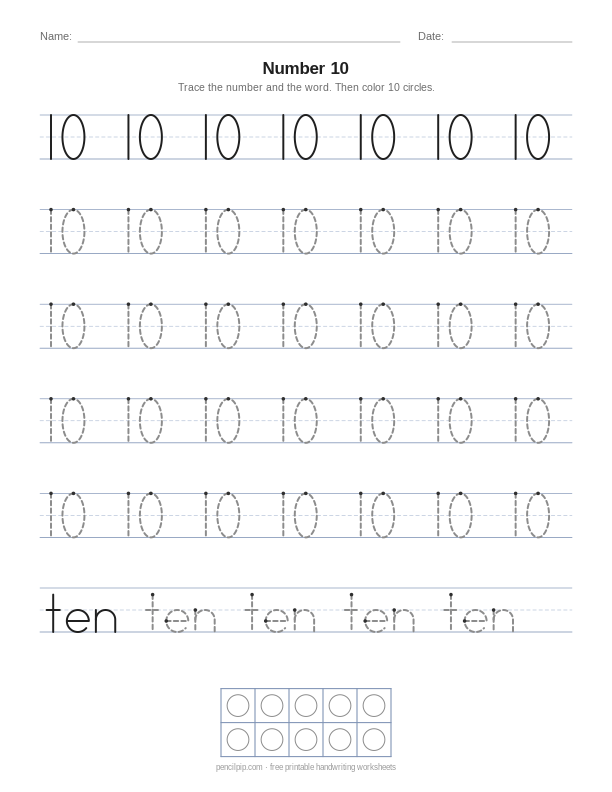
Number Tracing 0–20 Numbers
Primary Writing Paper Writing Paper
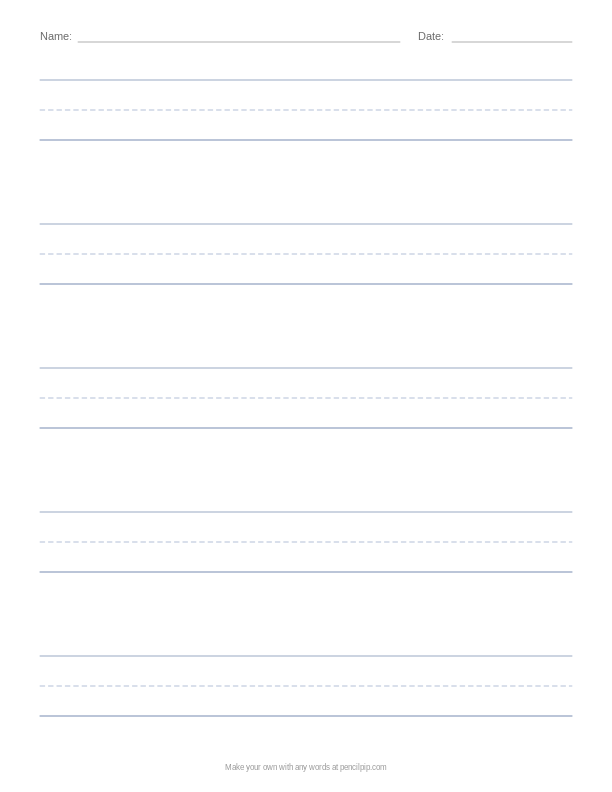
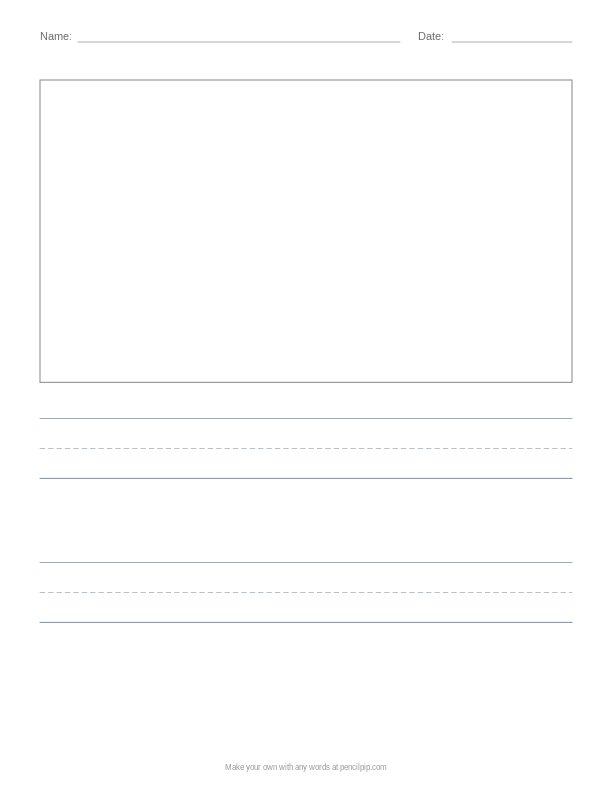
Story Paper Writing Paper
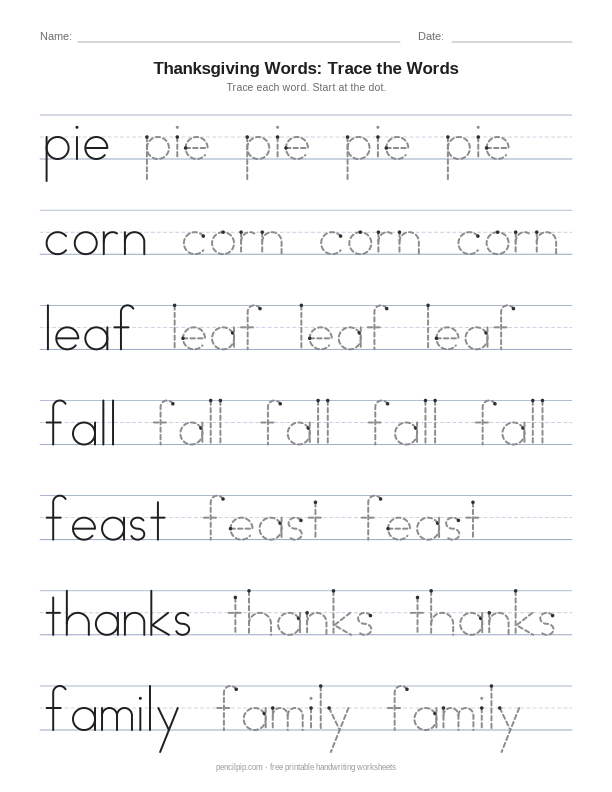
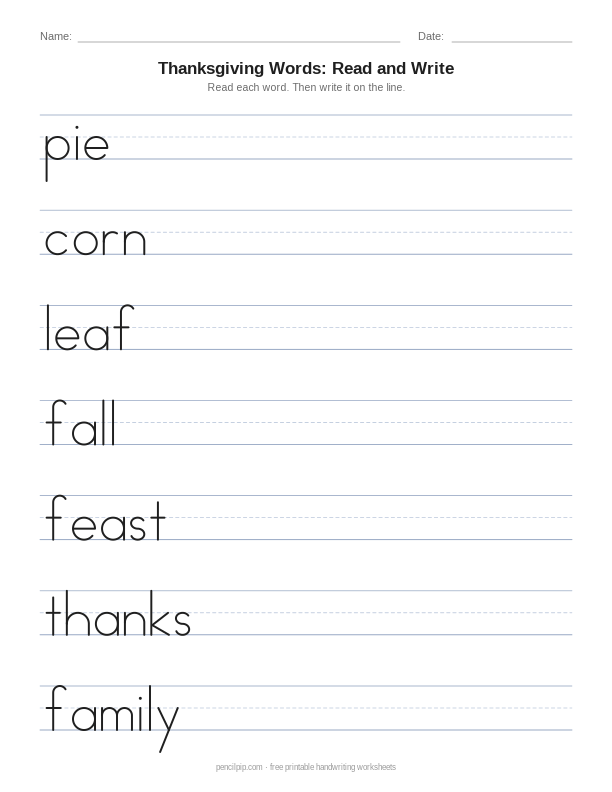
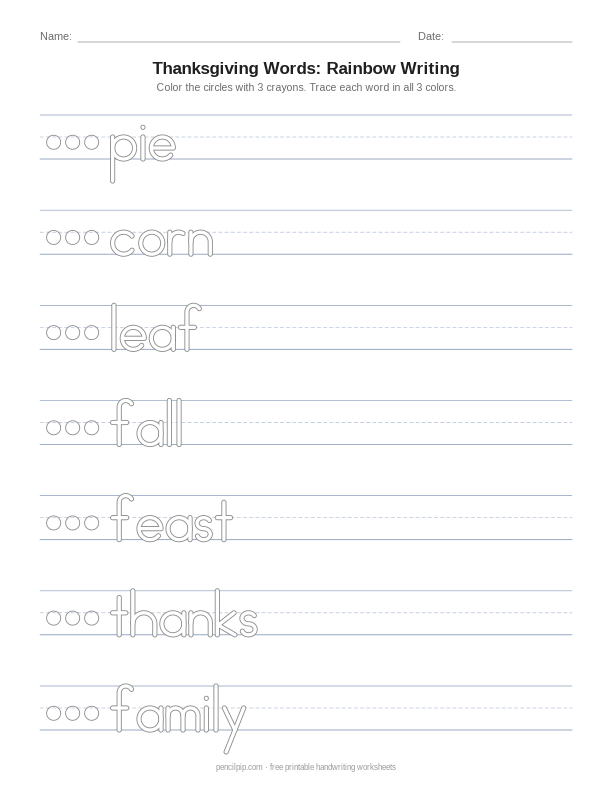
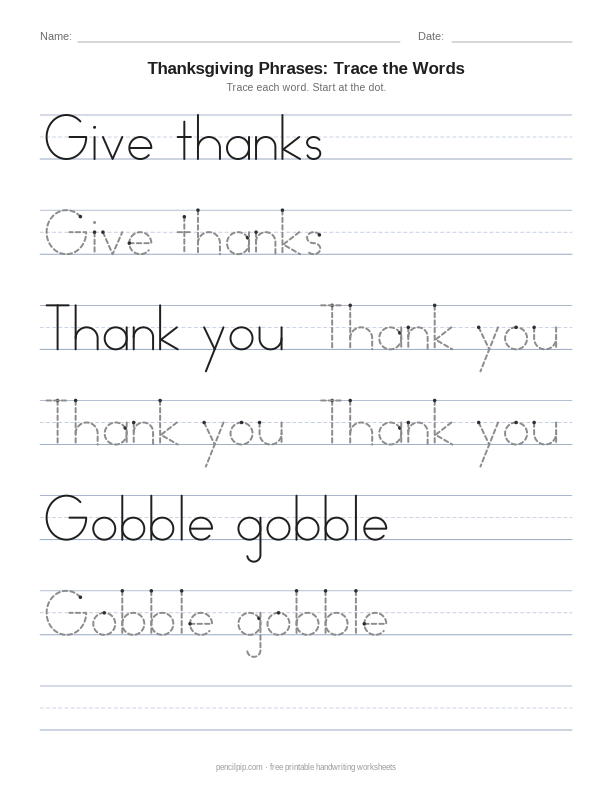
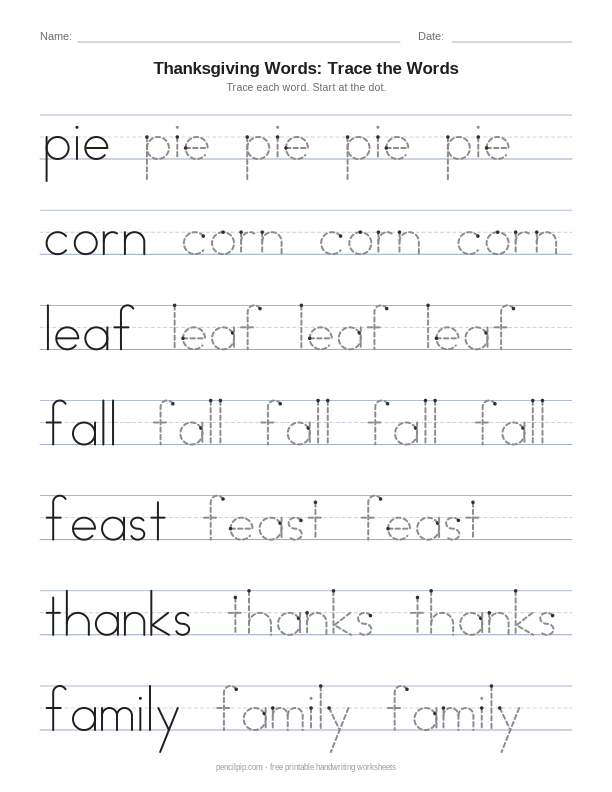
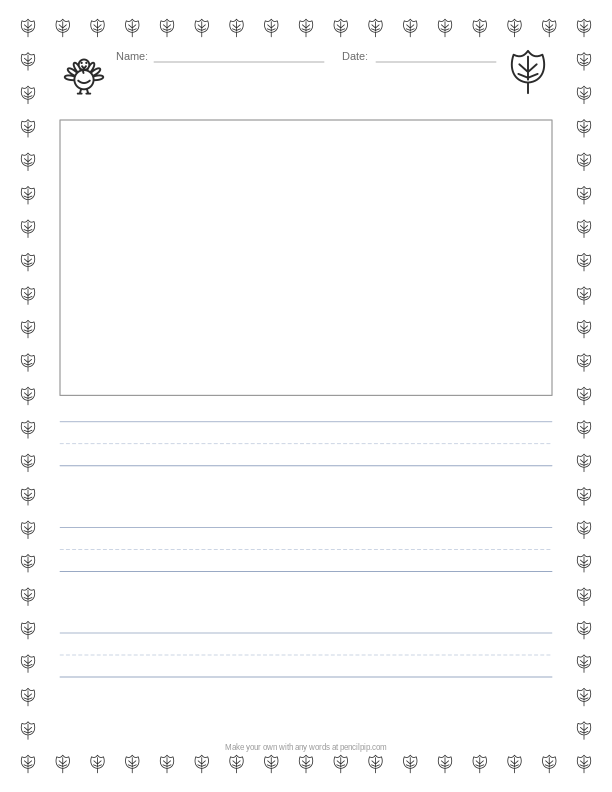
Thanksgiving Holidays
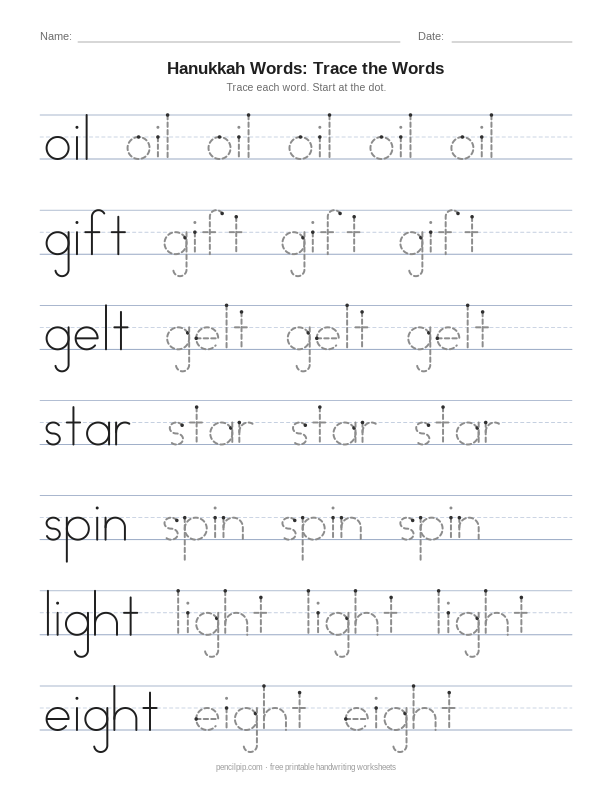
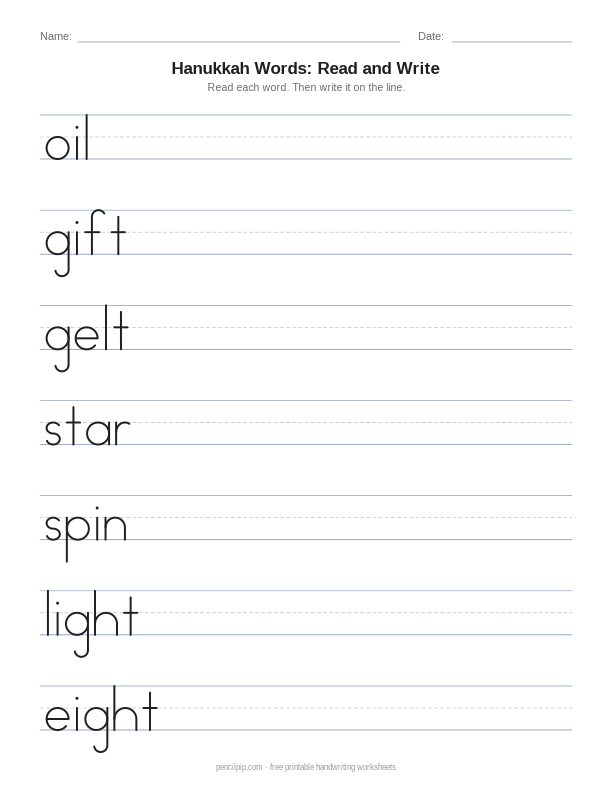
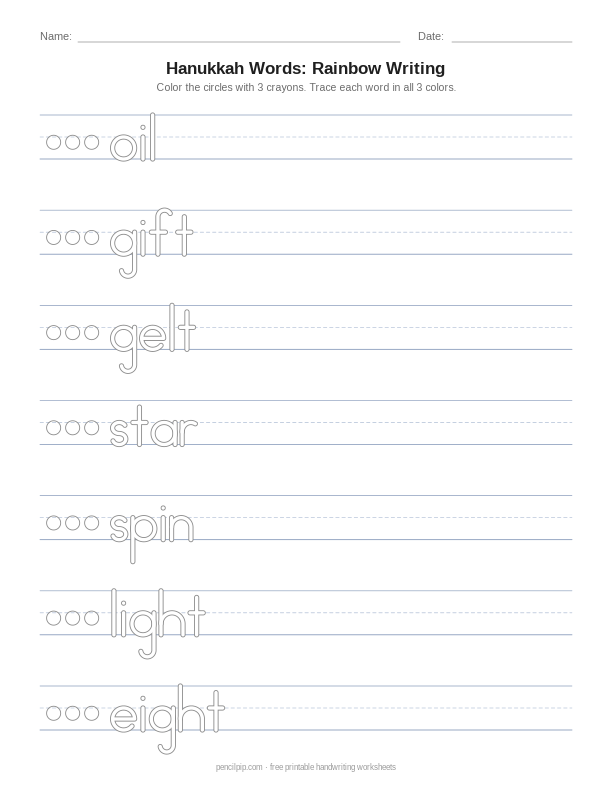
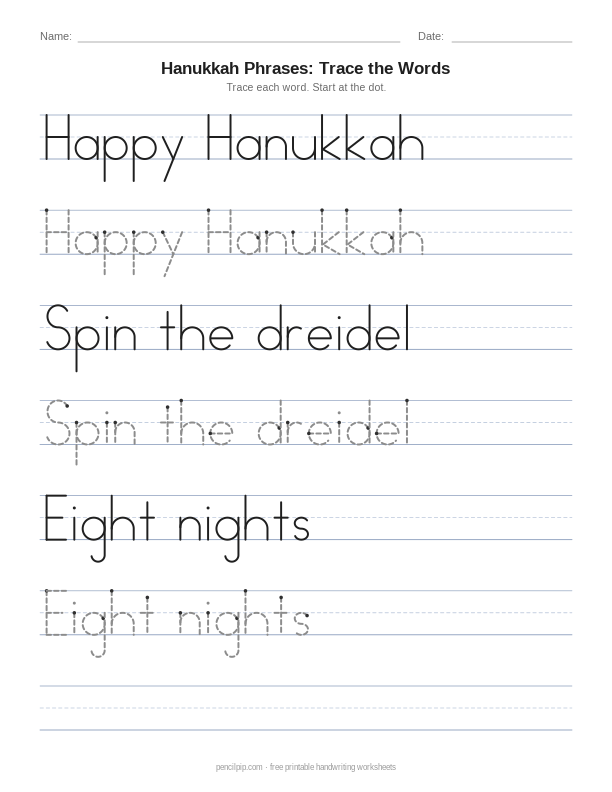
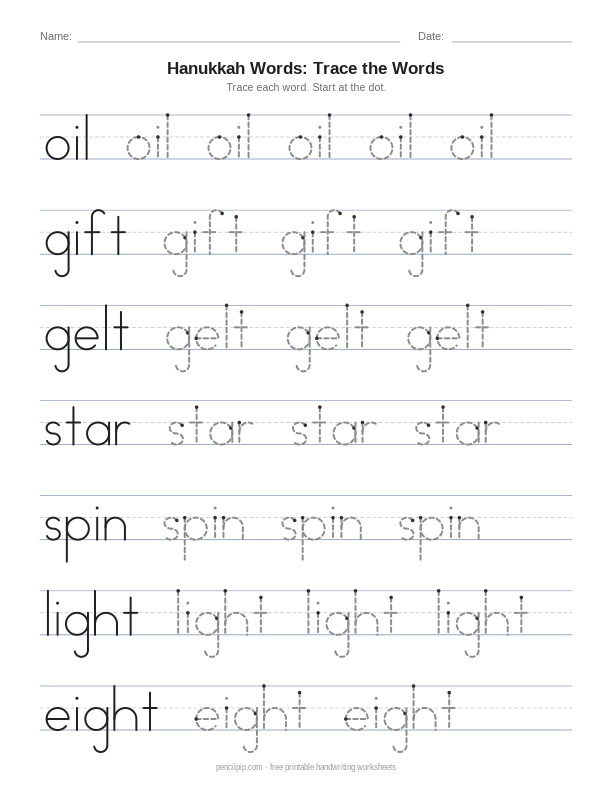
Hanukkah Holidays
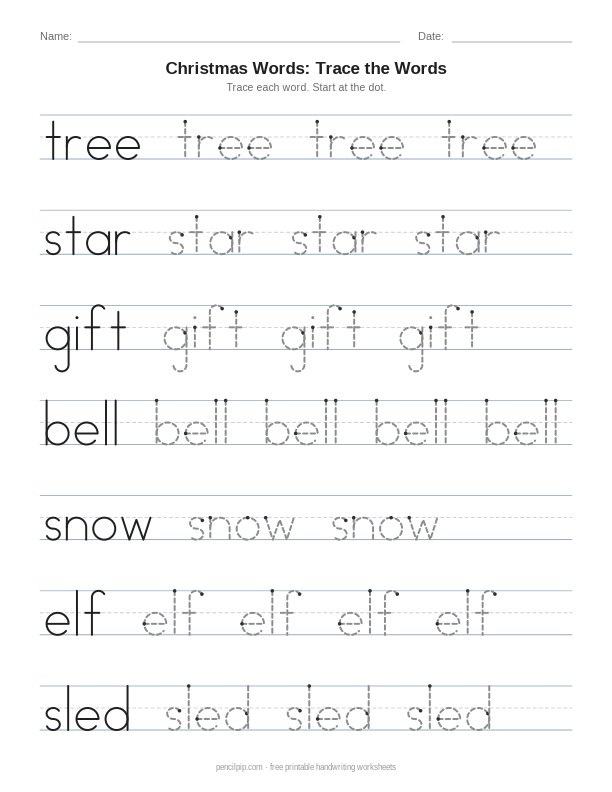
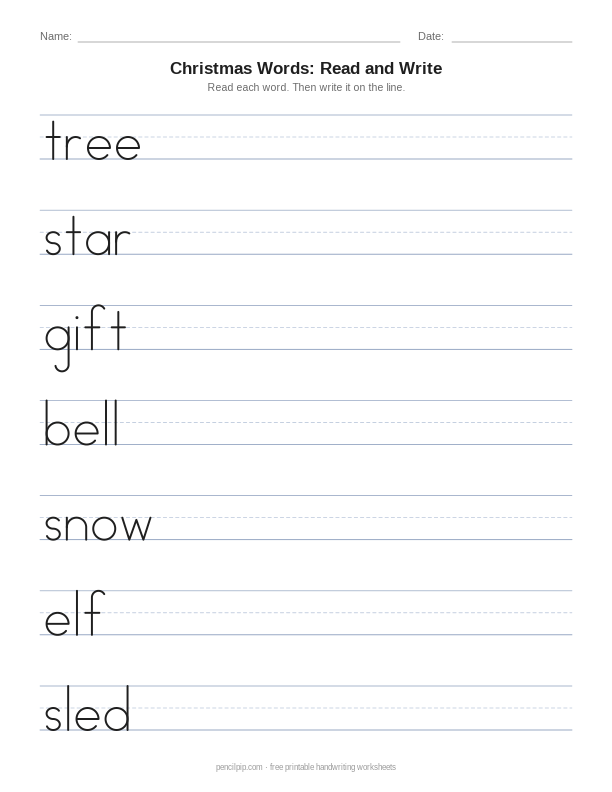
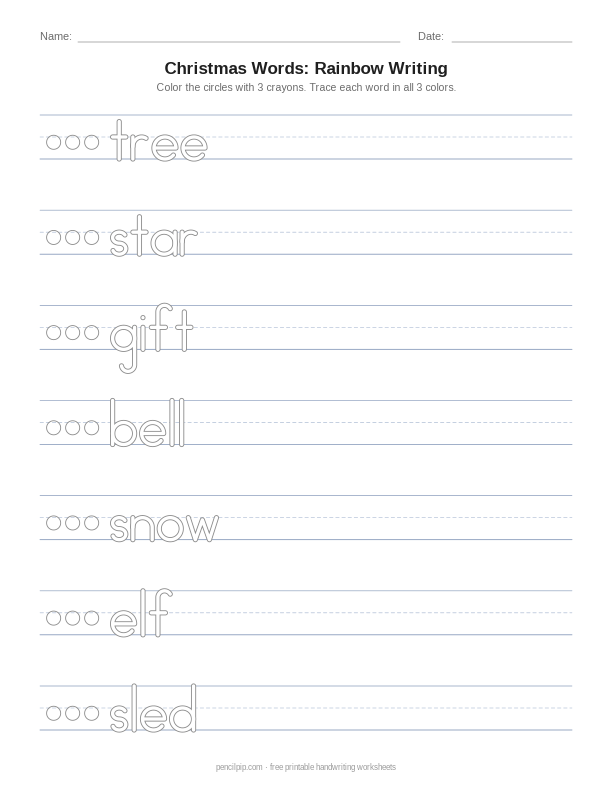
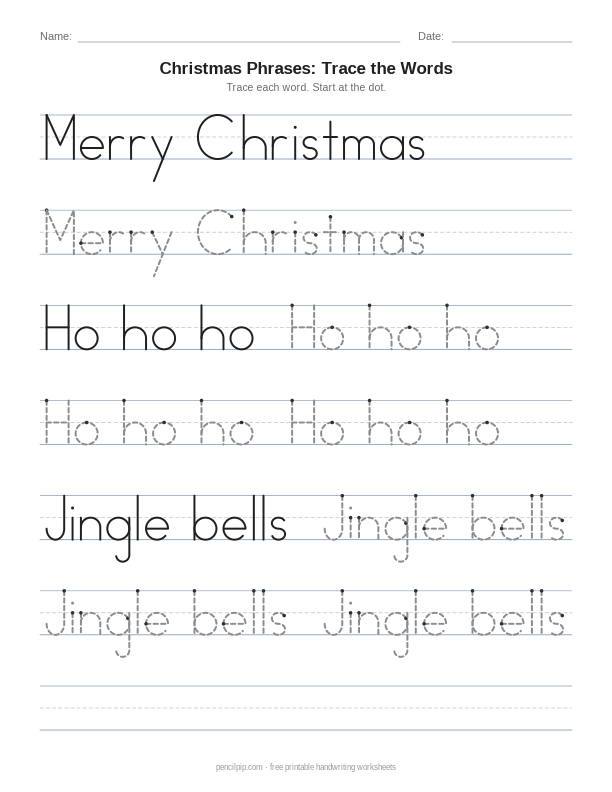
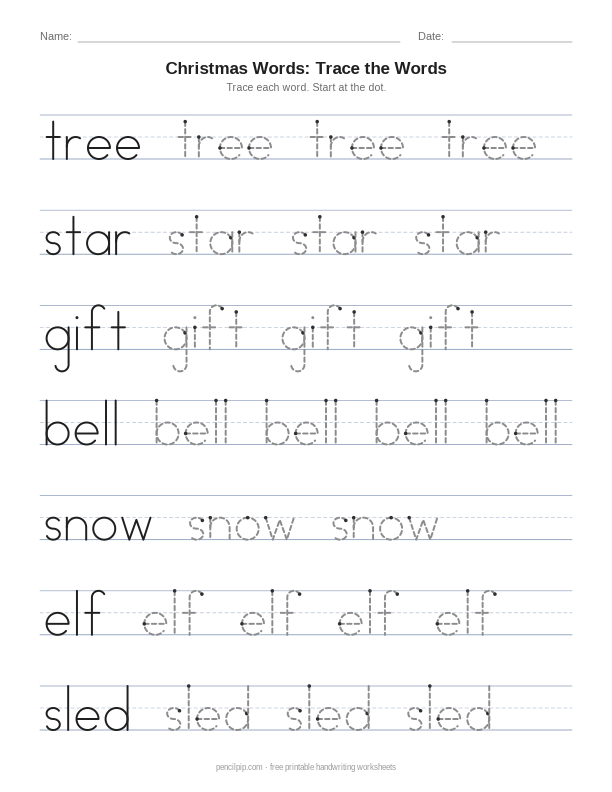
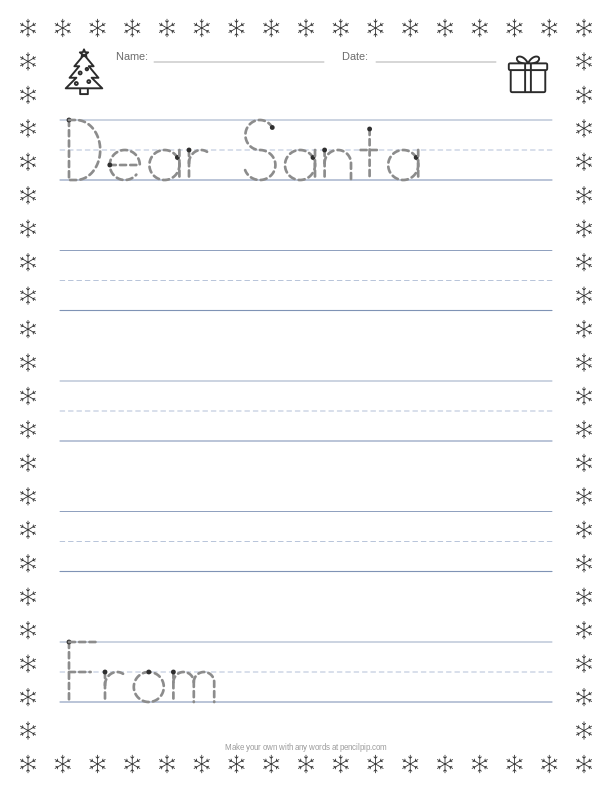
Christmas Holidays
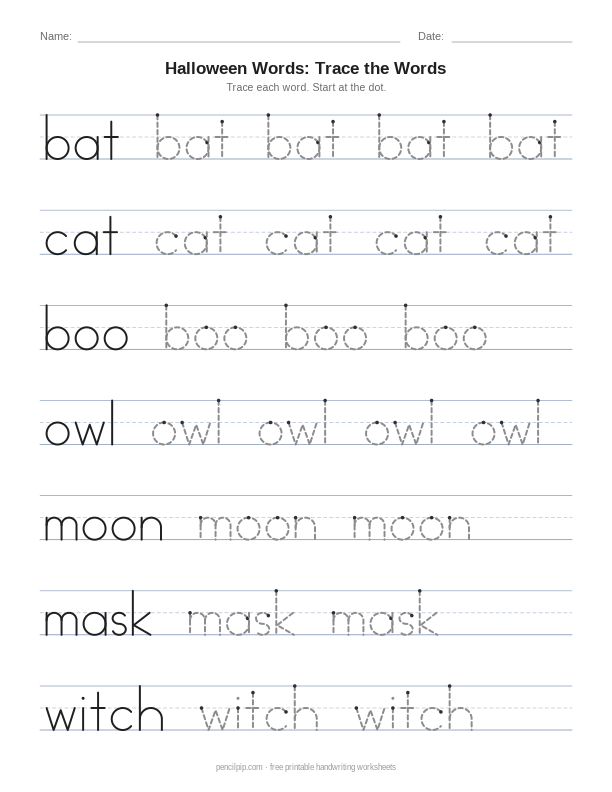
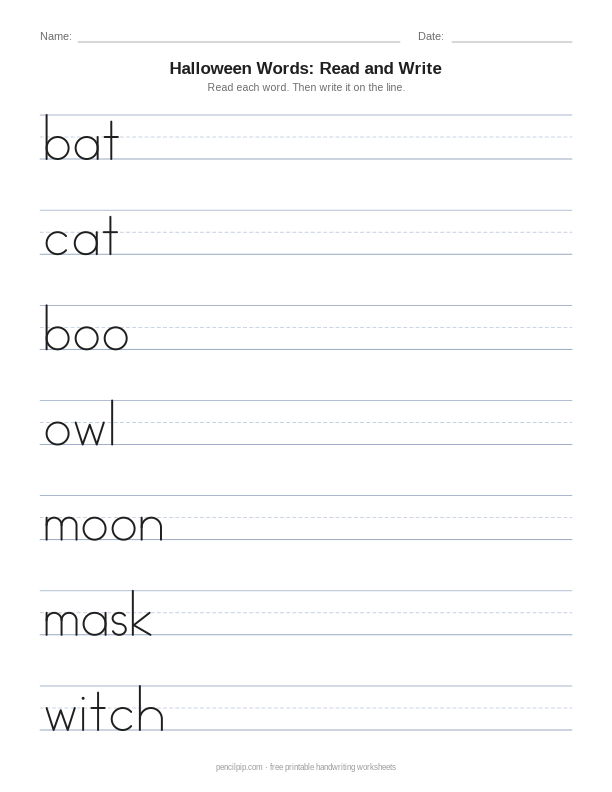
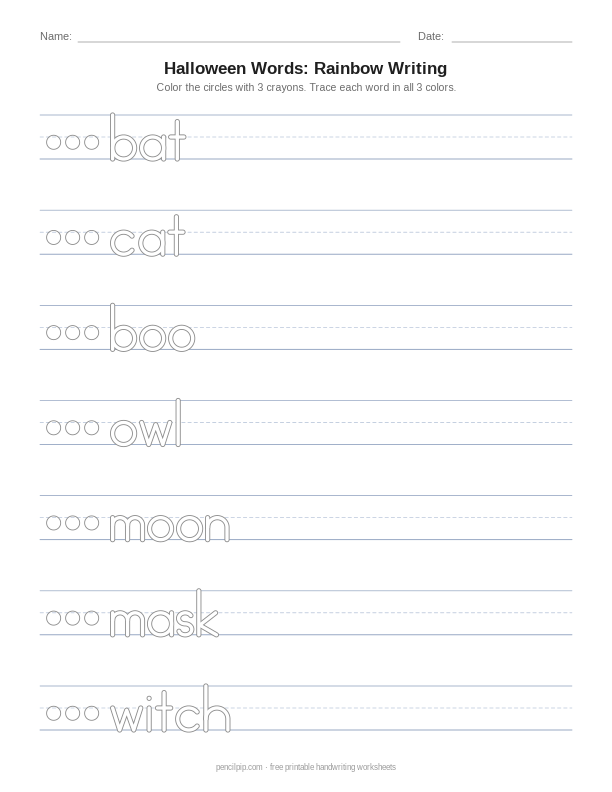
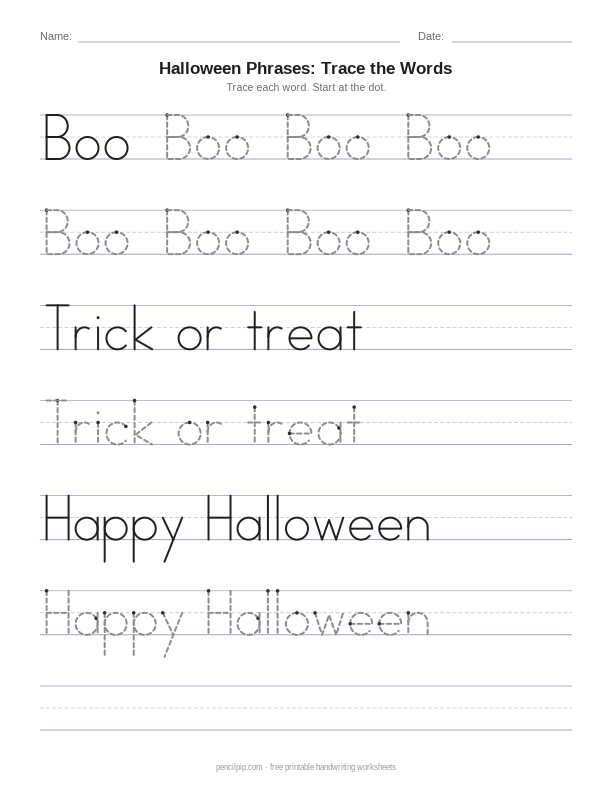
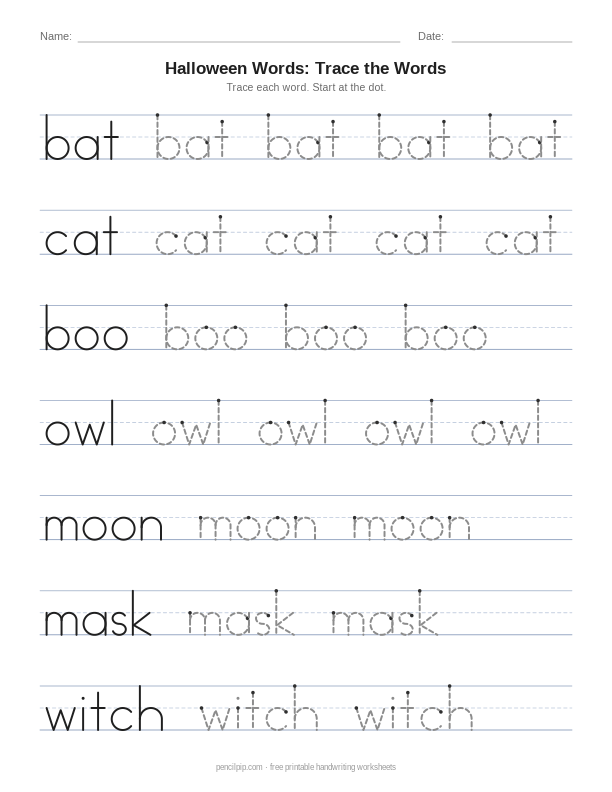
Halloween Holidays
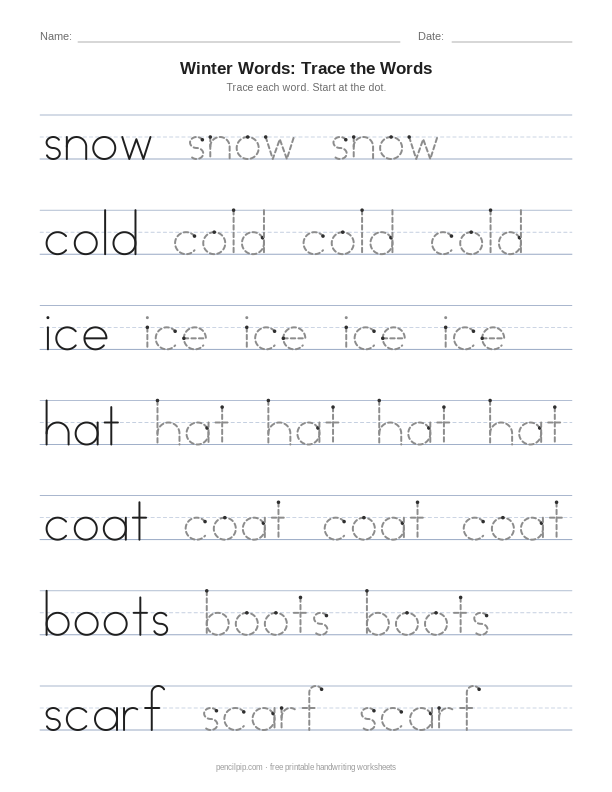
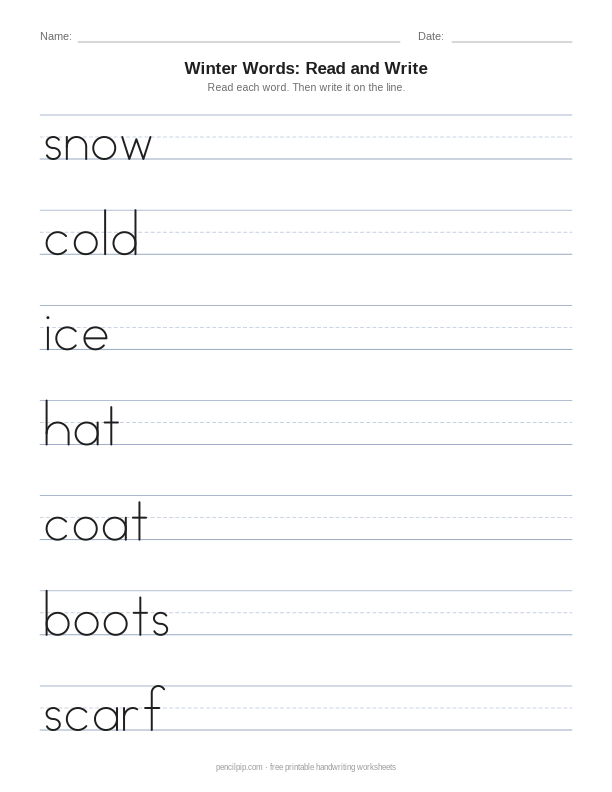
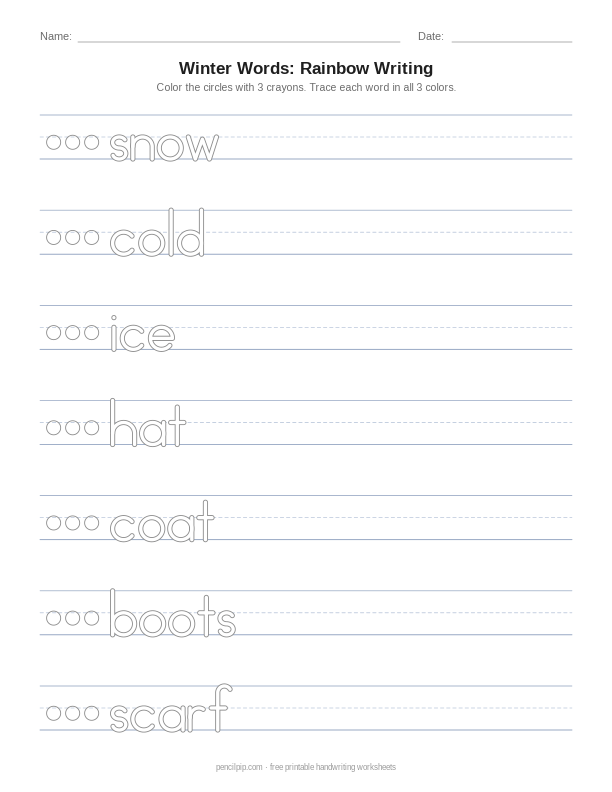
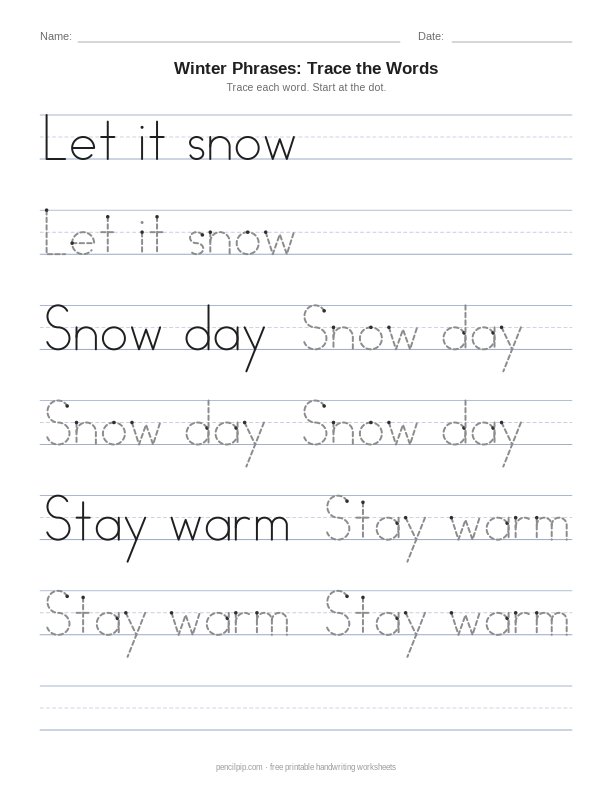
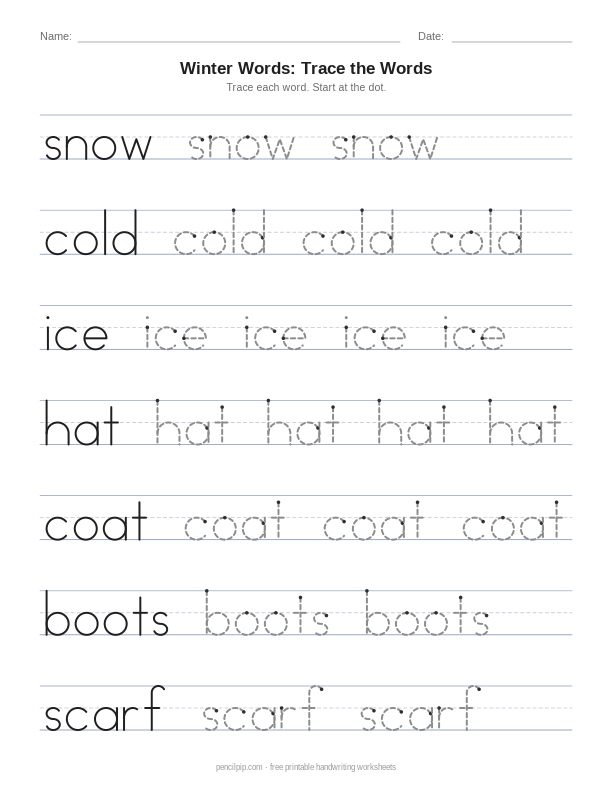
Winter Holidays
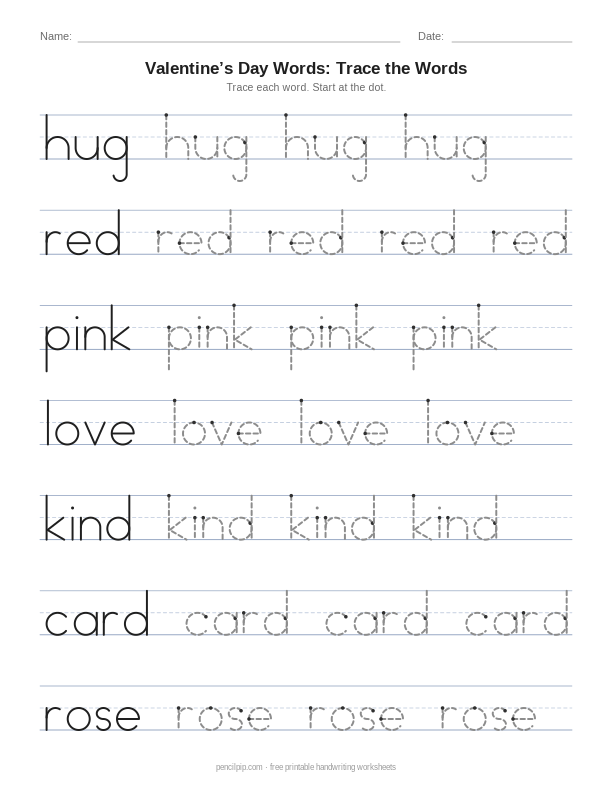
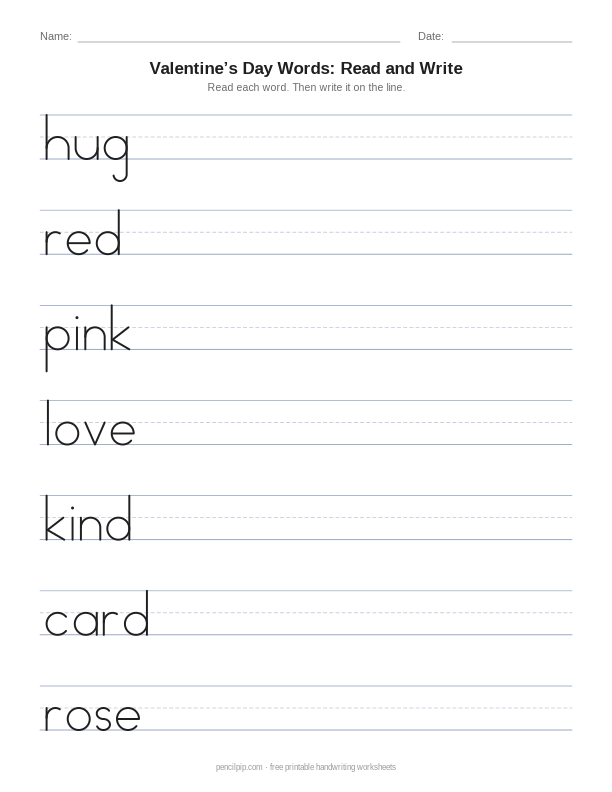
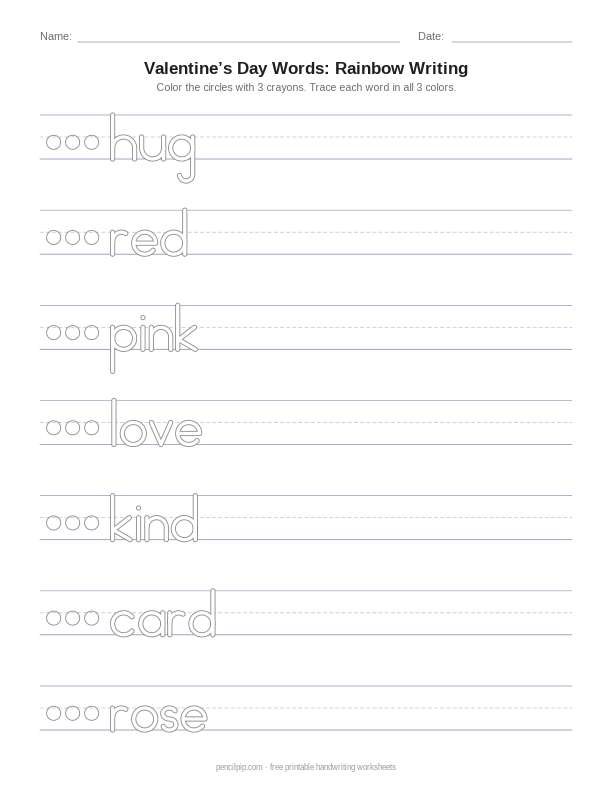
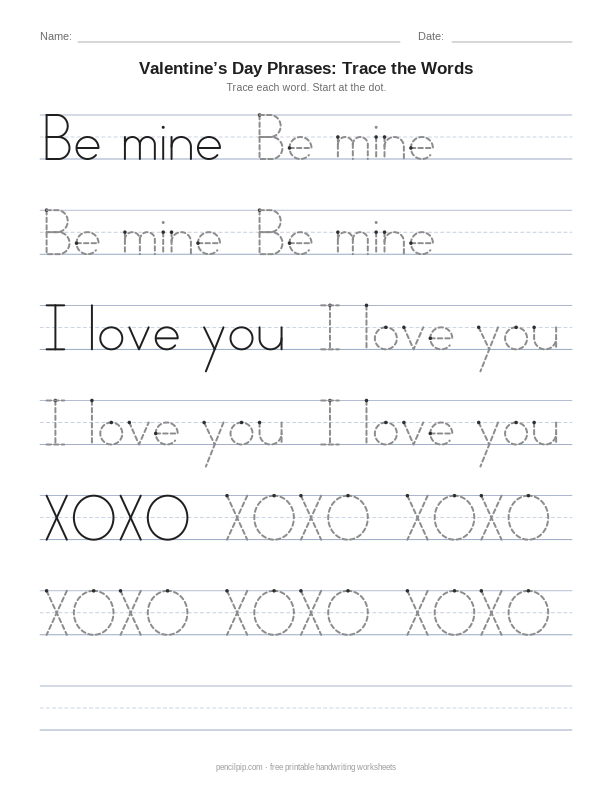
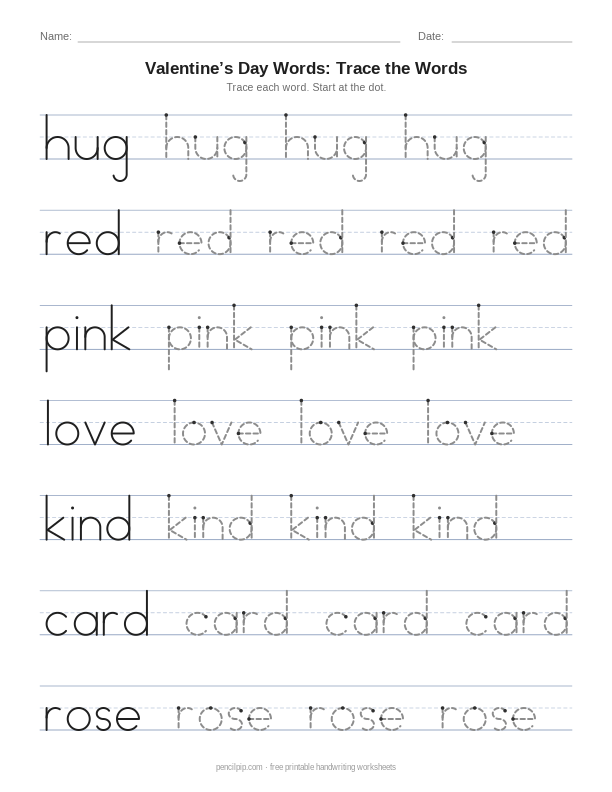
Valentine’s Day Holidays
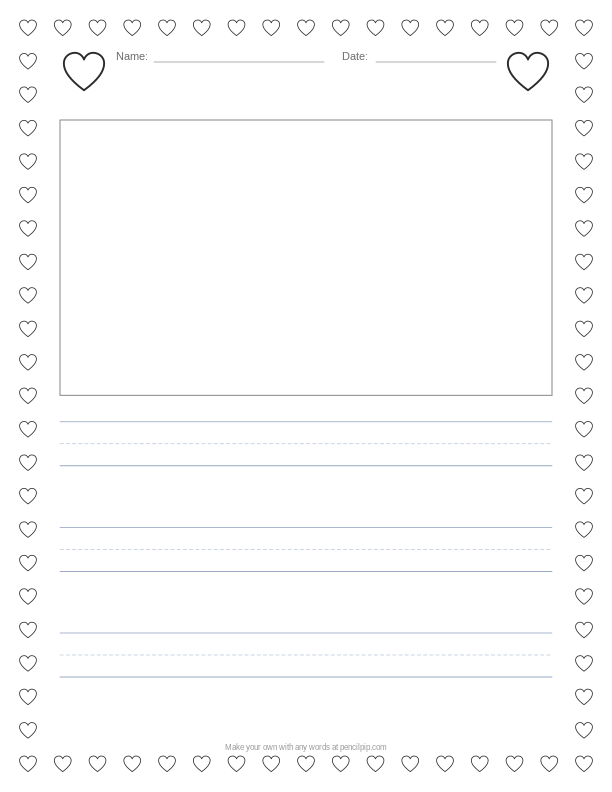
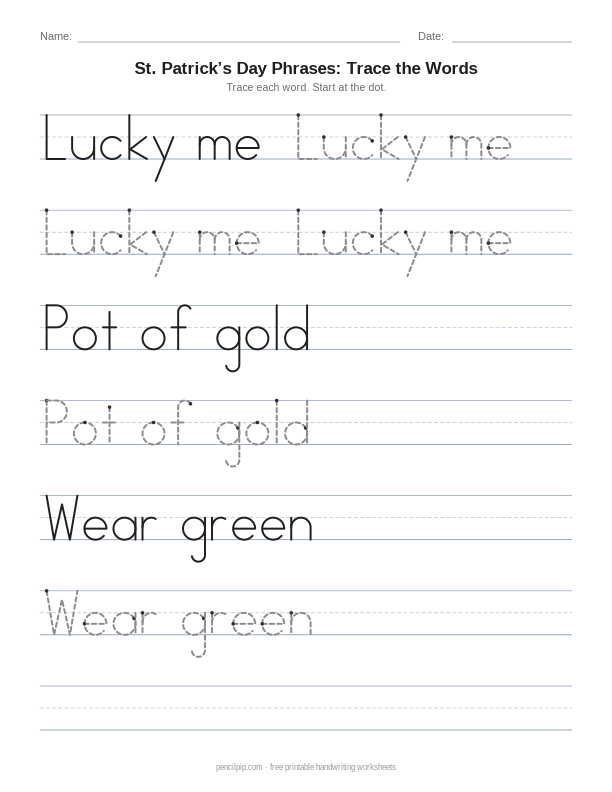
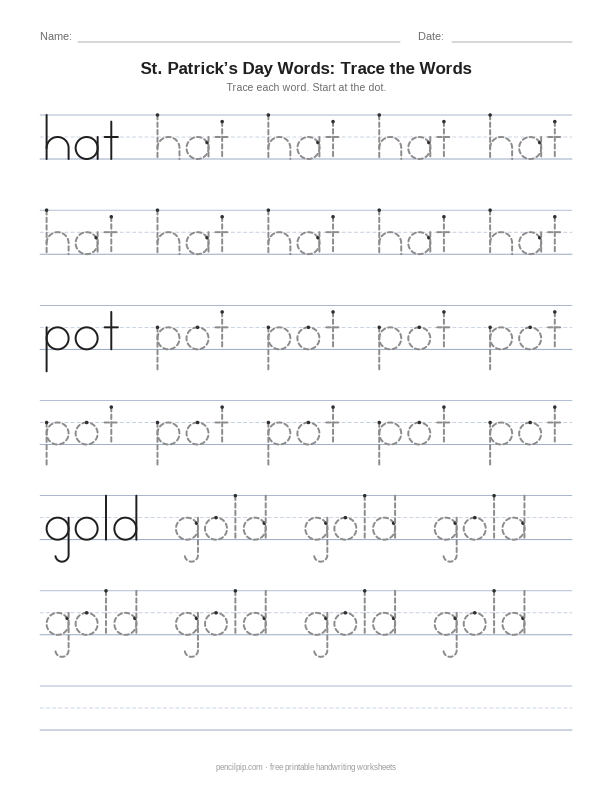
St. Patrick’s Day Holidays
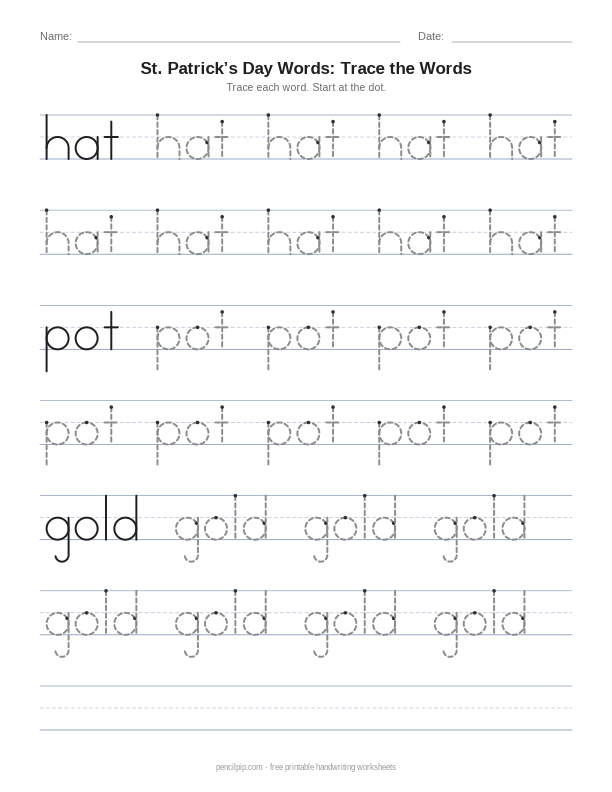
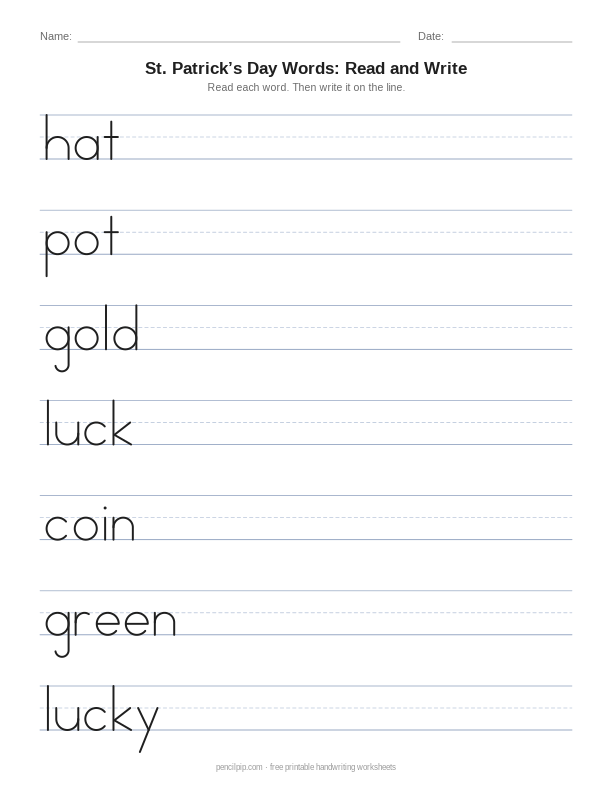
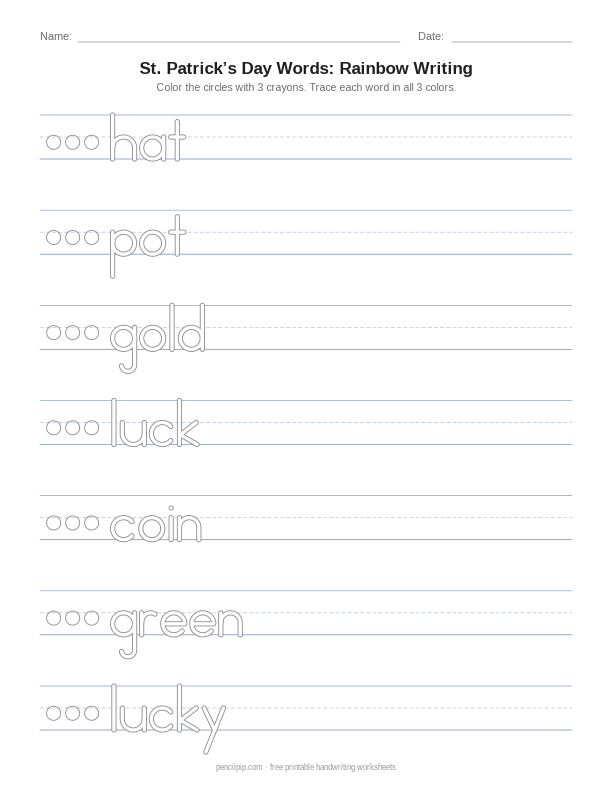
Easter & Spring Holidays
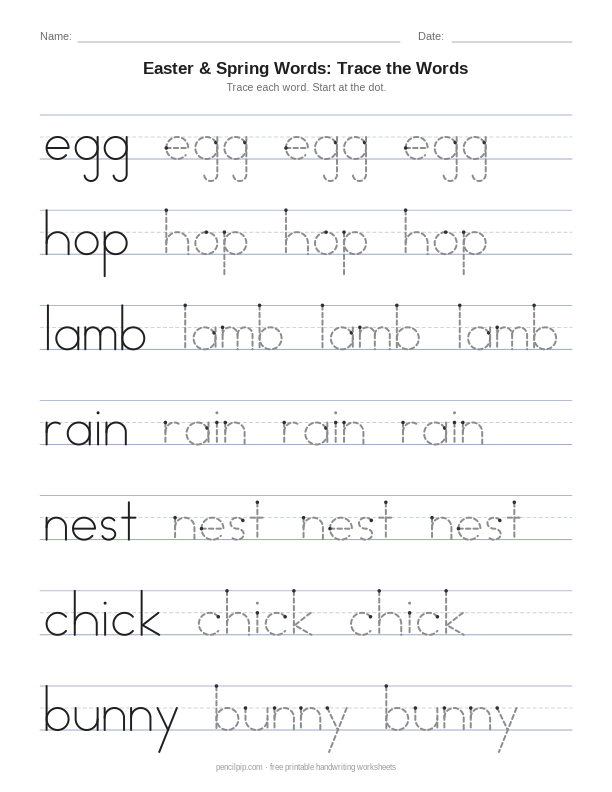
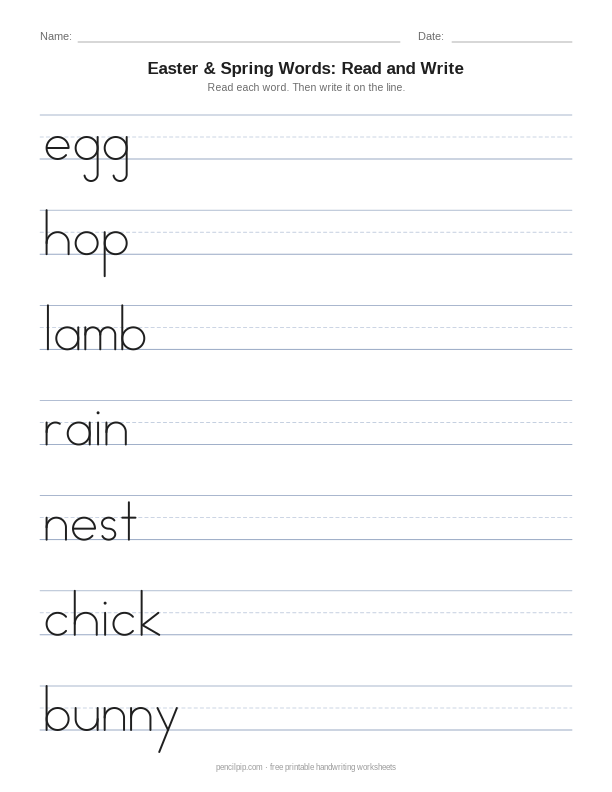
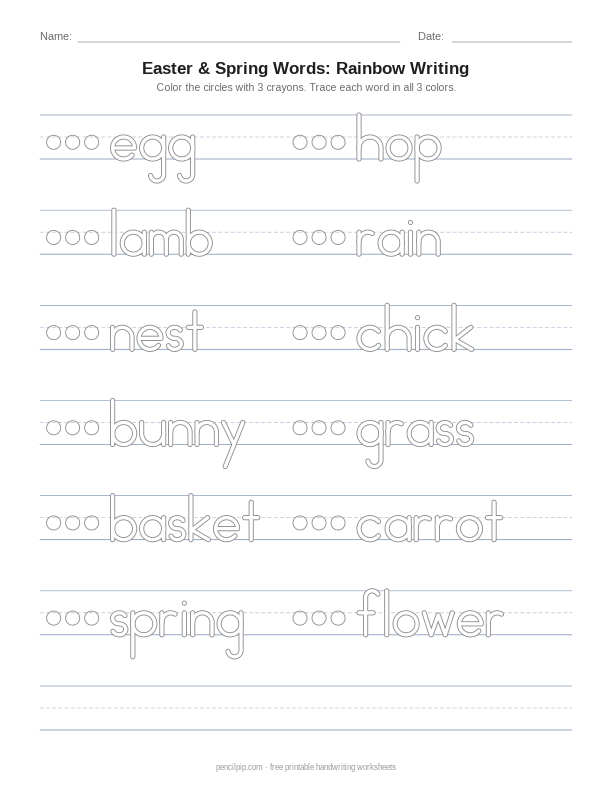
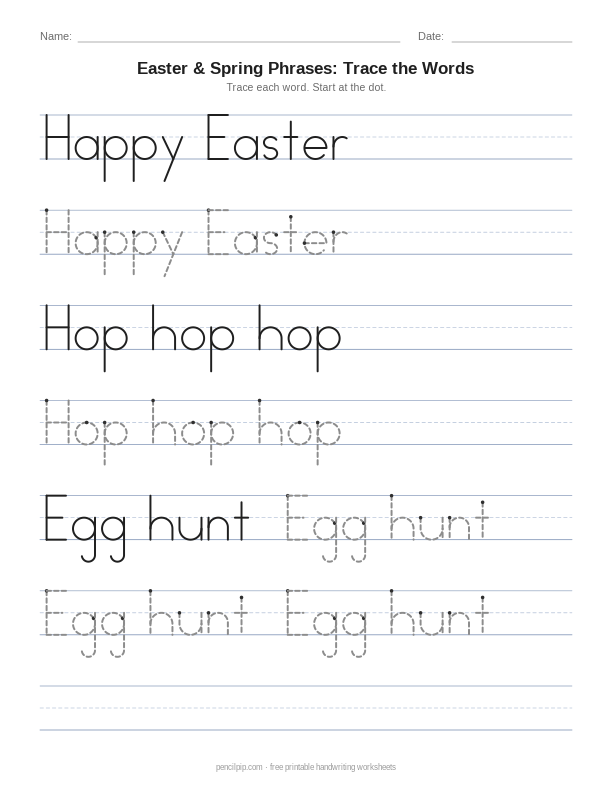
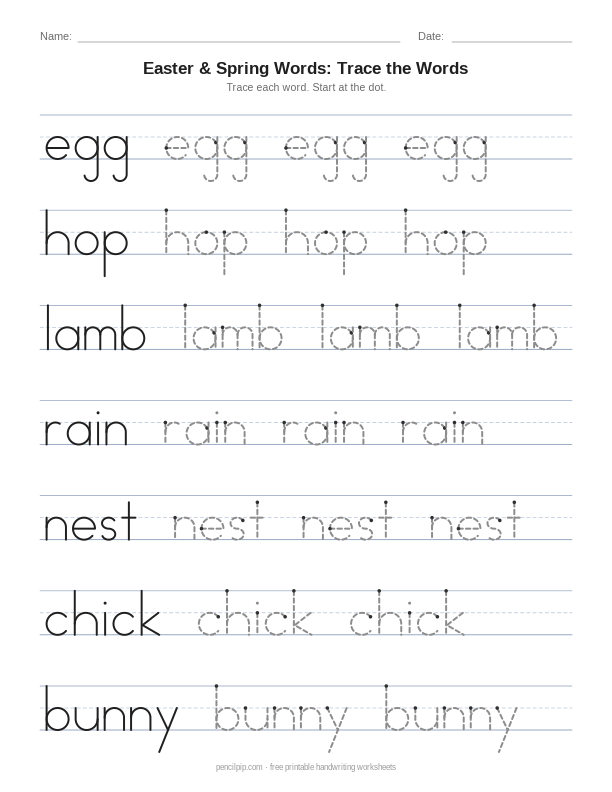
More holiday worksheets:HalloweenThanksgivingChristmasHanukkahWinterValentine’s DaySt. Patrick’s DayEaster & Spring
What writing looks like at ages 3 to 5
Preschool is about getting ready to write more than writing itself. Most three-year-olds can copy a vertical line and a circle; by four many can manage a cross, and by five a square and a triangle. Over the same years, the grip moves from a whole-hand fist toward the fingertips.
Many four- and five-year-olds want to write their own name, and that’s a great place to start with letters. Expect big, wobbly letters and some backwards ones — completely normal at this age.
A gentle weekly routine
Short and frequent beats long and rare. Five to ten minutes, three or four times a week, is plenty. A week might look like this:
- Monday: a line tracing page, such as straight lines or waves.
- Tuesday: a shape page — name the shape, then find one in the room.
- Wednesday: one letter from your child’s name.
- Thursday: a number page, counting real objects first.
- Friday: no worksheet — play dough, painting or chalk drawing instead.
Getting set up
- Sit at a table where your child’s feet rest flat, on the floor or on a box.
- Use chunky crayons, triangular pencils or short, broken crayons, which are easier for small hands to grip.
- Show your child how to hold the page still with the other hand, or tape it down.
- Left-handed children: tilt the top of the paper slightly to the right, and seat them on the left of a right-handed sibling or friend so elbows don’t bump.
Common questions
Does my preschooler need to write letters before kindergarten?
No. Kindergarten teachers expect to teach letter formation. What helps most is arriving with strong hands, a comfortable grip, an interest in drawing and perhaps the ability to write their first name. Line and shape tracing build exactly those skills.
My child won’t sit still for a worksheet. What can I do?
Keep it very short — one row can be enough — and stop while it’s still fun. Let your child choose the crayon color, trace with a finger first, or slip the page into a sheet protector and use a dry-erase marker. Movement and play count as practice too.
How can I tell if my child is left- or right-handed?
Watch which hand your child reaches with for crayons, spoons and toys over several weeks. Many children switch hands until somewhere between ages 4 and 6. Put the crayon in the middle and let them choose rather than steering them toward one hand.