Letter Tracing Worksheets
One page for every letter of the alphabet, each with uppercase and lowercase tracing and a simple word to write. Starting dots show exactly where each letter begins, and every page includes how-to-write tips for grown-ups.
Choose a letter to see its worksheet. Each page has uppercase and lowercase tracing, a word that starts with the letter, and tips on how to form it.
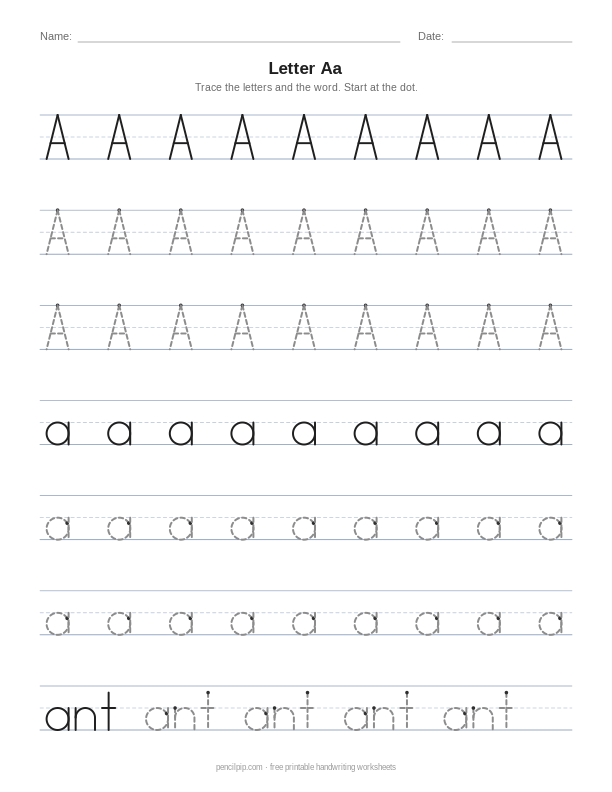
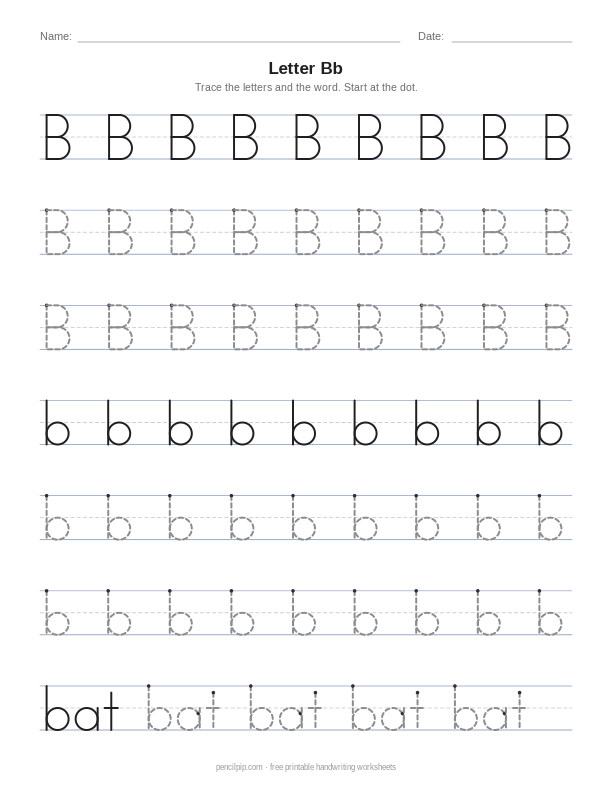
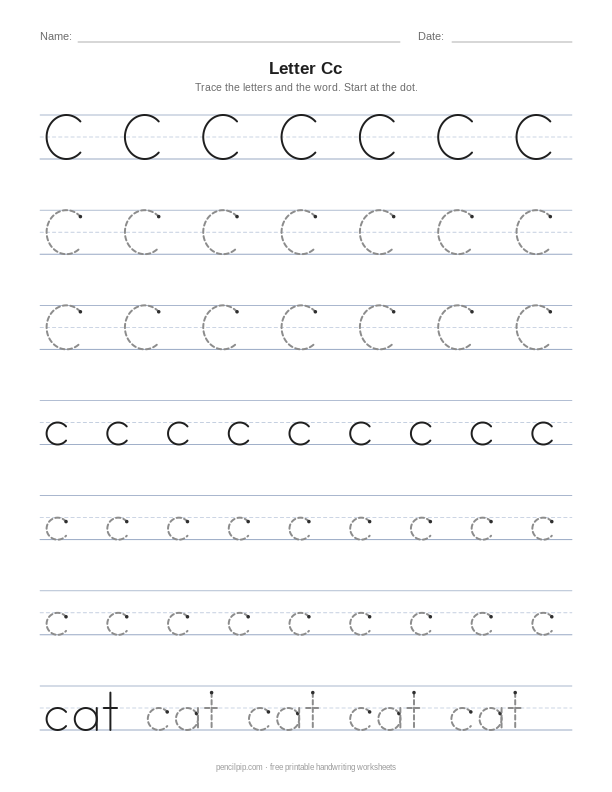
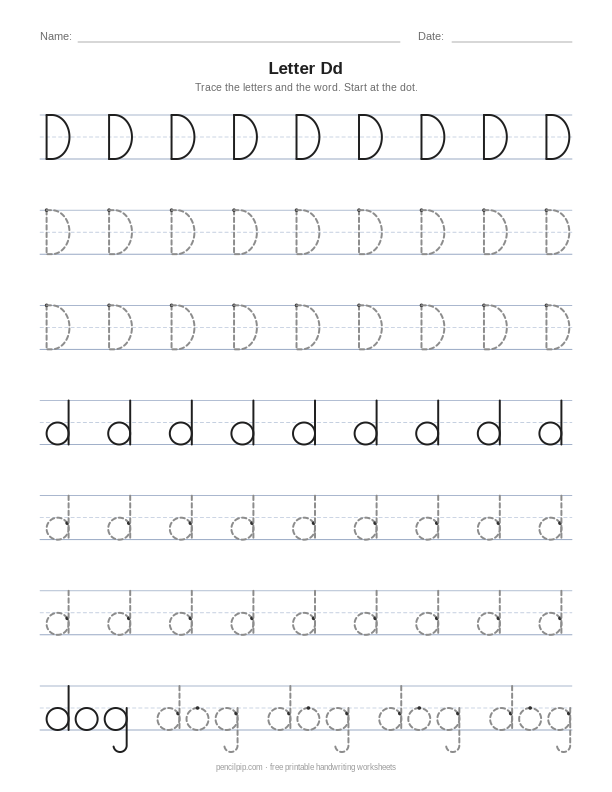
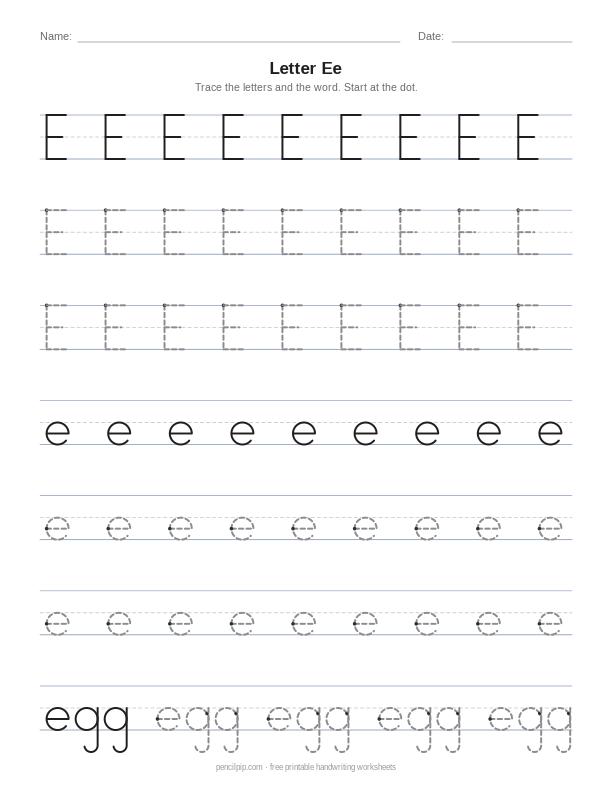
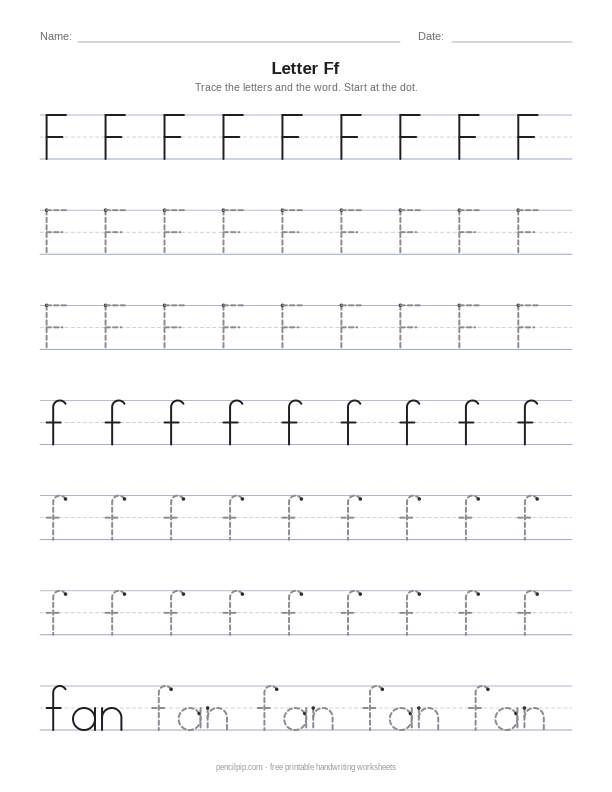
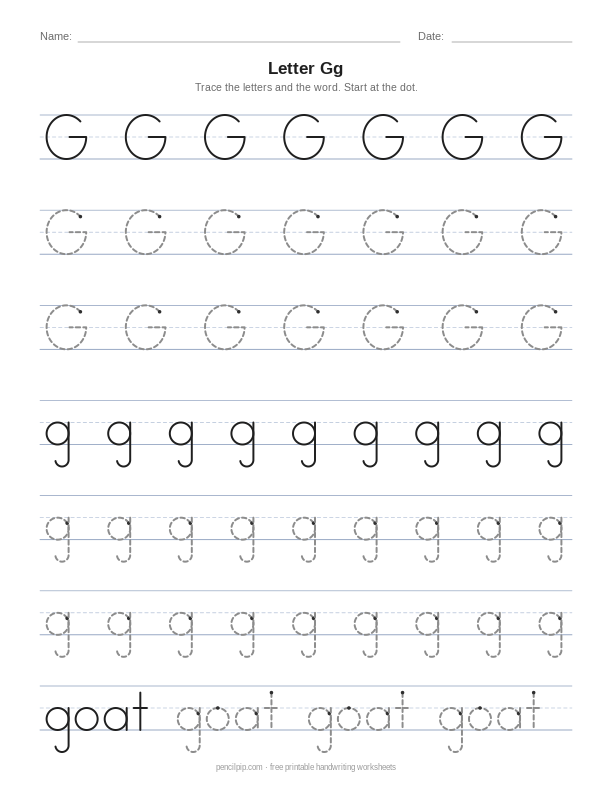
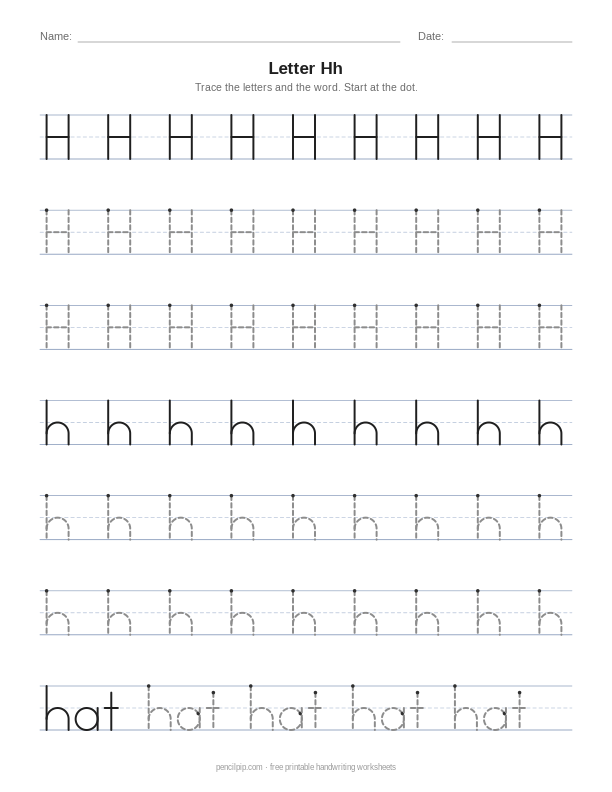
Trace the whole alphabet in order. Great for review once children know most of their letters.
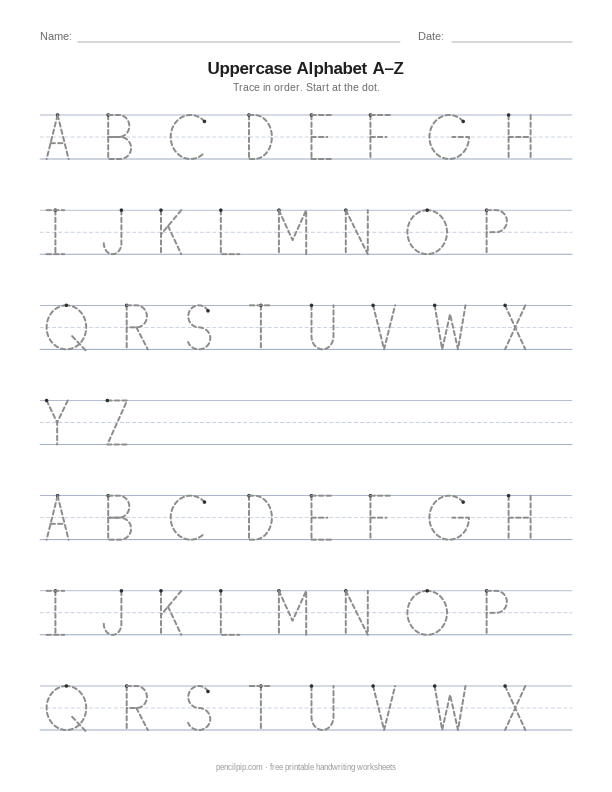
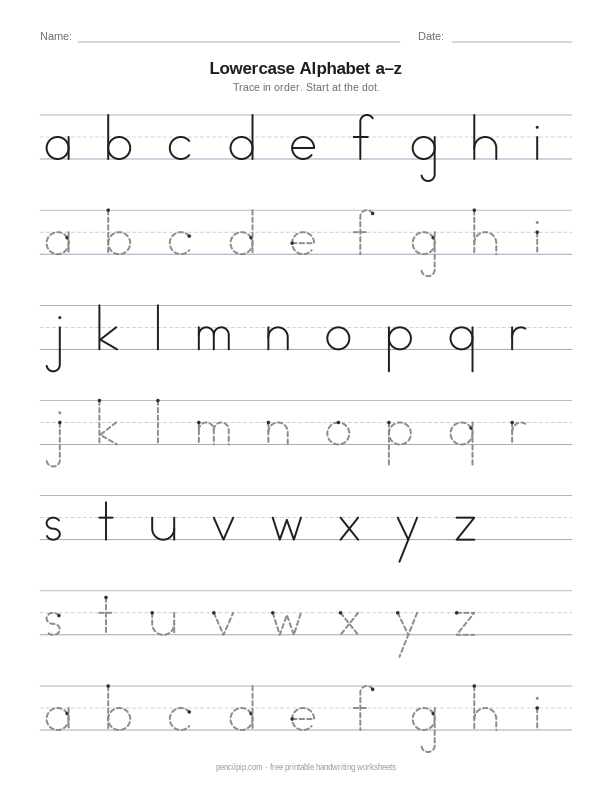
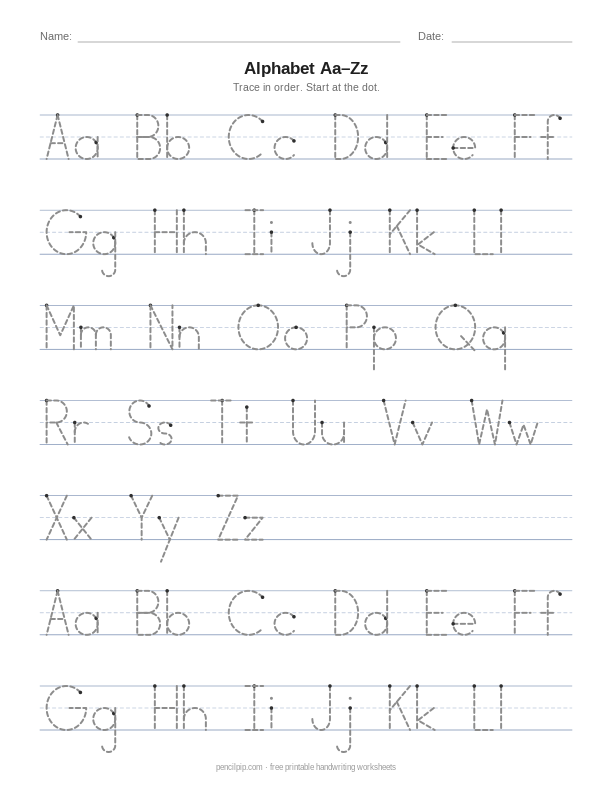
How each letter page works
Every letter page follows the same pattern, so children quickly learn what to do: a solid example with dots and arrows to look at, uppercase and lowercase letters to trace, a simple word that starts with the letter, then lines where children cover the examples with a hand and write on their own with only the starting dots left. Each worksheet page also has a step-by-step stroke guide showing where to start and which way to go.
Use the A–Z pages to introduce or practice one letter at a time. The full alphabet pages are for review once most letters are familiar.
Teach letters in stroke families, not A to Z
Alphabetical order is easy to remember, but it isn’t the easiest order to write. Start with the letters in your child’s name, then group the rest by the movements used to make them:
- Straight-line letters: l, i and t, then capitals such as L, T, E, F, H and I.
- Round letters that start like c: c, o, a, d, g and q. Start near the top and curve back around to the left.
- Bump letters that go down, back up and over: r, n, m, h and b.
- Slanted letters: v, w, x, y, k and z, plus capitals such as A, V, W, M and N.
Common mix-ups and how to help
- b and d: they are mirror images, so the shape alone doesn’t help. Teach the starting move instead — b starts with a tall line down, while d starts with a c curve, just like a and o.
- p and q: p starts with a line down below the baseline, q starts with a c curve.
- Starting at the bottom: if a letter is built from the bottom up, guide your child back to the starting dot. Top-down habits make writing faster and neater later.
- Capitals in the middle of words: many children mix uppercase letters into words. Point out that capital letters are for the start of names and sentences.
Common questions
Is it normal for children to write letters backwards?
Yes. Reversing letters such as b, d, s and j is very common up to about age 7, as children learn that direction matters for letters in a way it doesn’t for everyday objects. Consistent practice with the correct starting point helps most. If reversals continue well into 2nd grade, mention it to your child’s teacher.
Should my child learn print or cursive first?
Most US schools teach print (manuscript) letters first, in kindergarten and 1st grade, and introduce cursive later — often in 2nd or 3rd grade, if it is taught at all. These worksheets use simple upright print letters, the style most children learn first.
By when should children be able to write every letter?
Under the Common Core standards used in many US states, children should print many uppercase and lowercase letters by the end of kindergarten and all of them by the end of 1st grade. A few minutes of practice on most days works better than long sessions.