Number Tracing Worksheets
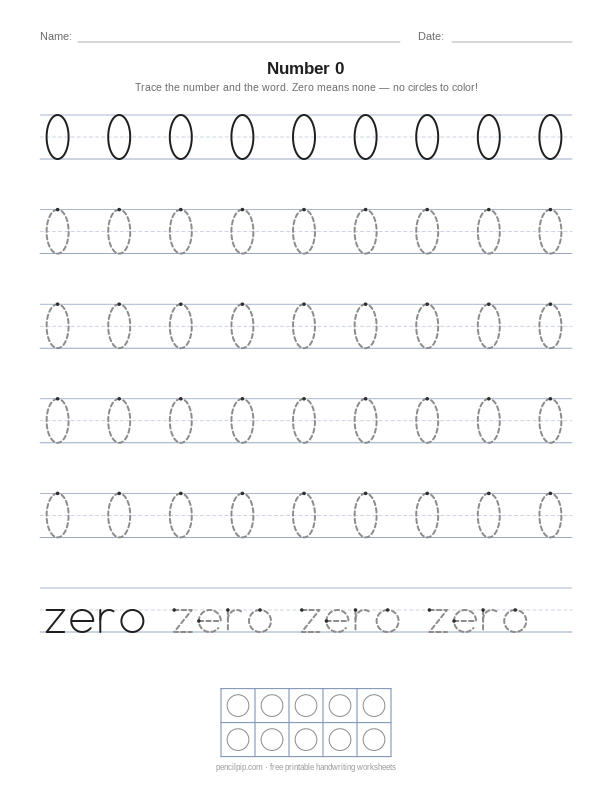
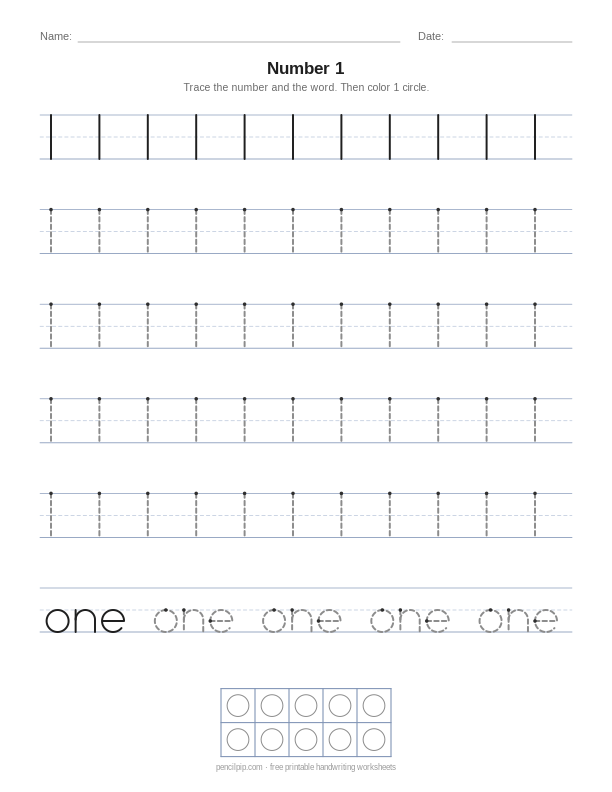
Each number page combines three skills: writing the numeral, writing the number word, and counting objects in a ten frame. Together they connect what a number looks like, how it’s spelled and how many it means.
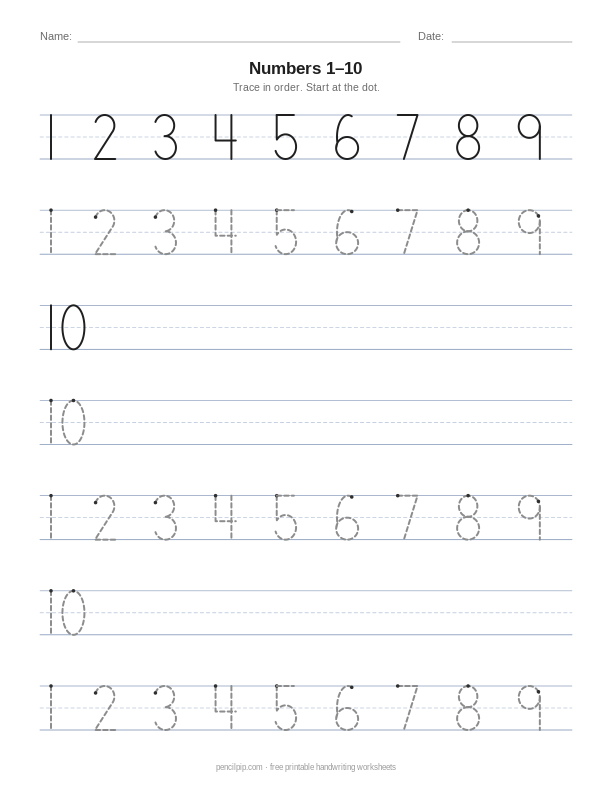
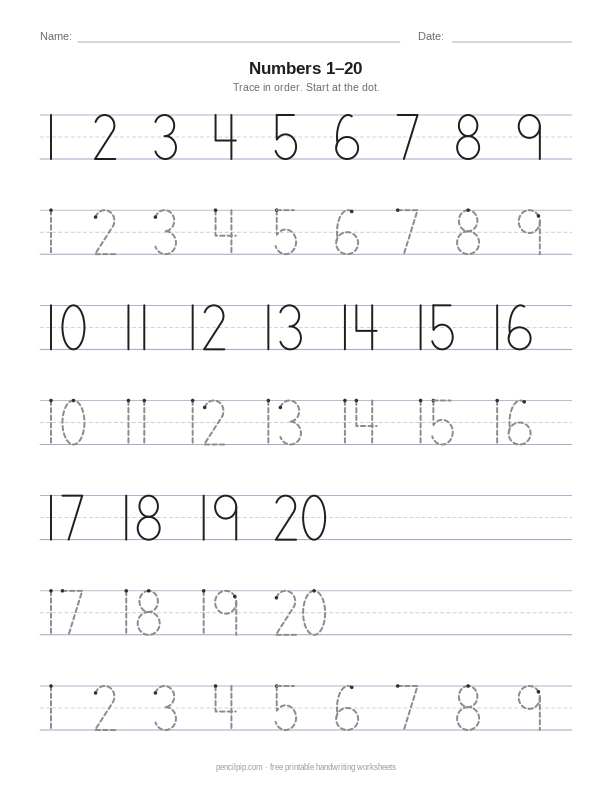
Pick a number to see its worksheet, or practice the whole sequence with the 1–10 and 1–20 pages.
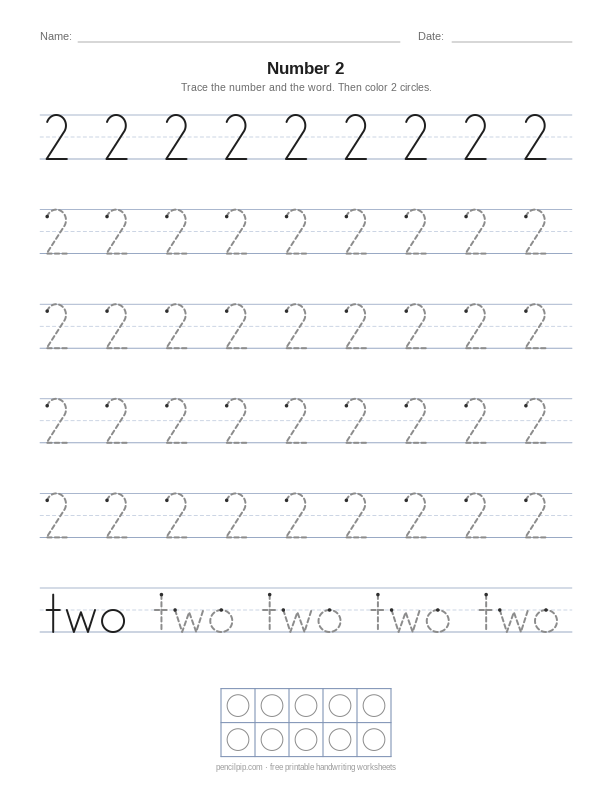
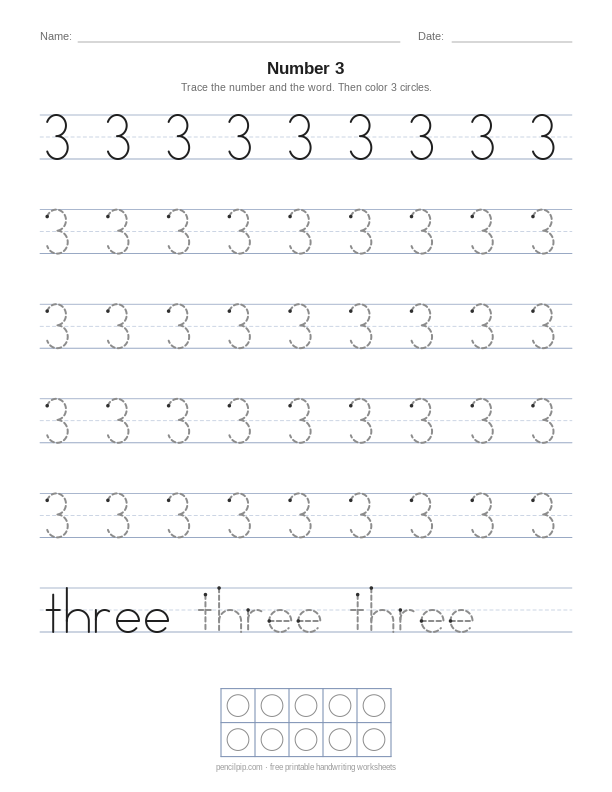
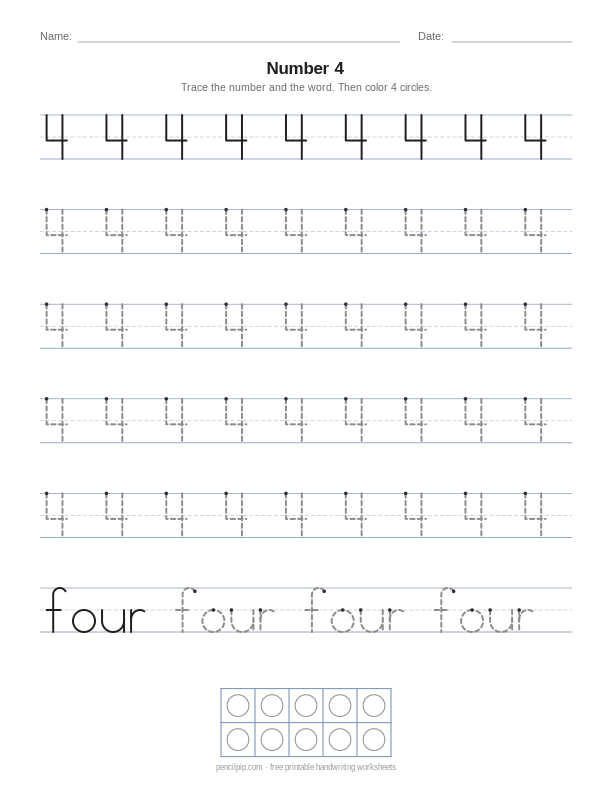
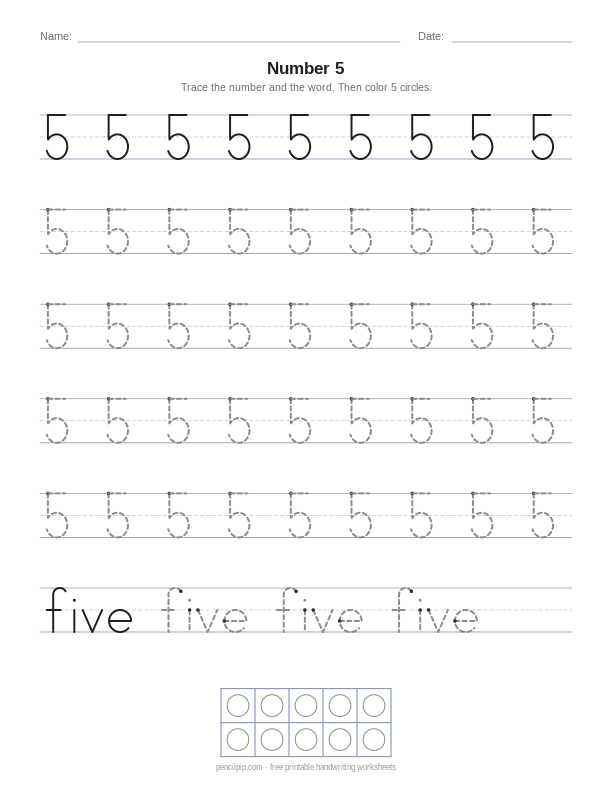
Match each number to its word and practice spelling it. A natural next step after number tracing.
What’s on each number page
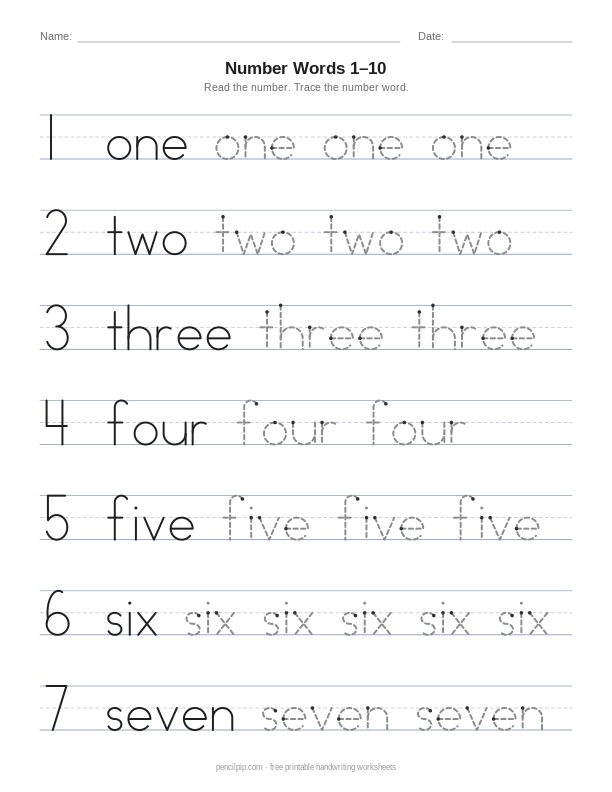
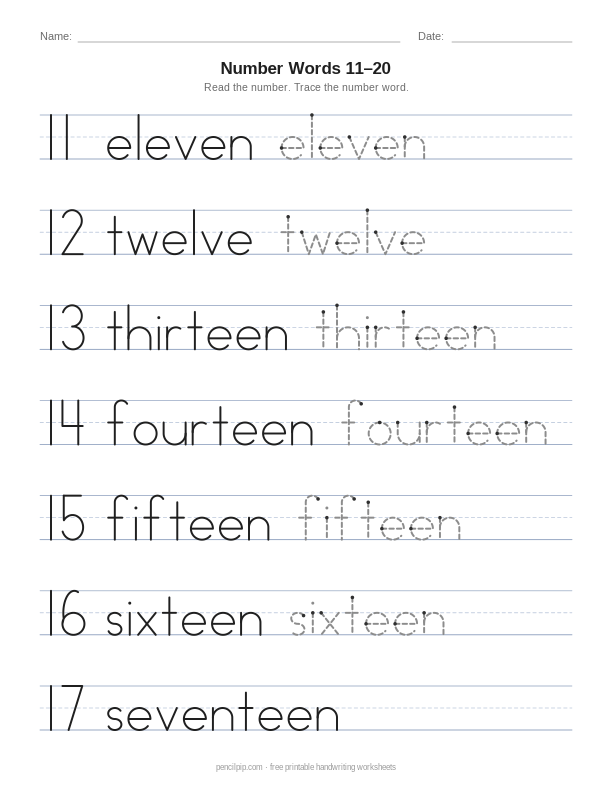
Each number from 0 to 20 has its own page with three parts: trace the numeral, trace its number word, then color the right number of circles in a ten frame. Writing, spelling and counting the same number connects the symbol 7, the word seven and an actual group of seven things.
The 1–10 and 1–20 pages practice the whole sequence and make a good daily warm-up. The number words pages focus on spelling one to twenty.
A suggested order
- 1 to 5: count real objects before writing each number.
- 6 to 10: use the ten frame to see each number as “five and some more.”
- Zero: introduce it once 1 to 10 are familiar, as the number for “none.”
- 11 to 20: point out that each teen number is one full ten and some ones.
- Number words: one to ten first, then eleven to twenty.
Why children write 31 for 13
We say most teen numbers “backwards”: in thirteen you hear the 3 first, but you write the 1 first. The same happens with 14 to 19, so writing 31 for 13 or 71 for 17 is a very common mistake. Point out that every teen number starts with a 1 for one ten, and say “one ten and three” while writing 13. The ten frames on the 11–20 pages show the same idea: one full frame, then some more.
Common questions
When should children be able to write numbers to 20?
Under the Common Core standards used in many US states, kindergarteners learn to write numbers from 0 to 20 and to write a number to show how many objects there are. Many preschoolers can already write a few numbers, especially their own age.
Which numbers are the hardest to write?
Numbers with curves that change direction, such as 2, 3 and 5, usually take the most practice, and 2, 3, 5, 7 and 9 are often written backwards at first. 8 is tricky because its two loops have to sit neatly on top of each other. The stroke guide on each number page shows where to start and which way to go.
How can we practice counting away from the page?
Count during everyday routines: stairs, grapes on a plate, red cars on the way to school. Ask “how many?” and then “how do we write that number?” Showing a small number of fingers or dots and asking your child to name it without counting one by one builds number sense too.