Sight Word Worksheets
Sight words, also called high-frequency words, are the words children meet most often in books, like the, and, said and was. Each worksheet practices a small set of words three ways: trace them, write them from memory with look, say, cover, write, check, then rainbow-write them. Using your school’s own list? Make worksheets from it with the spelling worksheet maker.
The 40 Dolch pre-primer words are the first sight words most children learn, usually in preschool or early kindergarten. They are split into 8 sets of 5 words — about one set a week.
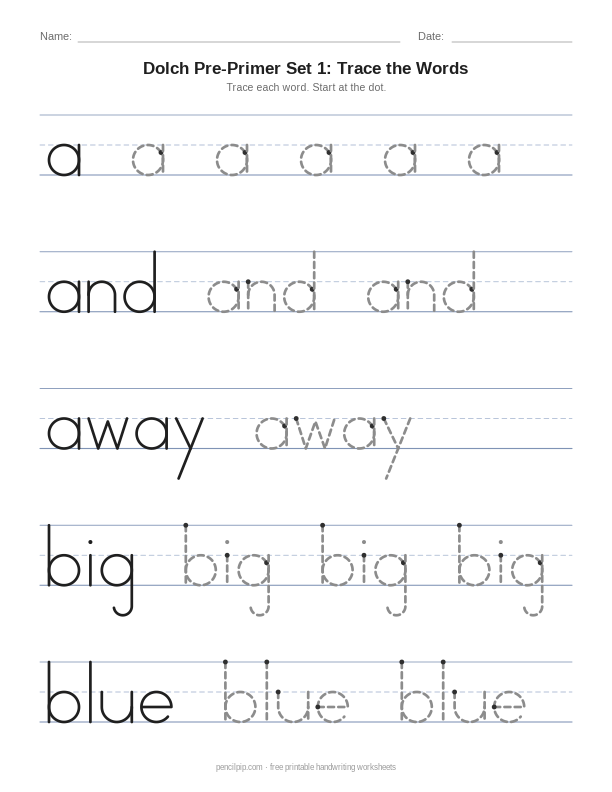 3 pagesDolch Pre-Primer Sight Words Set 1a, and, away, big, blue
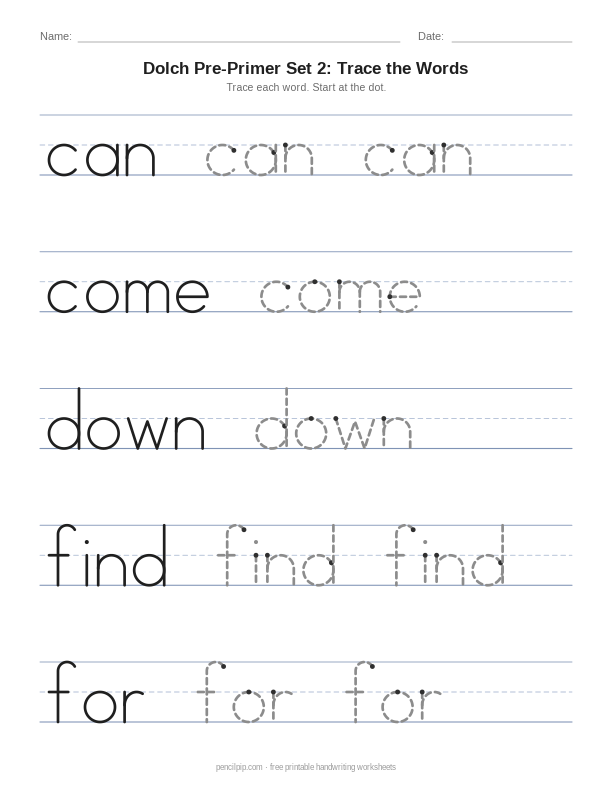 3 pagesDolch Pre-Primer Sight Words Set 2can, come, down, find, for
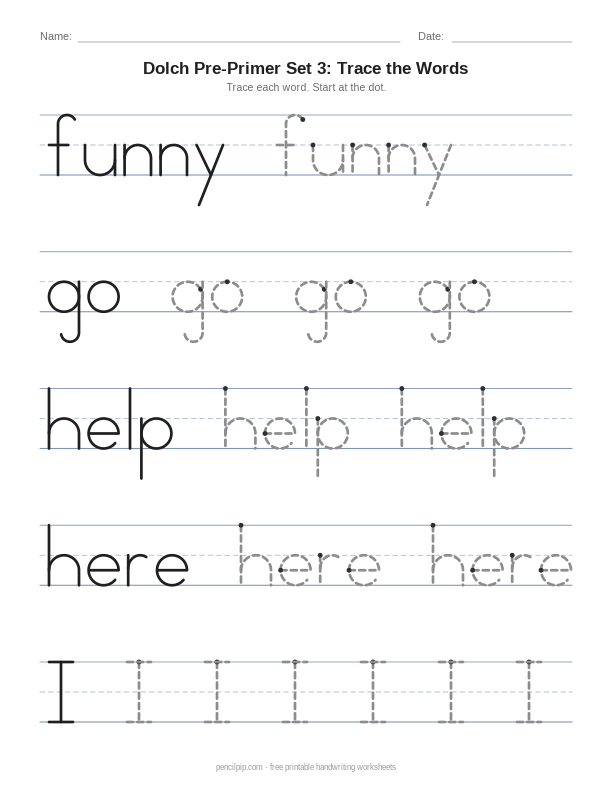 3 pagesDolch Pre-Primer Sight Words Set 3funny, go, help, here, I
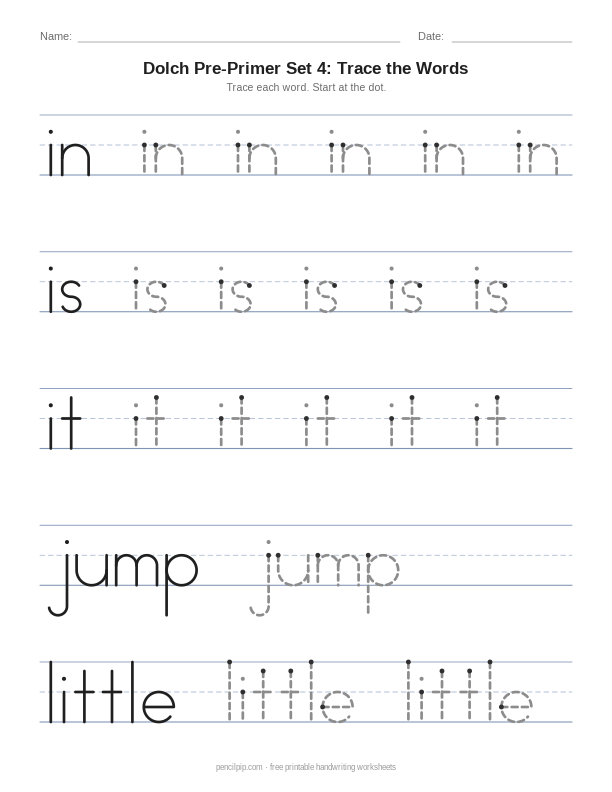 3 pagesDolch Pre-Primer Sight Words Set 4in, is, it, jump, little
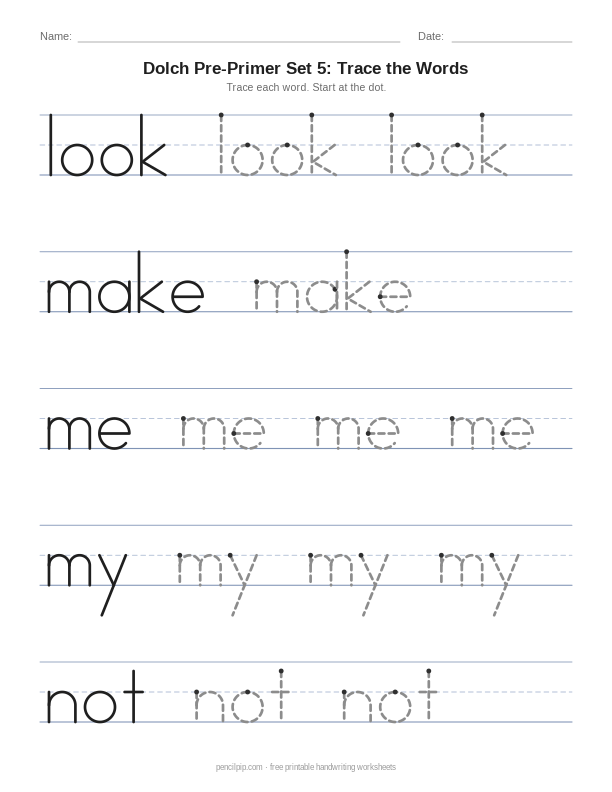 3 pagesDolch Pre-Primer Sight Words Set 5look, make, me, my, not
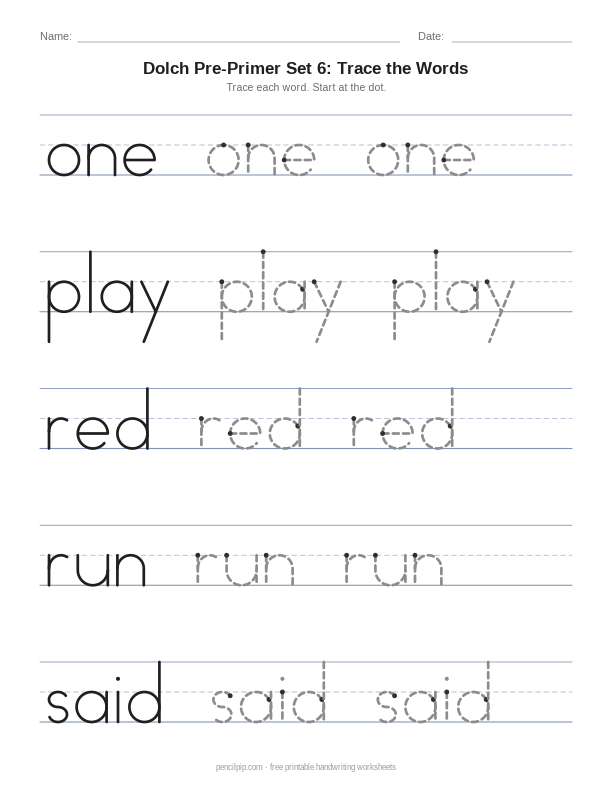 3 pagesDolch Pre-Primer Sight Words Set 6one, play, red, run, said
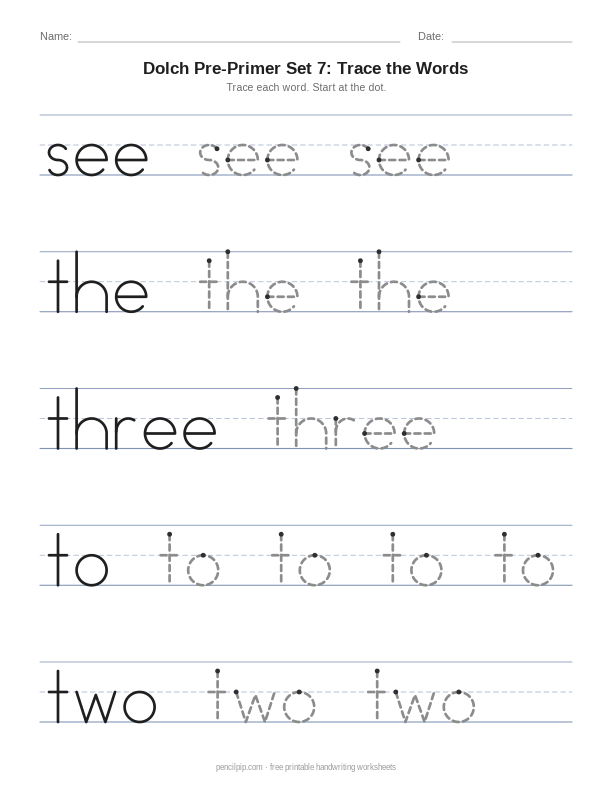 3 pagesDolch Pre-Primer Sight Words Set 7see, the, three, to, two
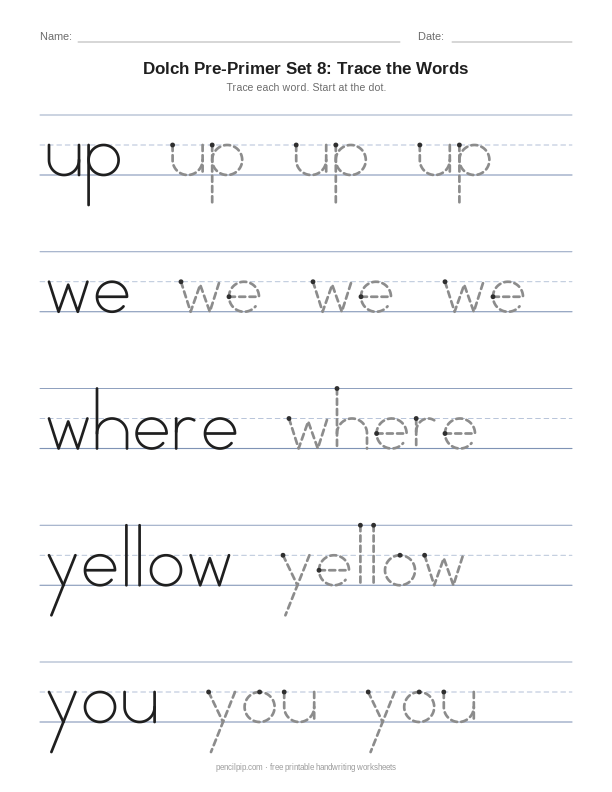 3 pagesDolch Pre-Primer Sight Words Set 8up, we, where, yellow, you
The 52 Dolch primer words come after the pre-primer list and are usually taught in kindergarten. They are split into 11 sets of 4 or 5 words — about one set a week.
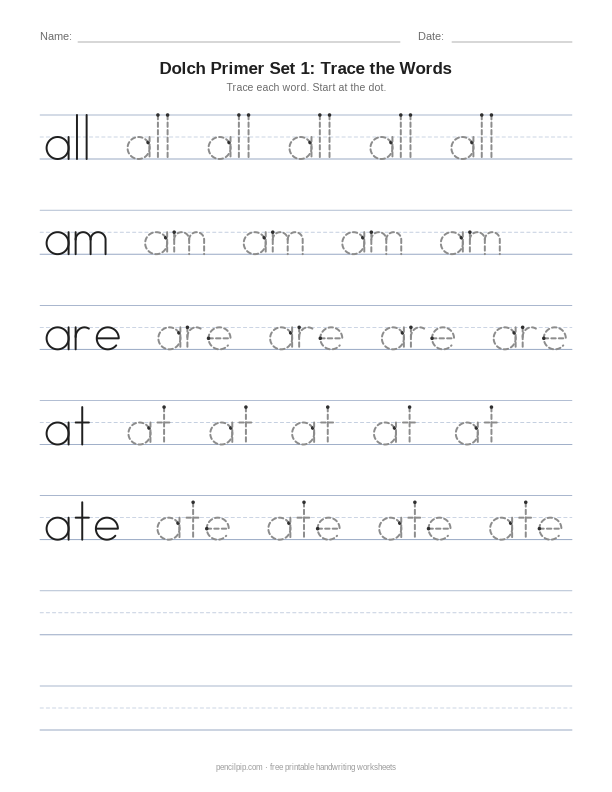 3 pagesDolch Primer Sight Words Set 1all, am, are, at, ate
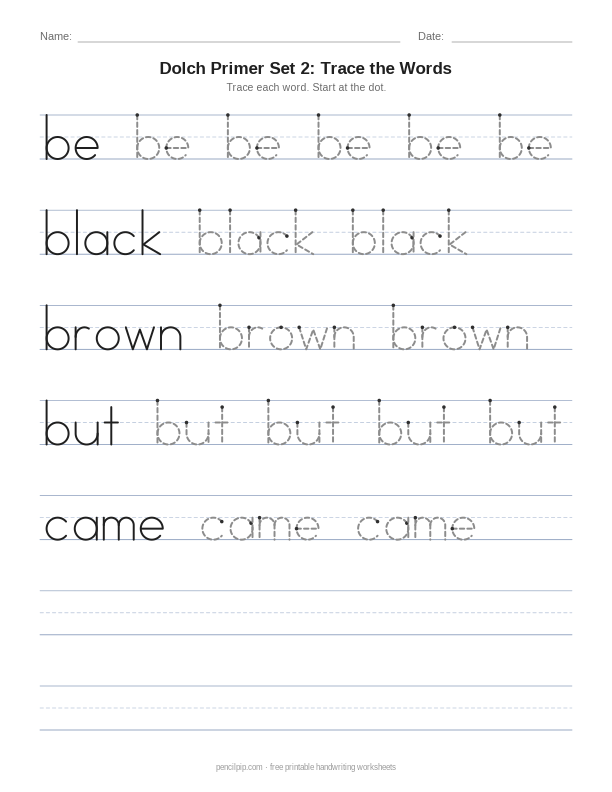 3 pagesDolch Primer Sight Words Set 2be, black, brown, but, came
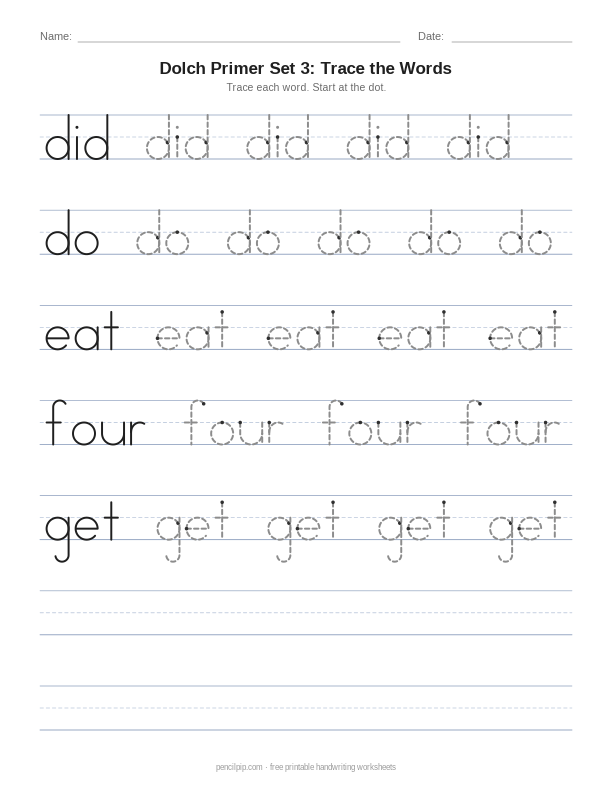 3 pagesDolch Primer Sight Words Set 3did, do, eat, four, get
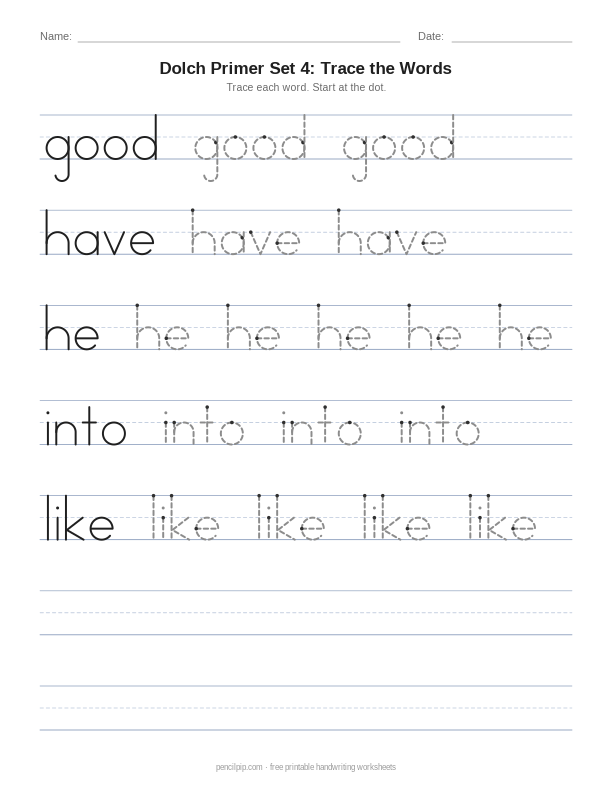 3 pagesDolch Primer Sight Words Set 4good, have, he, into, like
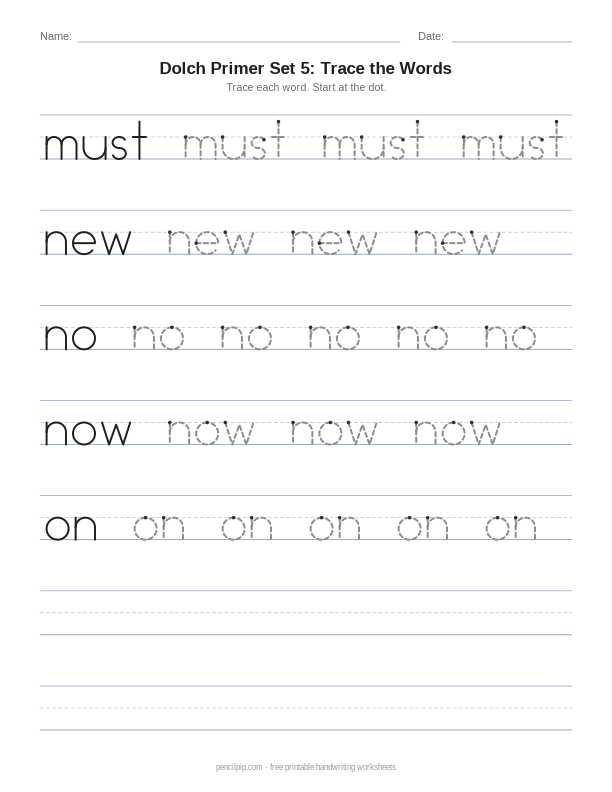 3 pagesDolch Primer Sight Words Set 5must, new, no, now, on
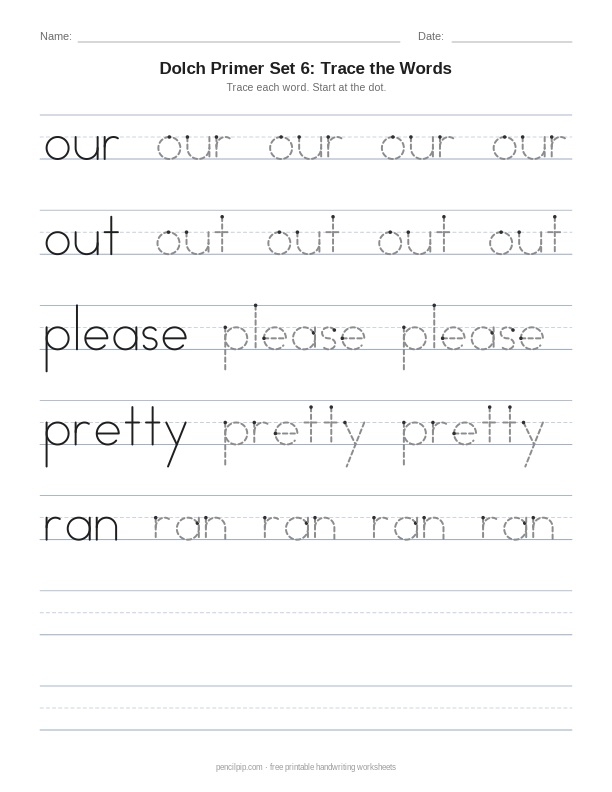 3 pagesDolch Primer Sight Words Set 6our, out, please, pretty, ran
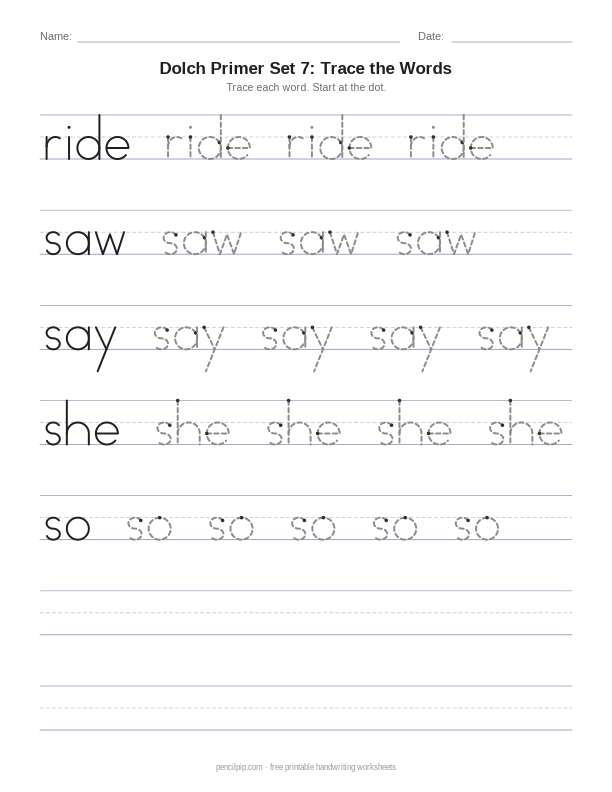 3 pagesDolch Primer Sight Words Set 7ride, saw, say, she, so
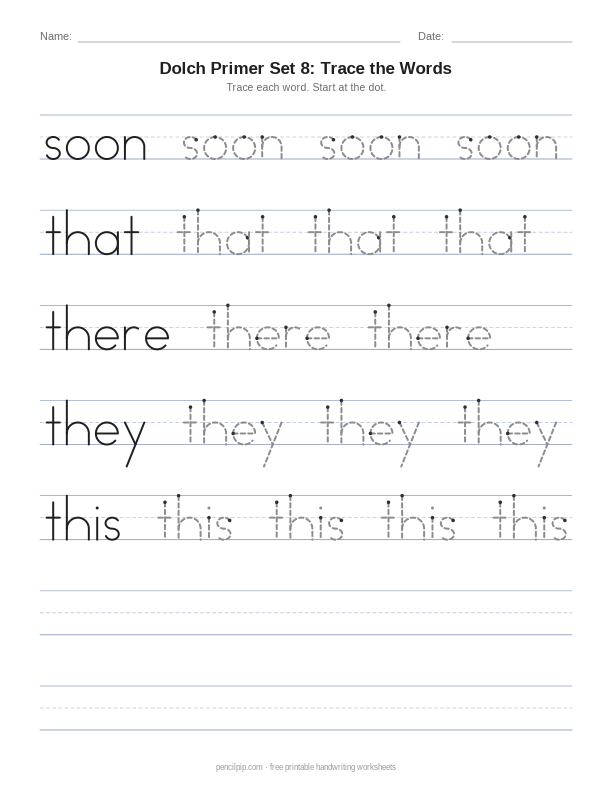 3 pagesDolch Primer Sight Words Set 8soon, that, there, they, this
The 41 Dolch first grade words come after the primer list and are usually taught in 1st grade. They are split into 9 sets of 4 or 5 words — about one set a week.
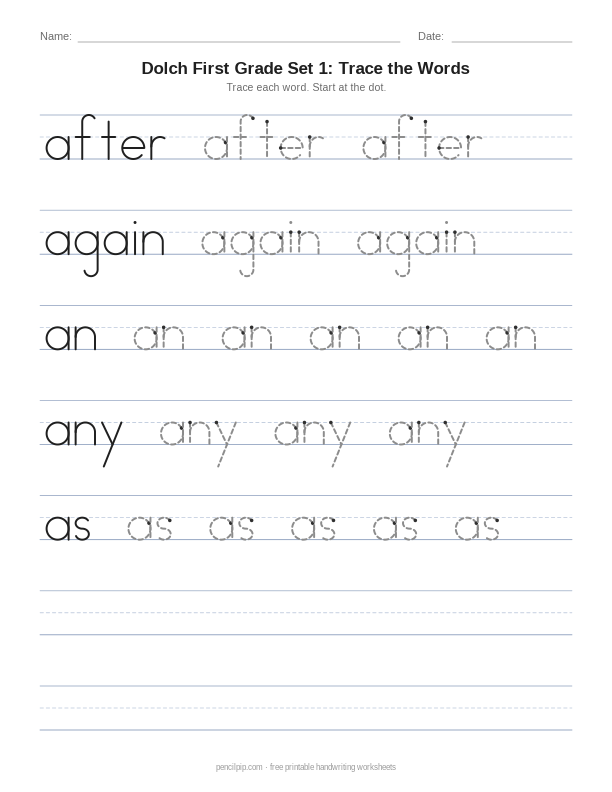 3 pagesDolch First Grade Sight Words Set 1after, again, an, any, as
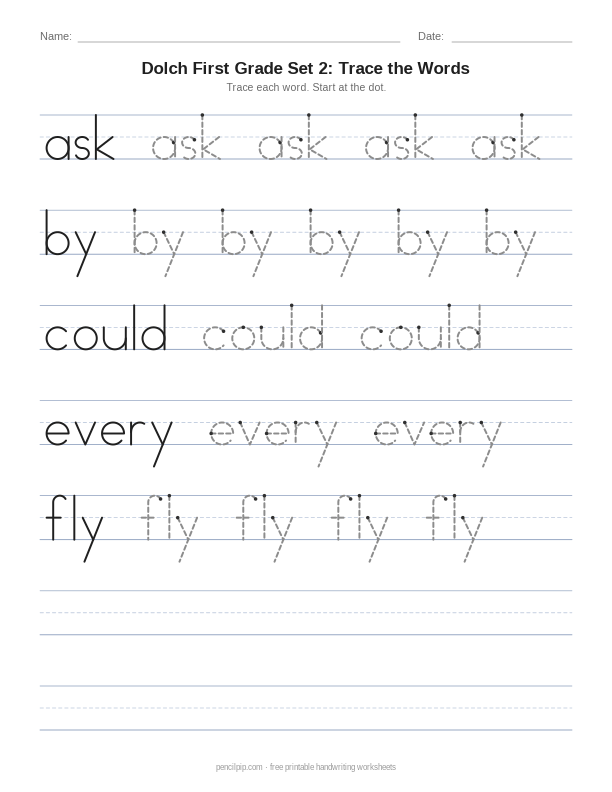 3 pagesDolch First Grade Sight Words Set 2ask, by, could, every, fly
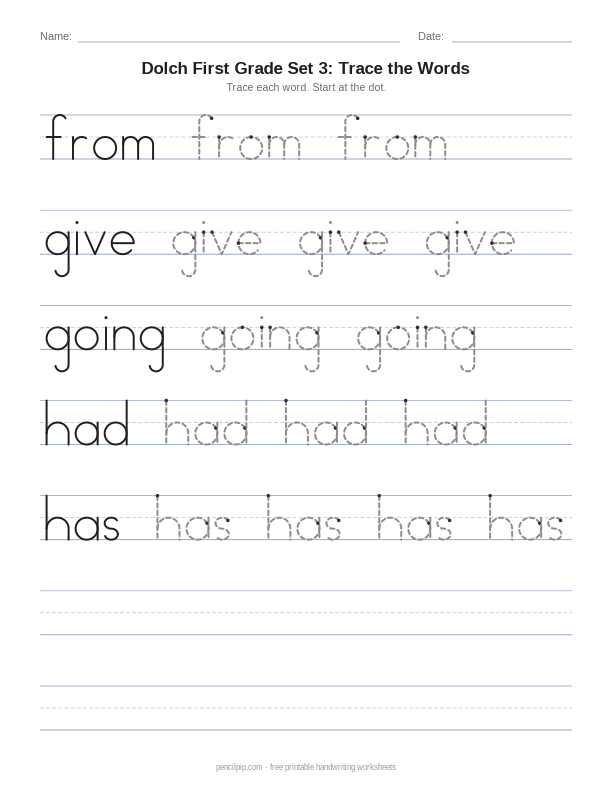 3 pagesDolch First Grade Sight Words Set 3from, give, going, had, has
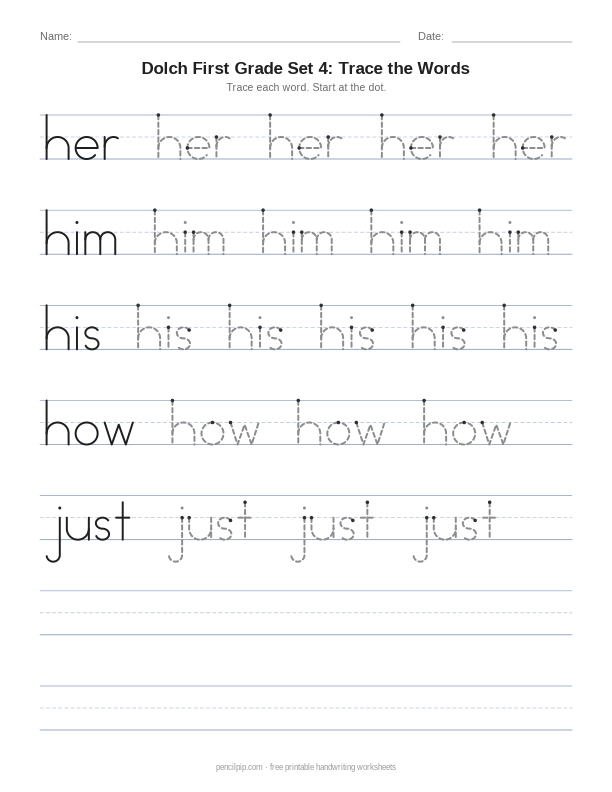 3 pagesDolch First Grade Sight Words Set 4her, him, his, how, just
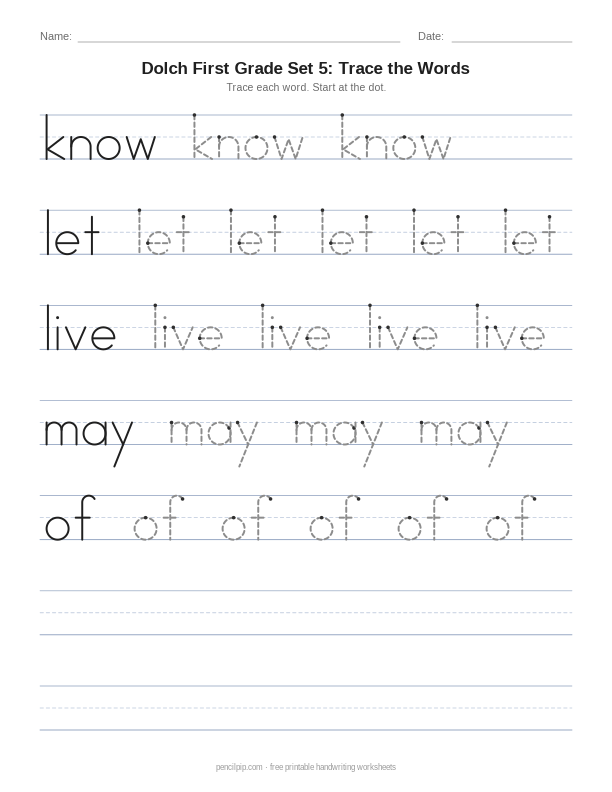 3 pagesDolch First Grade Sight Words Set 5know, let, live, may, of
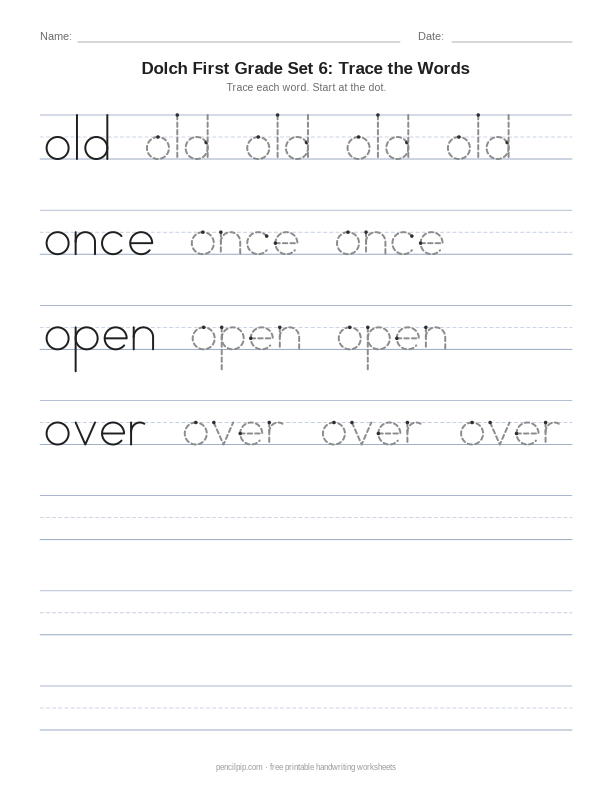 3 pagesDolch First Grade Sight Words Set 6old, once, open, over
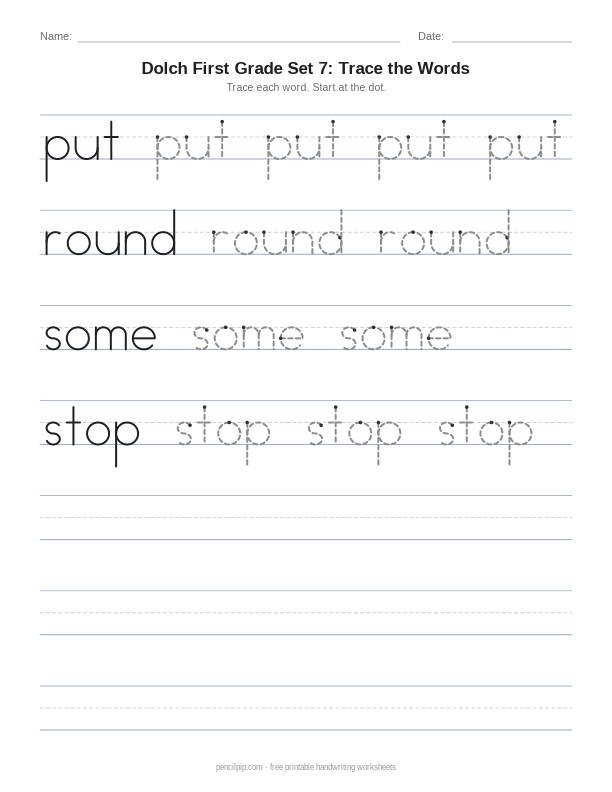 3 pagesDolch First Grade Sight Words Set 7put, round, some, stop
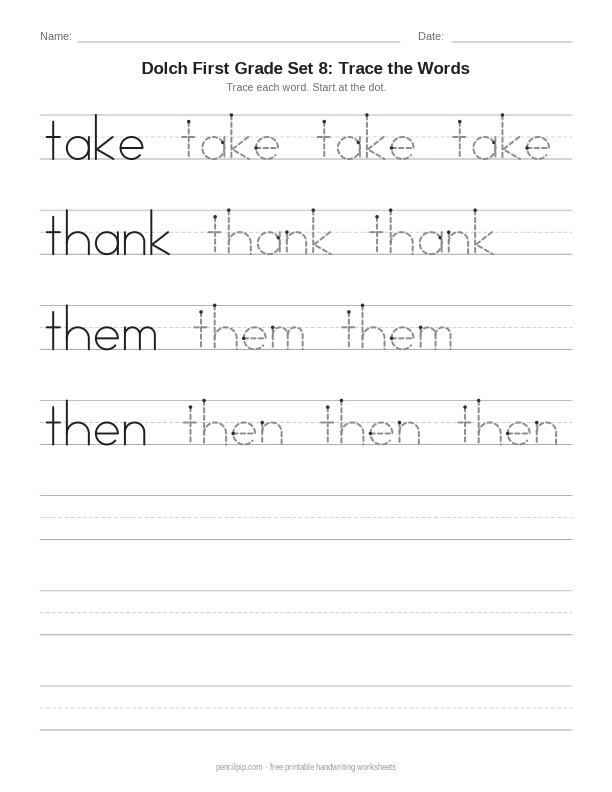 3 pagesDolch First Grade Sight Words Set 8take, thank, them, then
The first 100 Fry words are the most common words in English — together they make up about half of everything children read. They are listed from most to least common and split into 10 sets of 10.
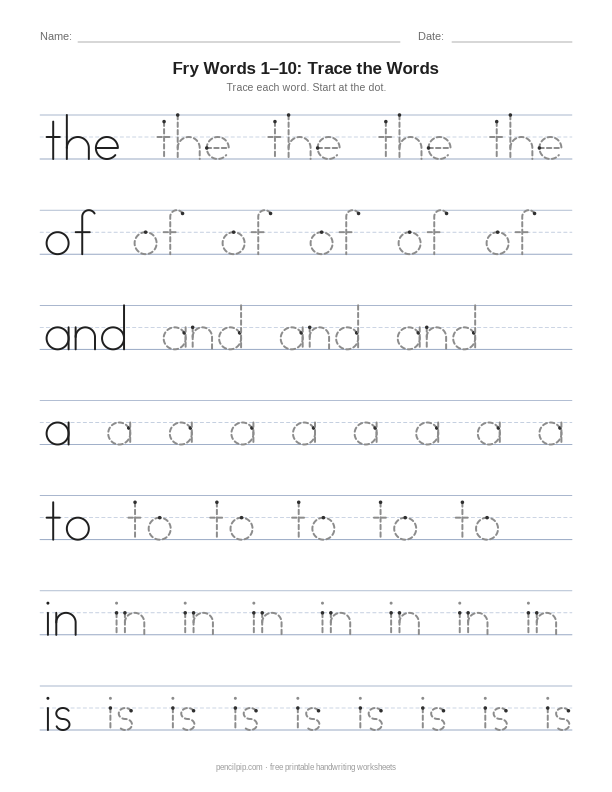 3 pagesFry Sight Words 1–10the, of, and, a, to, in, is, you, that, it
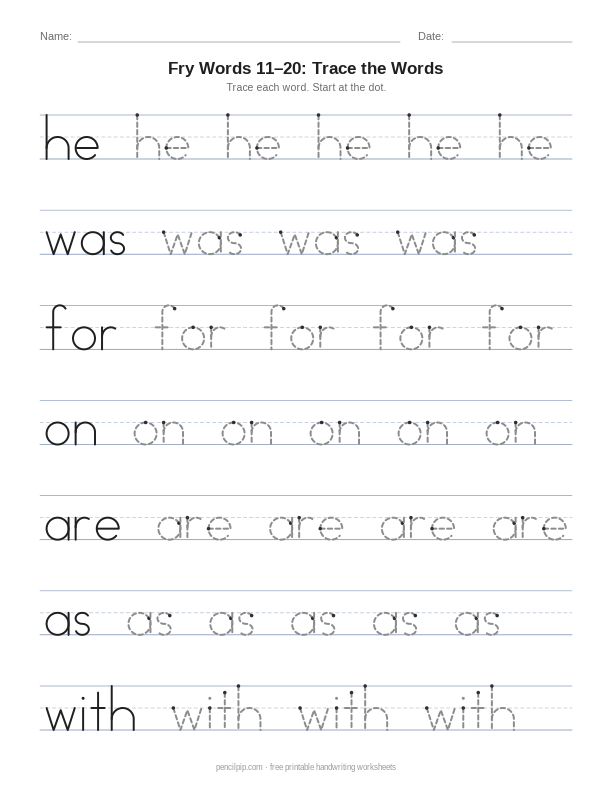 3 pagesFry Sight Words 11–20he, was, for, on, are, as, with, his, they, I
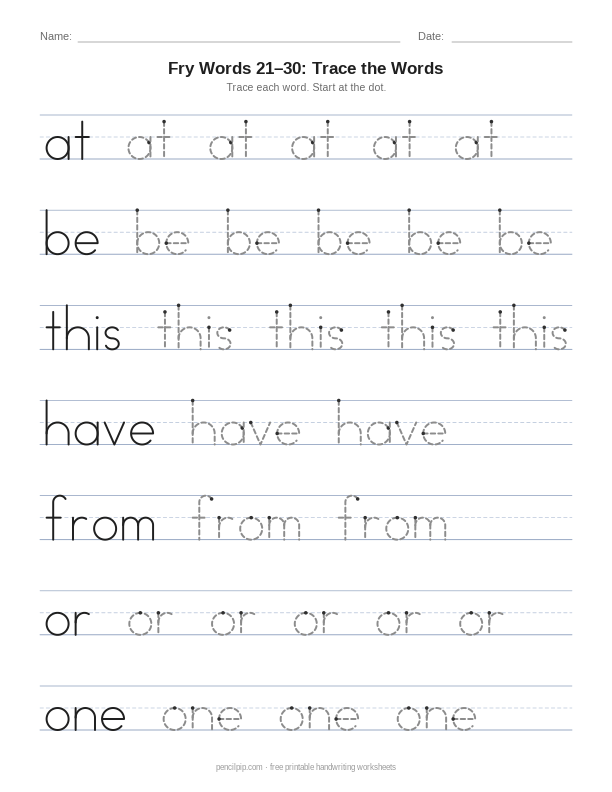 3 pagesFry Sight Words 21–30at, be, this, have, from, or, one, had, by, words
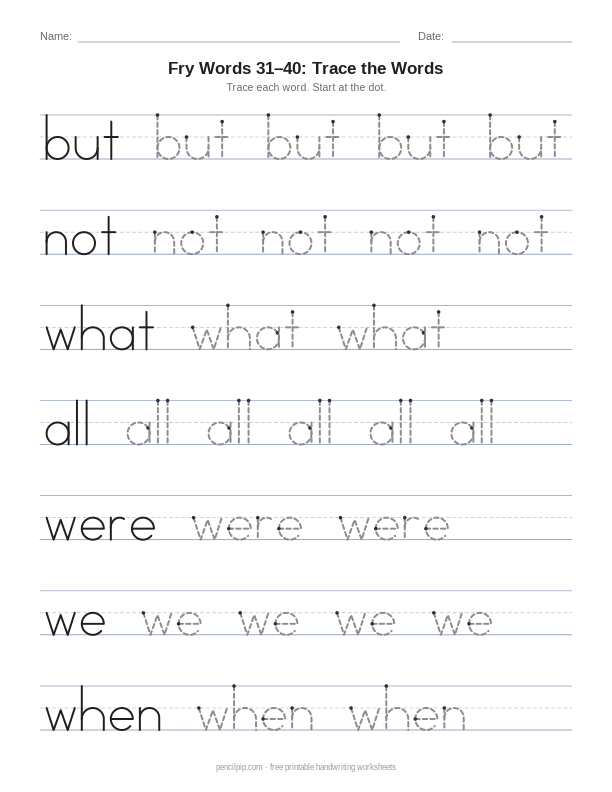 3 pagesFry Sight Words 31–40but, not, what, all, were, we, when, your, can, said
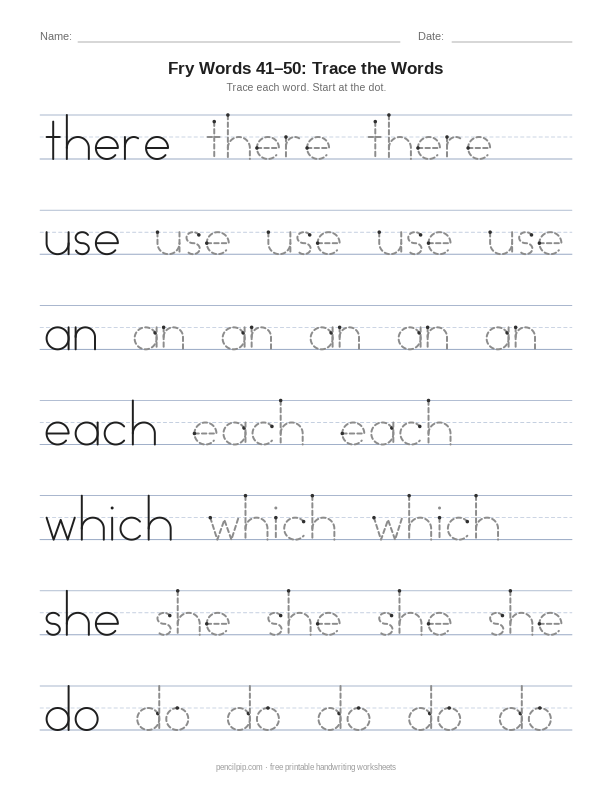 3 pagesFry Sight Words 41–50there, use, an, each, which, she, do, how, their, if
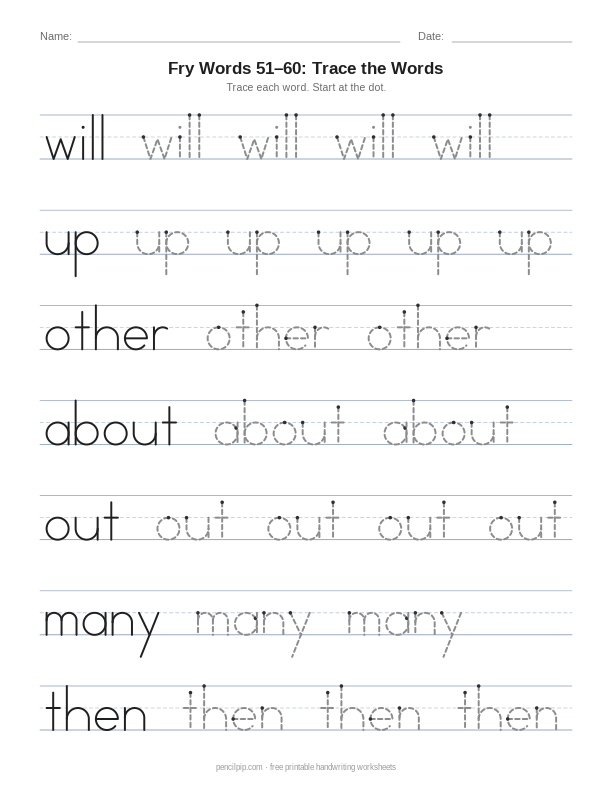 3 pagesFry Sight Words 51–60will, up, other, about, out, many, then, them, these, so
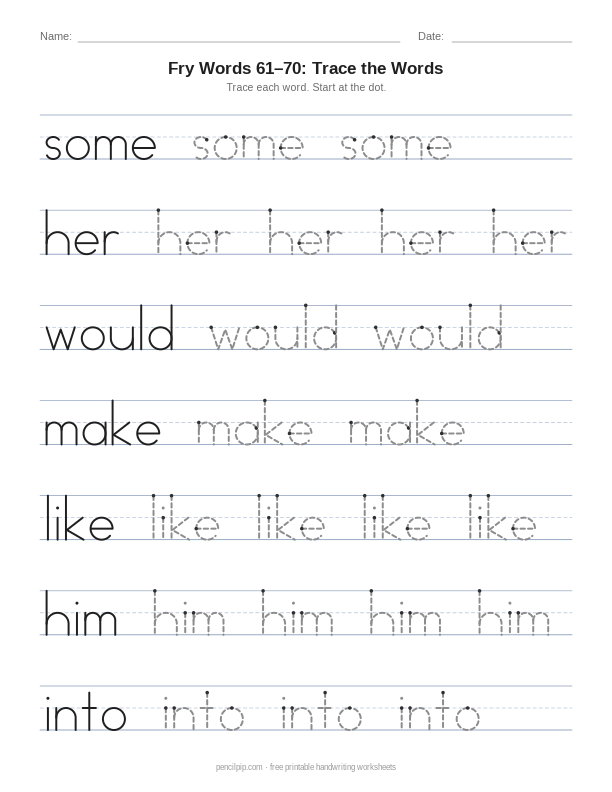 3 pagesFry Sight Words 61–70some, her, would, make, like, him, into, time, has, look
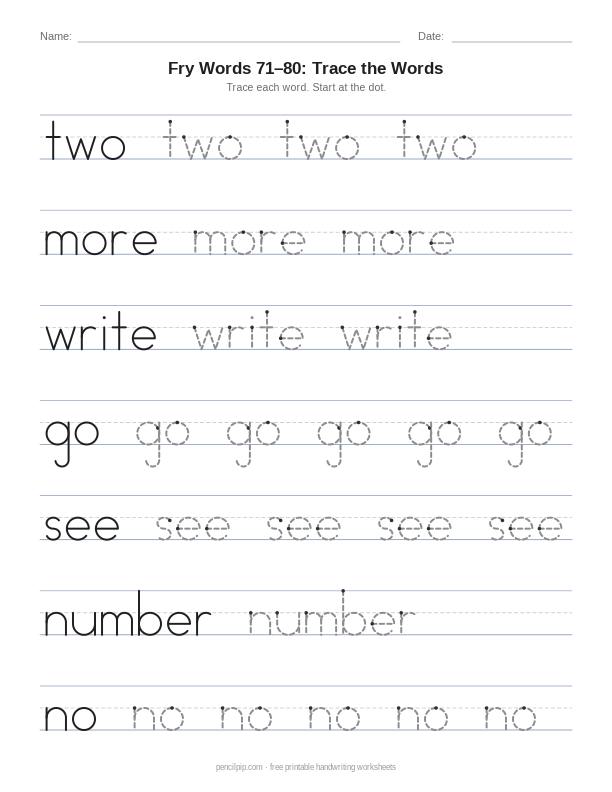 3 pagesFry Sight Words 71–80two, more, write, go, see, number, no, way, could, people
Which list should you use?
Dolch and Fry are the two classic high-frequency word lists, and they share many words. The Dolch list is grouped by grade level, which makes it easy to match to the school year. The Fry list is ranked by how often each word appears, so working through it in order covers the most useful words first. If your child’s school sends home its own list, use that instead — choose “Customize” on any set.
| List | Words | Sets | Typical age |
|---|---|---|---|
| Dolch Pre-Primer | 40 | 8 | Ages 4–5 (preschool to kindergarten) |
| Dolch Primer | 52 | 11 | Ages 5–6 (kindergarten) |
| Dolch First Grade | 41 | 9 | Ages 6–7 (1st grade) |
| Fry First 100 | 100 | 10 | Ages 5–7 (kindergarten to 1st grade) |
What’s on every worksheet
Dolch sets have about five words — roughly one week of new words — and Fry sets have ten. Each set is a three-page packet that practices the same words in different ways:
On the trace page, a small heart marks the tricky letters in a word — the part to learn by heart while the rest is sounded out.
- Trace: a solid example followed by dotted copies, so children see the whole word before writing it.
- Look, say, cover, write, check: children read each word, fold back the first column, write it from memory, then unfold and check.
- Rainbow writing: trace each word in three different colors — repetition that doesn’t feel like a chore.
Why writing helps reading
Reading a word and spelling it rely on the same knowledge: which letters stand for which sounds. When children say a word, name its letters as they trace, and then write it from memory, they link the sounds, the spelling and the meaning. That link is what lets a word become instantly recognizable — the whole point of sight words.
Common questions
How many sight words should my child know?
There’s no single standard: each school or reading program chooses its own list and pace. Ask your child’s teacher which words are on this year’s list. Whatever the target, a few new words a week with regular review works better than a long list all at once.
How do I know when a word is learned?
A word is learned when your child reads it instantly — without sounding it out — on different days and in real books, not just on a flashcard. Words that still need a pause go back into the review pile.
Are these worksheets useful in 1st grade?
Yes. The Dolch first grade list and Fry words 51–100 are aimed at 1st graders, and children who are still building fluency can use any set. For weekly spelling lists, the spelling worksheet maker makes the same three activities from your own words.