Phonics Worksheets: CVC Words and Word Families
CVC words such as cat, pig and sun have one sound for every letter, which makes them a clear place to connect letters with sounds. Word families take that further by changing only the first letter, as in cat, bat, hat and mat. These pages give children structured practice with both before they meet the irregular parts of high-frequency words.
A CVC word has a consonant, a short vowel and a final consonant, as in cat, bed and sun. Say the word slowly and help children hear one sound for each of the three letters. This page groups the words by short vowel so the practice stays focused.
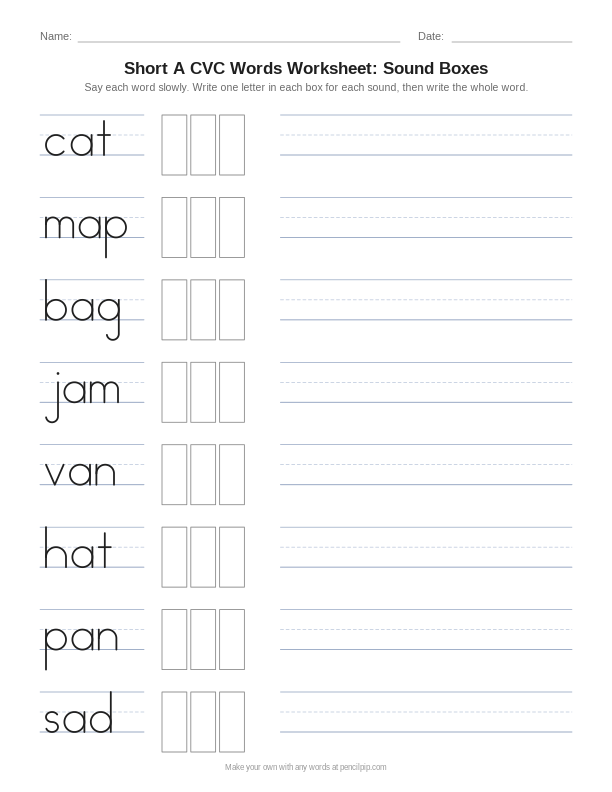 3 pagesShort A CVC Wordscat, map, bag, jam, van, hat, pan, sad
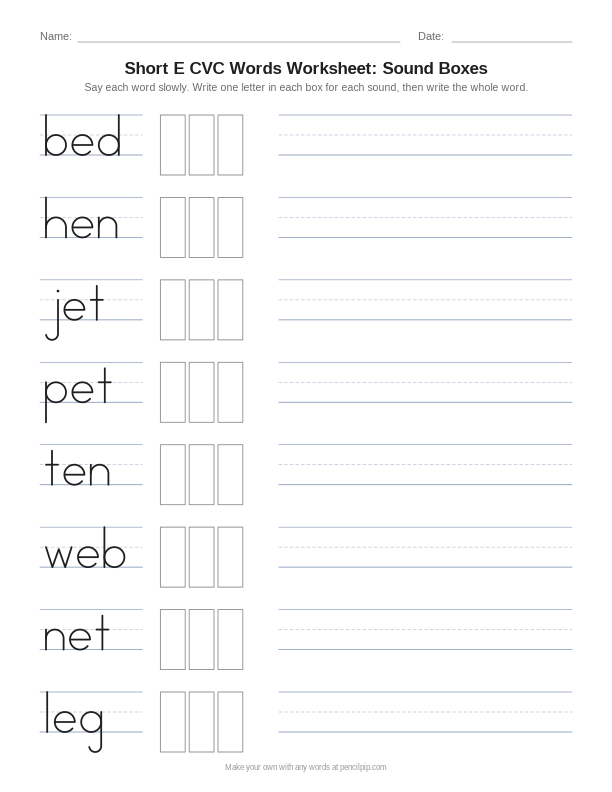 3 pagesShort E CVC Wordsbed, hen, jet, pet, ten, web, net, leg
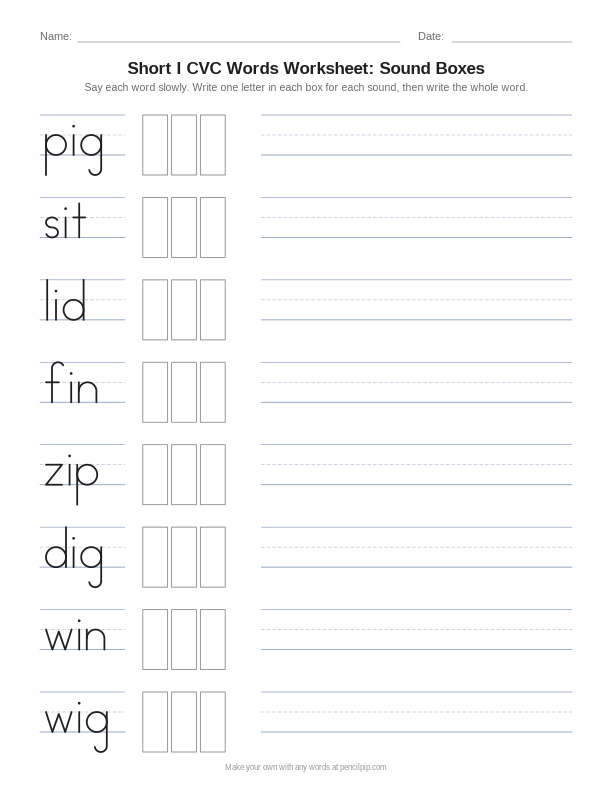 3 pagesShort I CVC Wordspig, sit, lid, fin, zip, dig, win, wig
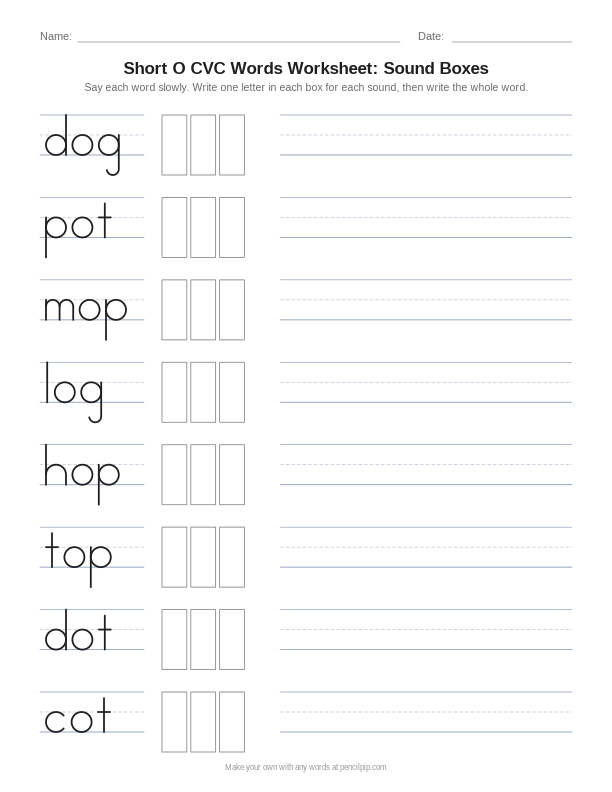 3 pagesShort O CVC Wordsdog, pot, mop, log, hop, top, dot, cot
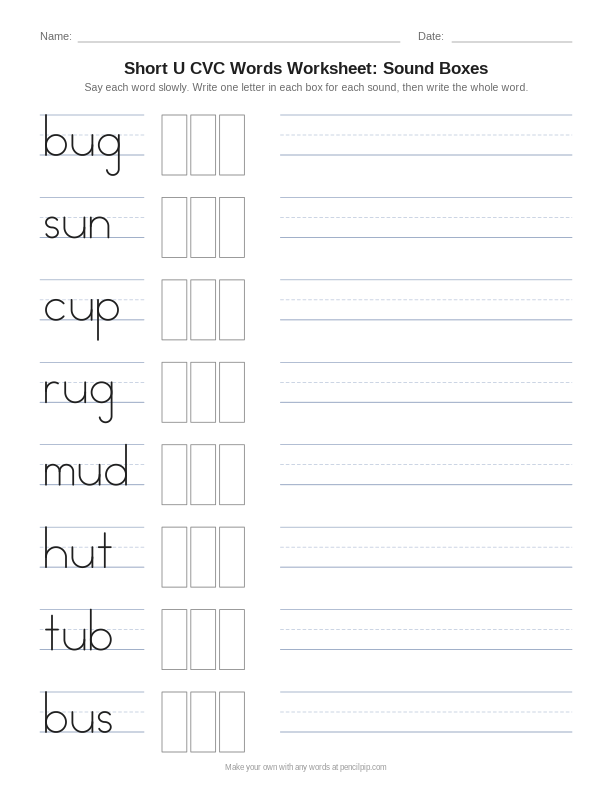 3 pagesShort U CVC Wordsbug, sun, cup, rug, mud, hut, tub, bus
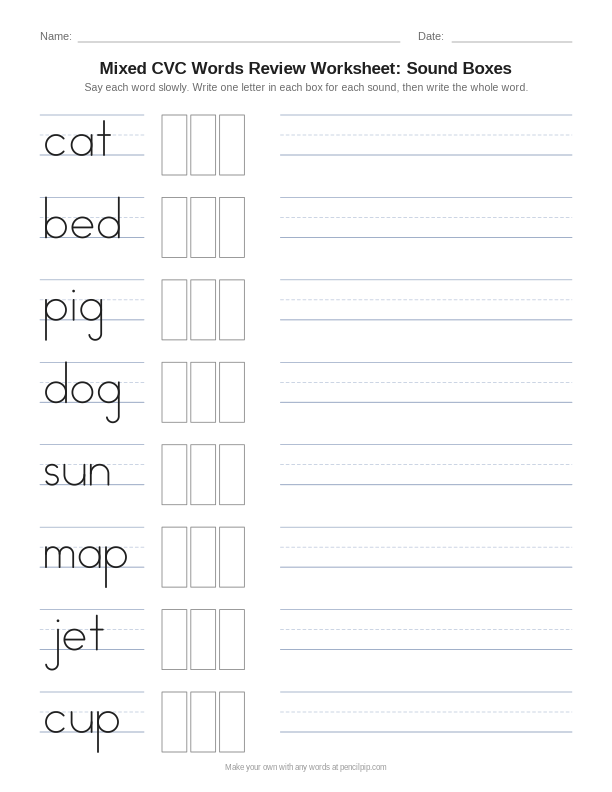 3 pagesMixed CVC Words Reviewcat, bed, pig, dog, sun, map, jet, cup
Word families share the same ending, such as -at in cat, bat and hat. Once children can read and write the shared ending, they only need to change the first letter. This makes the pages useful for building confidence with short-vowel words.
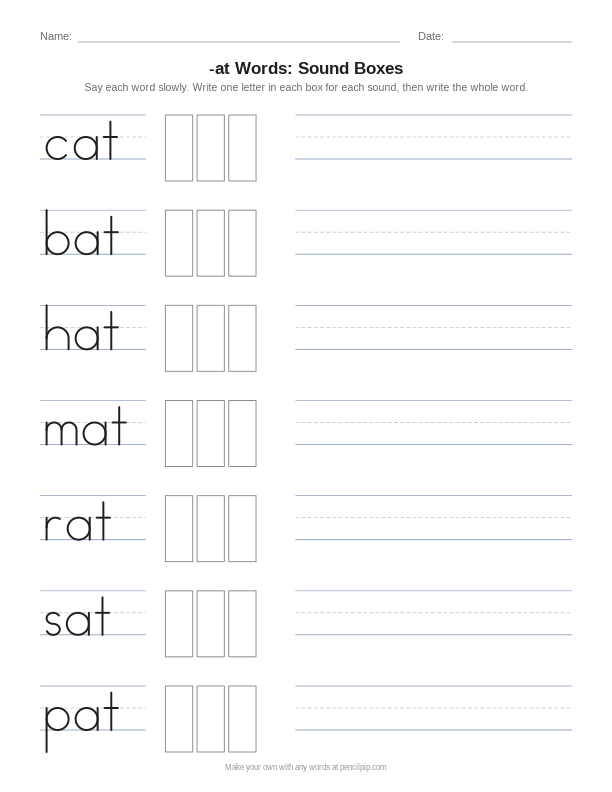 3 pages-at Word Familycat, bat, hat, mat, rat, sat, pat
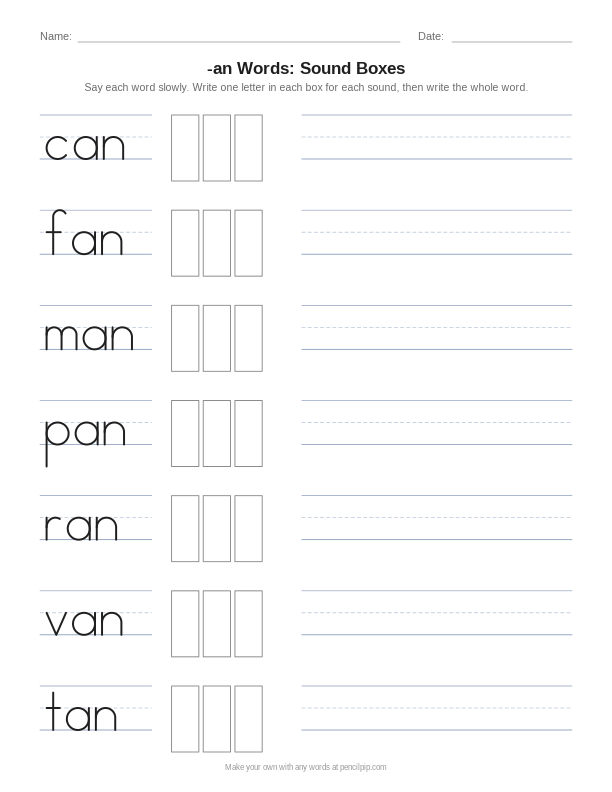 3 pages-an Word Familycan, fan, man, pan, ran, van, tan
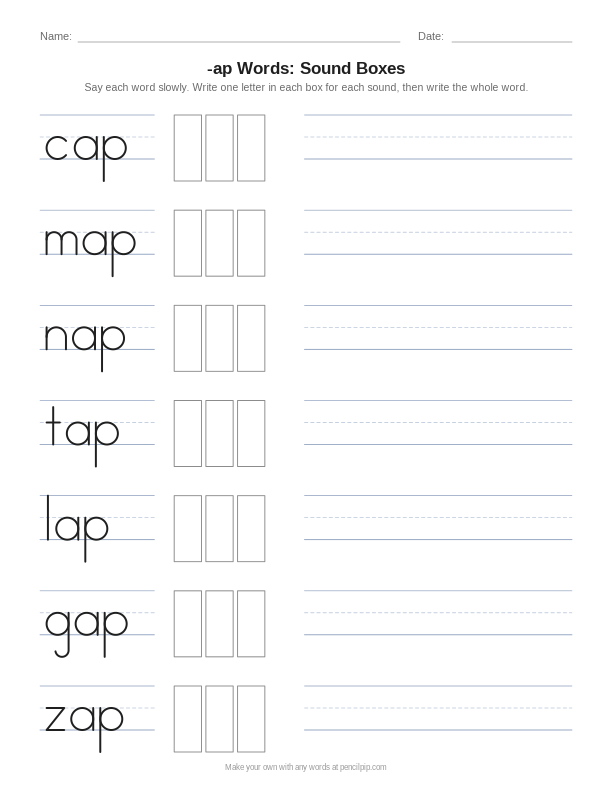 3 pages-ap Word Familycap, map, nap, tap, lap, gap, zap
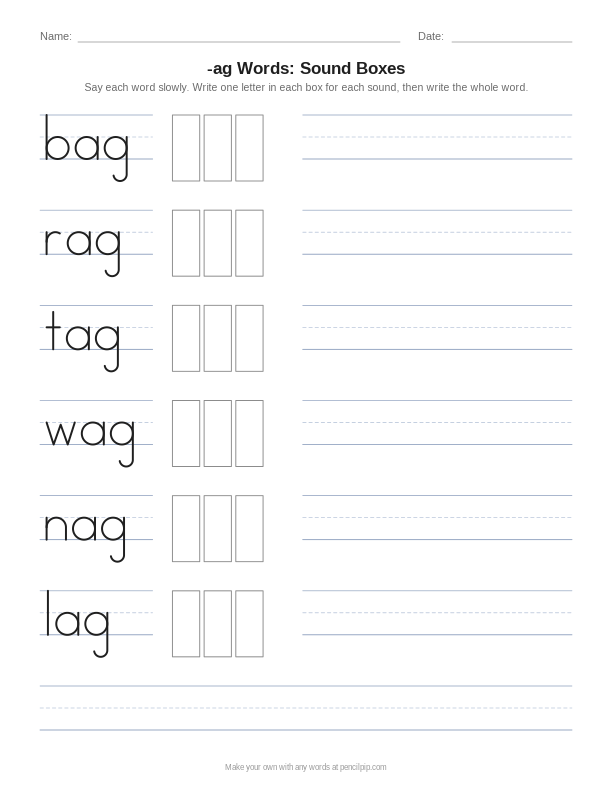 3 pages-ag Word Familybag, rag, tag, wag, nag, lag
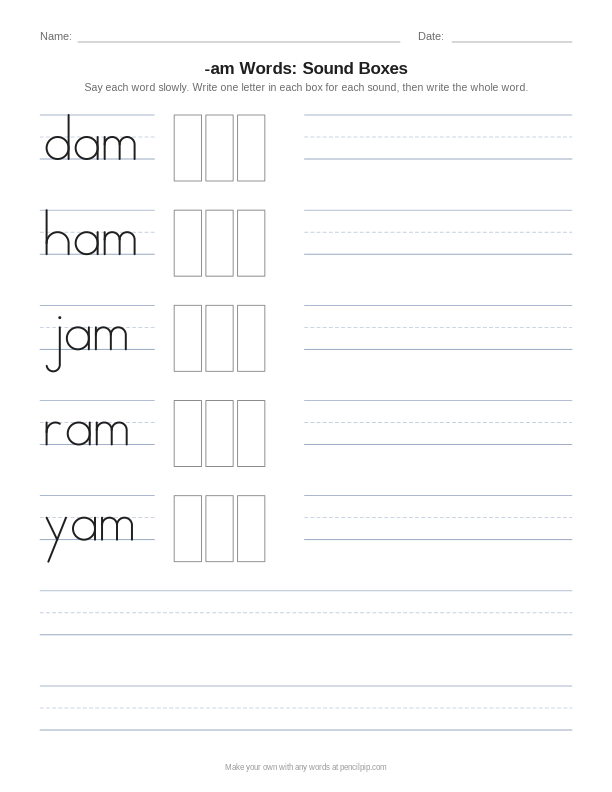 3 pages-am Word Familydam, ham, jam, ram, yam
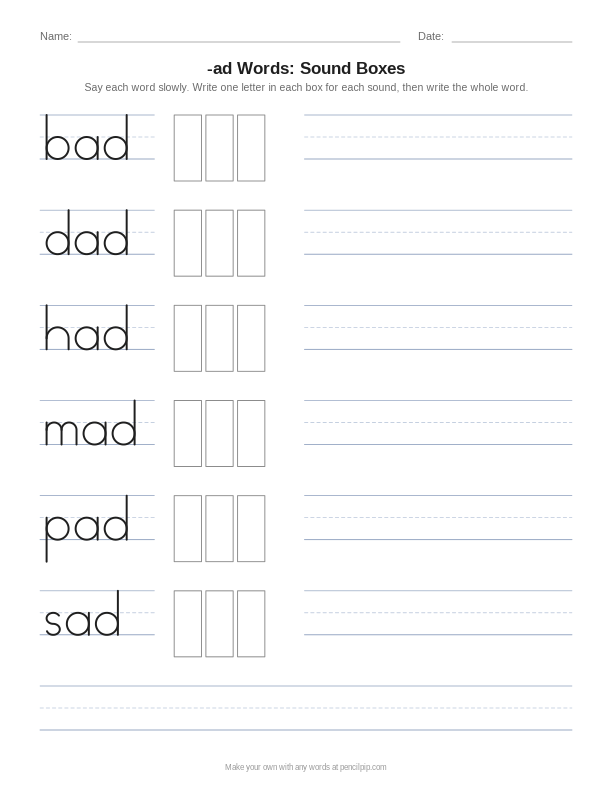 3 pages-ad Word Familybad, dad, had, mad, pad, sad
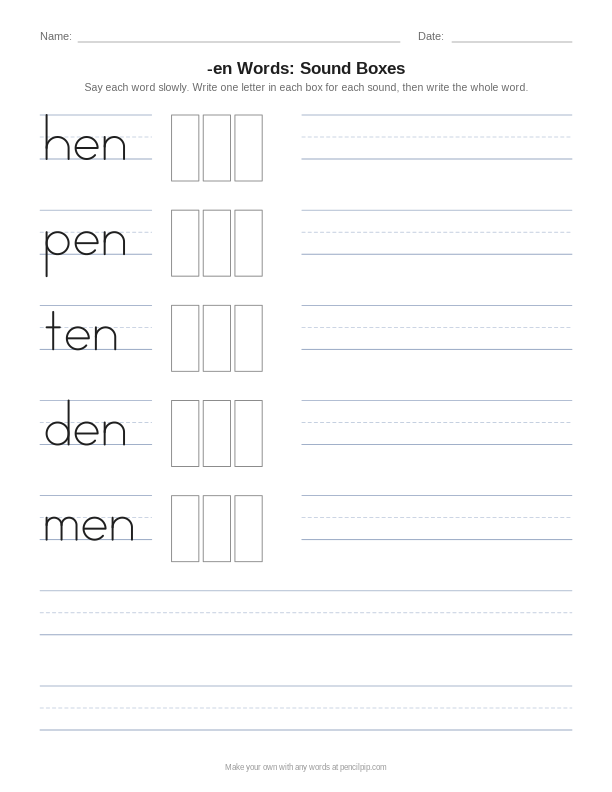 3 pages-en Word Familyhen, pen, ten, den, men
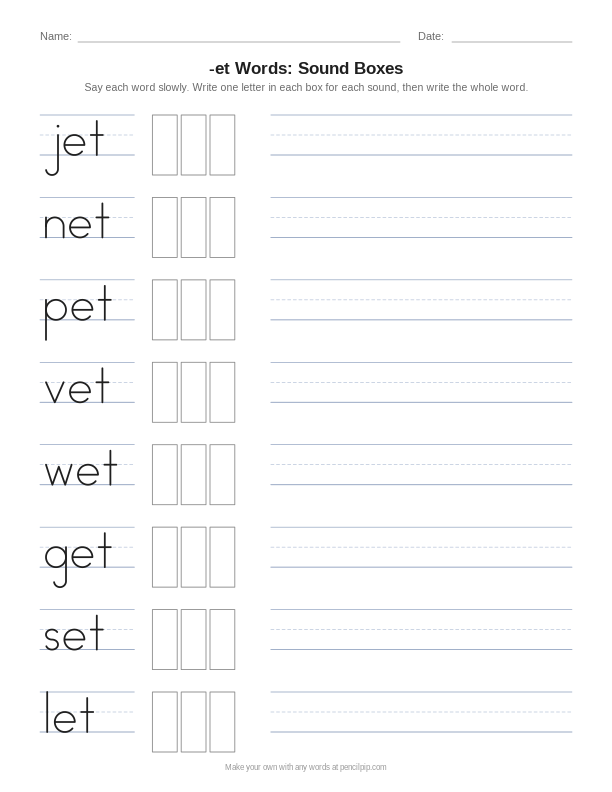 3 pages-et Word Familyjet, net, pet, vet, wet, get, set, let
Start with CVC words
CVC words such as cat, bed, pig, dog and sun have a consonant, a short vowel and a final consonant. For most of these words, each letter stands for one sound, so children can hear three sounds and match them to three letters.
The sound-box page makes that mapping visible: children say the word slowly and write one letter in each box. Tracing and look, say, cover, write, check then give them a chance to read and spell the same words with less support.
Then notice word families
Word families group words with the same ending, such as -at in cat, bat and hat. Once a child can read the shared ending, only the first letter changes. This is a useful bridge from sounding out every letter to recognizing larger spelling patterns.
Keep the focus on sound as well as letters. Read the ending aloud, say the whole word, and ask which part stayed the same. The sound boxes still show one letter for each sound in these selected three-letter words.
Where Heart Words fit
High-frequency words are not all irregular. Many, such as and, can and big, can be sounded out with the patterns children are learning. Others have a part that does not match the spelling rules taught so far, such as the ai in said.
Teach the regular parts through phonics, then draw attention only to the tricky part that must be remembered by heart. Use the CVC and word-family pages for regular short-vowel practice, and use the sight-word pages for the small irregular parts that need extra attention.
Common questions
Should I teach CVC words or sight words first?
They can be taught side by side. CVC words and word families give children regular patterns they can sound out. High-frequency words give them useful words to read in books, with the regular parts sounded out and only the irregular part learned by heart.
How many CVC words should we practice at once?
A small set is enough for one session. Choose one short vowel or one word family, read the words aloud, and practice writing a few rather than the whole page at once. Short, frequent review is more useful than a long list in one sitting.
Can I make these worksheets with my own words?
Yes. Open the spelling worksheet maker and choose the Sound boxes activity. The boxes give one square per letter; short three-letter CVC words work best because each letter usually stands for one sound.