Primary Writing Paper by Line Size
Blank primary writing paper gives children room to use the letter formations they are learning without tracing guides. Use lined paper for handwriting, spelling and dictation; choose story paper when children need a box for a picture and lines for a caption or story below.
These blank handwriting pages use the same blue guide lines as our letter worksheets: a top line for capitals, a dashed midline for lowercase letters, and a baseline for every letter to sit on. Pick the line size that matches your child’s age and writing stamina.
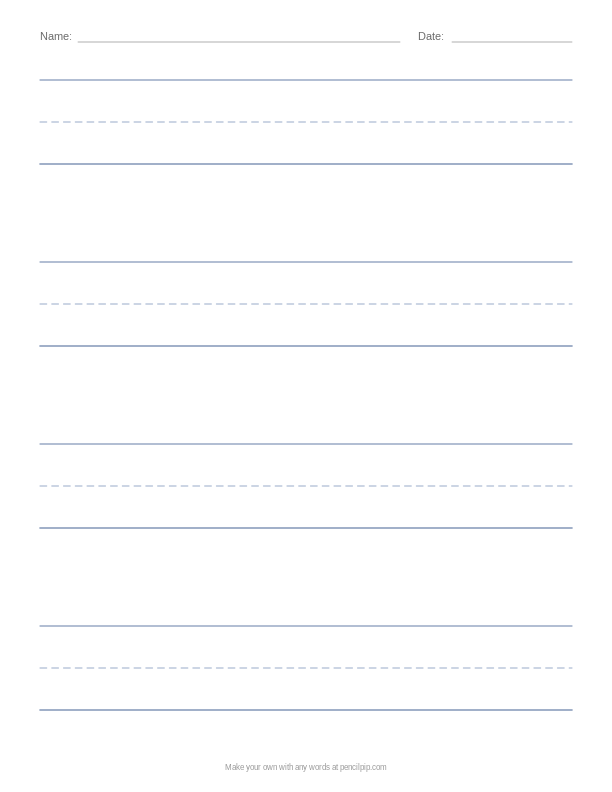
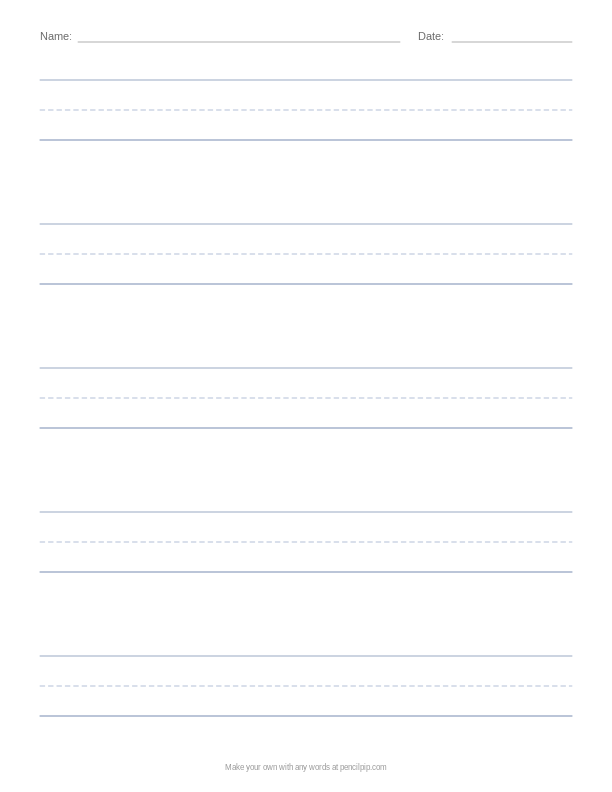
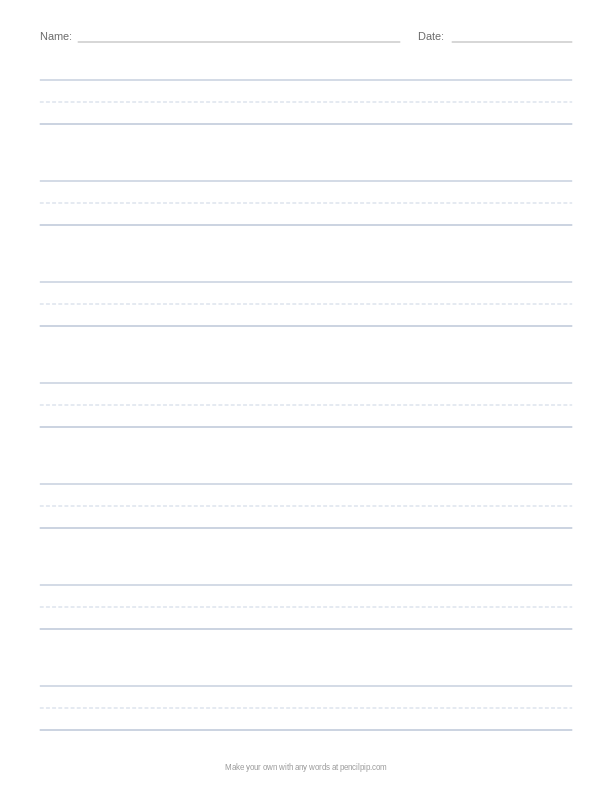
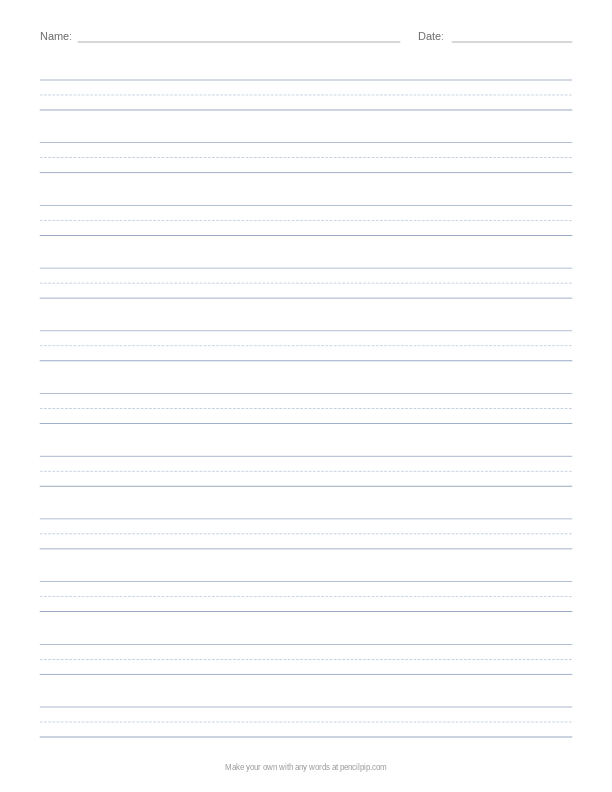
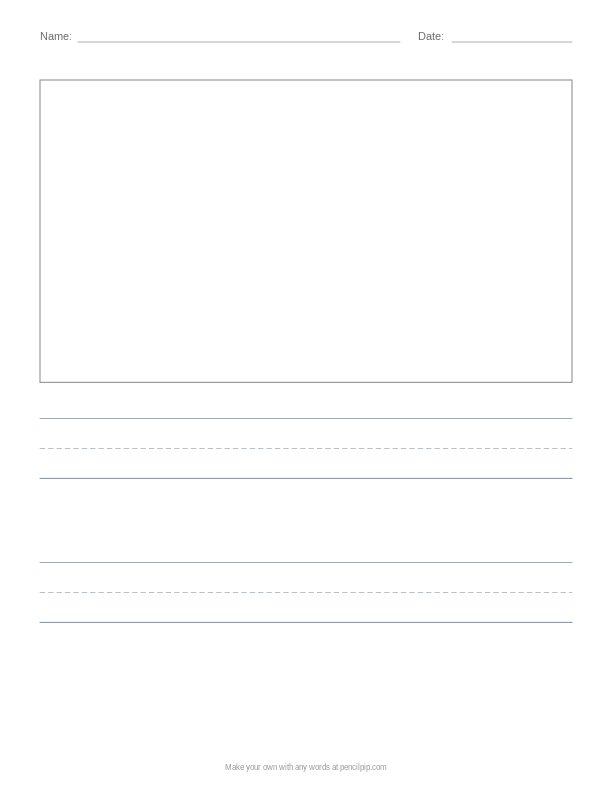
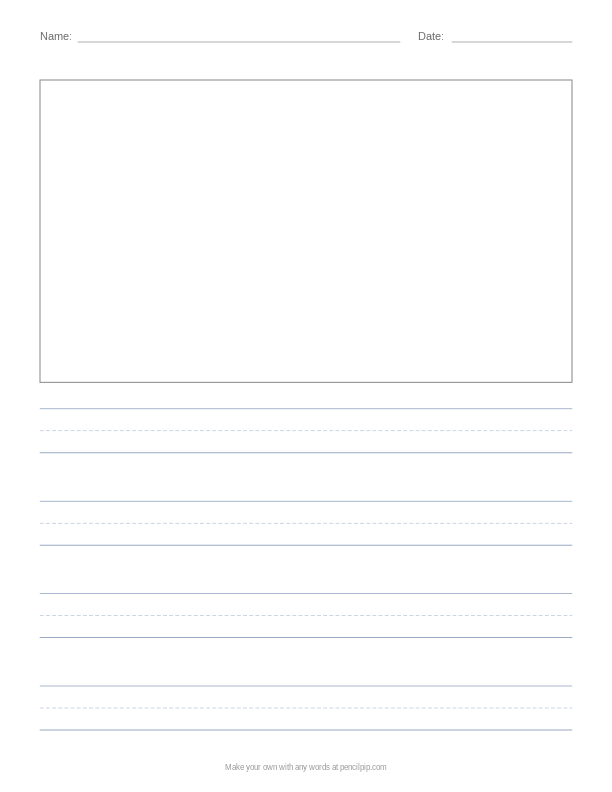
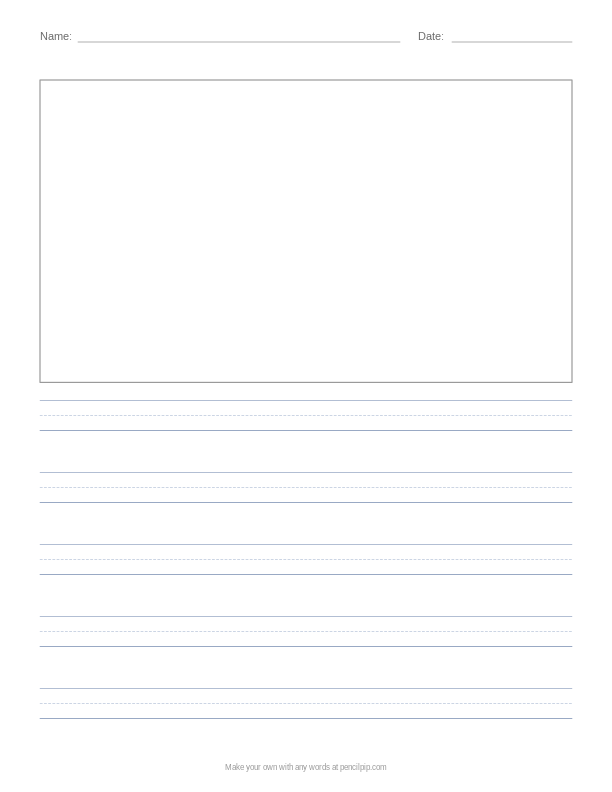
Story paper combines a drawing space with handwriting lines, so children can plan a picture and then write about it. The box and lines stay separate, which keeps words off the drawing and gives young writers a clear place to begin.
Choosing a line size
Primary writing paper uses three guide lines: a top line, a dashed midline and a solid baseline. The dashed midline marks the height of most lowercase letters, while tall letters reach the top line and letters with tails drop below the baseline. Matching this spacing to the child is more useful than making every page look the same.
Use extra-large lines for a child who is still learning to control a crayon or pencil, large lines in the first years of formal handwriting, medium lines for 1st grade and small lines for children whose letter size is becoming consistent.
Lined paper or story paper?
Choose lined paper for handwriting practice, spelling words, dictation and short paragraphs that need as much writing room as possible. Choose story paper when the task includes a picture: the drawing box gives children a place to plan, and the writing lines below keep the words separate from the illustration.
Both kinds use the same guide-line spacing, so a child can move between them without changing letter height. The optional bottom line is useful for words with g, j, p, q or y and can be turned off for simpler practice.
Ways to use a blank page
- Write this week’s spelling words and compare them with the tracing page.
- Take a short dictation, then circle the letters that need another try.
- Write a sentence about a drawing or a favorite book.
- Make a grocery list, a note to a grandparent or a sign for a pretend shop.
- Keep a finished page as a dated writing sample to see progress over the year.
Common questions
Is primary writing paper the same as handwriting paper?
In everyday use, yes. Both names usually describe paper with a top line, a dashed midline and a baseline for young children. Some classrooms call it handwriting paper, while others use “primary writing paper” for the same three-line layout.
When should children stop using the dashed midline?
There is no single age. Children usually move to plain notebook paper when they can keep letters consistently on the baseline and make tall and small letters the right relative size. Some benefit from guide lines longer than others, especially when they are tired or writing quickly.
Can I customize the paper for my class?
Yes. Choose “Customize” on any paper page to change the line size, switch between US Letter and A4, add or remove the tail line, and show or hide the Name and Date line. Decorations such as stickers and borders are available in the same customizer.